Doc Type: Life Sketch

  • Hyrum Smith Rice

    Hyrum Smith Rice

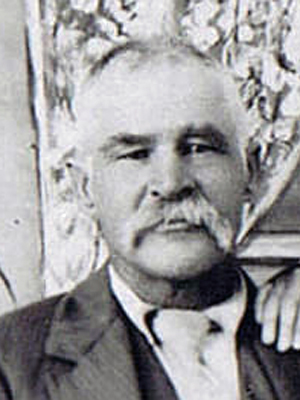
    On May 15, 1844, Hyrum Smith Rice, more often called William Hyrum, was born in Nauvoo, Illinois. His father was Ira Rice, and his mother, who died while he was yet very young, was Sarah Ann Harrington. This couple had pioneered in Ypsilanti, Washtenaw County, Michigan, and had prospered well there. After their conversion to The Church of Jesus Christ of Latter-day Saints, they moved to Nauvoo, Illinois, in 1841. They built a fine brick home near the Temple, which was burned by persecutors after the Prophet and his brother Hyrum were killed at Carthage, Illinois. Hyrum Smith Rice was born just a month after this tragedy. Another child, Ephraim, was born in 1846, after they had left Nauvoo. At Winter Quarters, the family endured more hardships, but Ira and his sons always managed to have more horses and equipment than they needed for their own use. Many destitute families found assistance through Ira and his sons.

    When Ira and his two older sons decided to go West with the first companies of Saints, Sarah Ann and the rest of the family were to come across the following year. It fell to Hyrum’s older brother, Leonard Gurley, to shoulder much responsibility in this decision. It is easy to assume, since details are so scarce, that Hyrum’s mother must surely not have been well enough to make the journey, but her courage is manifest, as she sent all of her children between the ages of 18 and 4 to cross the plains with the Heber C. Kimball Company. Hyrum was only four years old, and he never saw his mother again, for she died shortly after her children left Iowa. Hyrum lived for a time in Utah with Leonard Gurley and his new bride, Elizabeth Almira Babbitt. When his father, Ira, married Ann Morris Butler, Hyrum lived with them for a while. Early in life, Hyrum began working as a man. He loved horses and ranching.

    Hyrum married Olive Emily Smith on December 25, 1865, in Salt Lake City, Utah. They lived in Cache County, Utah, until about 1880. Hyrum freighted a lot and had a ranch in Mendon. Five children were born to them before they moved to Round Mountain, Cassia County, Idaho. He became known as “Hy Rice from Round Mountain.” His ranch became a way station for freighters, stagecoaches, and mail carriers. By 1884, they had two more children. They sold the ranch and moved nearby to Almo, Idaho. It was here that his wife, Olive Emily, had a tragic accident that took her life on May 22, 1886. She suffered a compound fractured arm, the result of a fall from the family wagon. Infection set in and blood poisoning followed.

    Hyrum faced difficulties in trying to do what was best for a motherless family. He did not always keep them together. When Nathaniel married, an attempt was made to live with him and his wife, Alice Jane. Alice was an inspiration and mainstay for this drifting family until they were old enough to shift for themselves.

    Hyrum tried working wherever he could, even in Nevada, but he returned to the more established location with Nathaniel in Almo, Idaho. After the children were grown, he lived alone in Almo. We are not sure when he died or where he is buried. It is said that he died in Malta at the home of his daughter, about 1906.
  • Maria Küenzlin

    Maria Küenzlin

    Maria Küenzlin/Kienzli was born October 17, 1842, in Oberbaldingen, Baden, Germany, the daughter of Mathias Kienzli and Katharina Lohrer. Other spellings for her surname include Kuenzlin, Kienzly, Kienzle, Kunzli. Wilhelm (William) Wilker was born January 12, 1847, in Solothurn, Solothurn, Switzerland, the only son of Johann Wendell Wilker and Katharina Schorli.

    William and Maria were married March 20, 1872, and made their home in Switzerland. They were converted to The Church of Jesus Christ of Latter-day Saints in Switzerland. William was baptized January 23, 1882, by Ulrich Fischer and confirmed the same day by Elder Hasler.

    Maria was baptized February 16, 1882, by Ulrich Staufer and was confirmed the same day also by him. She was rebaptized November 8, 1883, and reconfirmed November 15, 1883, both by J.U. Stucki. This was after they came to America. Perhaps Maria did not have an adequate record of her baptism, whereas William had his certification of ordination to the priesthood as an elder, as he was ordained an Elder in the Schaffhausen Branch of the Swiss-Italian-German Mission on November 16, 1882, by Elder J. G. Hafen. The family emigrated to America in the fall of 1883 and settled in Paris, Bear Lake County, Idaho.

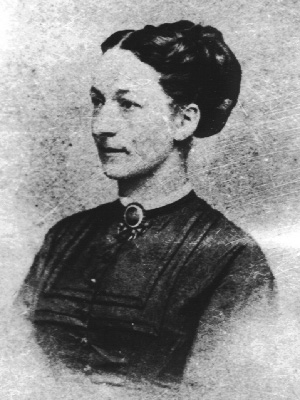
    Below are photographs of Maria as a young woman and as an older woman in a similar pose.

    William was by trade a painter—“maler” in his native language. He painted in the Logan Temple when it was under construction. In my Book of Remembrance is a picture of a group of workmen on the Logan Temple, and Grandfather Wilker is in the picture along with some of my other progenitors. My father explained that his father was a sick man with consumption when he came to this country; the altitude was too high, and he died from that disease and also dronsey (dropsey?). (Painters were also subject to lead poisoning and perhaps that was a contributing factor.)

    William died at Paris, Bear Lake, Idaho, on July 14, 1884, less than a year after he came to America. He is buried in the Paris cemetery. His father had died in 1873, and his mother died June 2, 1883, so his parents were both gone when he left Switzerland, but he left two sisters there, Jeanette and Maria Ursula Wilker. I have been told that after William joined the Church, his family disowned him. However, when my father went to Germany on a mission to visit his two aunts for a short while. They were really surprised to see him and were pleased to see the son of their only brother.

    William and Maria had seven children: Maria Emily, Henry William, Albertina Hedwig, Ernest Herman, Frederick Charles, Emma Julia and Frida Alice. Emma Julia died in October 1883, soon after they arrived in Paris. The youngest child, Frida Alice, was born September 26, 1884, about two months after her father’s death in July. Here was my grandmother—a widow in a new country with a different language, with five children to raise and another on the way.

    My father, in writing of his mother, said that she did whatever she could to make ends meet, and with some help from the people she was able to keep them all together until the oldest girl, Emily, got married. Later, his sister Hedwig went to Salt Lake to stay with her. This left just the three boys at home, as Frida Alice had died at the age of five from scarlet fever.

    The Paris Second Ward in which they lived paid for the children’s tuition to the school. Grandmother also attended school to learn English. Frederick Charles went to Germany on a mission. Financing a mission must have been a real challenge. There is a postcard from Germany saying, “I forgot to tell you in the letter about having to have some more money … I hate to keep having to write for money in every letter… If I could write a letter and not have to ask for money every time…”

    Two of Maria’s boys were married on the same day—Frederick Charles to Lillian Hurst and Ernest Herman to Rhoda Wallentine. Grandmother went to the temple in Salt Lake with them and obtained her endowments the same day, June 12, 1908. She was also sealed to her husband that same day with Ernest Herman acting as proxy for his father.

    Daughter Emily’s husband, Julius Billeter, was a professional genealogist working and living in Switzerland, and many names were submitted in grandmother’s name for ordinance work to be done for hers and her husband’s ancestors. Many names of friends were also submitted to the Salt Lake Temple for their work to be done. This was many years before there was a temple in Switzerland, and the people were unable to do the work themselves. Grandmother went to the temple in Salt Lake a number of times to do ordinance work and to have some of her children sealed to her and William. In October 1921, she came to Pocatello on the train; then she and my father went to Salt Lake, also on the train; at this time my father was sealed to his parents.

    I was nine years old when Grandmother died. I was never in her home in Paris, but I do remember occasional visits she made to Pocatello. My sister Lola recalls that one time when Grandmother was visiting in Pocatello, she went to town and brought home a sack of butterscotch wafers for Dad; she had to get some candy “for my baby.” Another time she sent some cookies in a sack, and some bottles of homemade root beer on the train from Montpelier to Pocatello, and both arrived in good condition.

    Maria Kienzli Wlker died January 24, 1930, in Paris, Bear Lake County, Idaho, at the age of eighty-eight. She is buried in the Paris cemetery.

  • Olive Emily Smith

    Olive Emily Smith

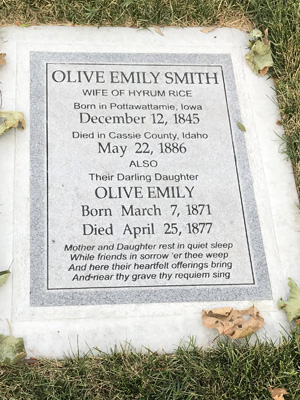
    Olive Emily Smith was born in Lee County, Iowa, on December 12, 1845. Her parents were William Orville Smith and Emily Jane Spinning. They were Utah pioneers. Olive’s father died July 7, 1849, shortly after he had settled his family in Farmington, Utah. She came from a very religious family, and so she may have had something to do with encouraging her husband to be baptized six months after their marriage. She married Hyrum Rice on December 25, 1865, in Salt Lake City, and they made their home in Cache County, Utah, until 1880. Five children were born to them in Farmington, Utah: William Hyrum Rice, Jr., born September 9, 1866; Nathaniel Abel, born July 31, 1869; Olive Emily, born March 7, 1871, died six years later on April 25, 1877, and was buried in Farmington; Mary, born November 7, 1875; and Jerry Mann, born December 6, 1878.

    After Hyrum and Olive Emily moved north to settle on a homestead near Round Mountain, Cassia County, Idaho, two more children were born. One of these children, no sex given, was born in 1880 and died in 1880 or 1881, and Edna Ann was born on March 7, 1883.

    Round Mountain was never a town. When Hyrum owned the ranch that lay east of a very large hill that rises from the flatland floors of the area, it was a way station for travelers from Oregon, California, Idaho, and Utah. By 1884, after the railroad in southern Idaho had been built, this traffic was reduced, and Round Mountain became isolated. Hyrum and his family moved to the nearby town of Almo, where a few families were beginning to settle. They lived on a ranch in what is called “The Cove.” It was located at the mouth of the canyon directly west of Almo and just south of the ranch their son, Nathaniel, bought after he was married.

    Olive Emily’s husband, Hyrum, was usually occupied breaking his colts, for he was a lover of horses, as his father and brothers before him had been. Olive Emily was forty-one years old when an unfortunate accident caused her death. Hyrum had been training a team to drive, and Emily asked that he take her and the children in the family wagon to some neighbors. As they prepared to return home, Hyrum held the horses while Emily climbed into the back of the wagon and bent to help the children into the wagon box. A chasing dog frightened the horses, and they lunged forward suddenly. Emily fell from the wagon and suffered a mangled and compound fractured arm. After getting home, Nathaniel rode a horse to Albion for a doctor who traveled the long distance to Almo in a buggy. Help was too late. She died of blood poisoning on May 22, 1886. She was a very lovely lady—good and kind to everyone.

    She was buried on the ranch, but afterward was removed, along with the baby who had been buried in 1880 or 1881, to a burial plot in Farmington, Utah.