Family: Busenbark

  • Mary Busenbark

    Mary Busenbark

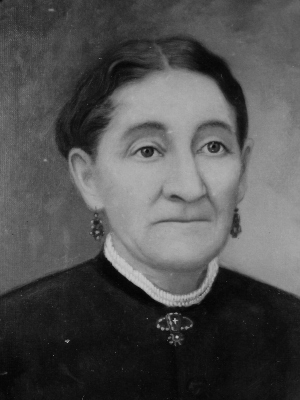
    Mary Busenbark, a younger sister of Louisa, was born on 14 August 1829.  She and her parents and other members of the Busenbark family joined the Latter-day Saints Church in New York State in 1842.  They gave up relatives, money and all they had and went to Nauvoo, Illinois.  Mary went to work for different families to support herself and her younger sisters.  She came across the plains as hired help to a family and it was 1849 before she and her parents got to Salt Lake Valley. 

    Asaph and Louisa lived in Farmington until about 1852. Asaph then married Louisa’s sister Mary as his second wife and they all moved to North Ogden to live.  The Busenbarks and this branch of the Rices always found their paths following side by side.  Mary enjoyed the companionship of Louisa and her mother and father in all her pioneer ventures.

    Mary’s children born in Salt Lake City, North Ogden, Farmington and Providence, Utah.  Their days in Providence were hard and at times dangerous.  Their first homes were in fort formation and the men and boys took turns standing guard at night that they might never be taken by surprise by Indians.  They made friends with the Indians who did less damage than was done in many other settlements. 

    Mary belonged to the first Relief Society in Providence.  She was always a faithful Latter-day Saint.  She and Louisa could have rebelled when a new and seemingly unnecessary call came for another journey to a far away place needing settlers, but it did not enter their loyal hearts to do so.  Mary buried a wee daughter September 1865, in Providence and soon was told of the proposed journey.  To this family, no sacrifice was too great—if Brother Brigham called, they responded. 

    They met Brother Brigham in Salt Lake while on their way to the land of Utah’s Dixie and he asked where they were going.  When told, Brother Brigham said he did not make such a call of Asaph—that a mistake had been made and he need not go so far away.  However, Asaph had sold all he owned and felt they had just as well go on, inasmuch as they were now a part of a sixty-wagon train headed to what proved to be “No Man’s Land.”  But be it known, it was not Brigham Young’s mistake as many of his sons and families grew up thinking.  No woman was ever more dutiful to the man she had wed than Mary Busenbark Rice.  Few are like her in this day and age.  Mary Busenbark Rice departed this life on 18 December 1888.
  • Louisa Busenbark

    Louisa Busenbark

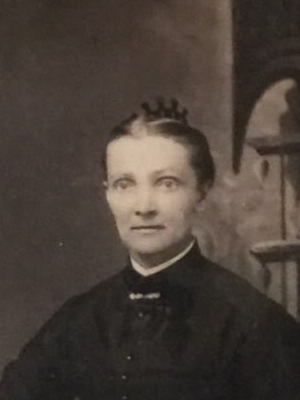
    Louisa Busenbark, born on 25 May 1827, was a daughter of Isaac Busenbark and Abigail Manning.  She came from German Jewish descent.  Her people were well-to-do in New York, but they lost everything—friends, relatives, and money—when her father’s family joined the Church of Jesus Christ of Latter-day Saints. 

    Louisa was part of a large company of emigrants that reached the Salt Lake Valley in 1847.  She came in company with her sister, Sarah Jane Busenbark Hall.  Some where along the way, she married Edwin Calkins who enlisted in the Mormon Battalion, and was killed by Indians on his way home after he was released from service. 

    After her marriage to Asaph Rice in 1850, she and Asaph lived in Farmington, Utah, where some of their children were born.  After Asaph’s marriage to Louisa’s sister Mary Busenbark in 1852, they all moved to North Ogden for a few years.   They were among the first families in that locality.  Louisa saw the Rice men folk help dig ditches, build the first meeting house in North Ogden, and went through real Indian problems brought on by a foolish white man.   

    Louisa and her children were hustled down south when Johnston’s Army came into Utah.  She lived in a wagon box all summer while the men cleared land, cut ditches, and planted crops.  Then all hands set out together to cut trees and build log cabins in a fort formation as a protection from the Indians. 

    Ten years later she was in another moving project–this time to St. George or Utah’s Dixie Land.  In this day Louisa would have refused to move again, but she made no complaints.  She was in a wagon train that numbered sixty wagons.  Slowly and warily, they all went until they finally landed in Panaca, Nevada.  Here Louisa Busenbark Calkins Rice died on 3 May 1885.  She was buried beside her husband and was followed by her sister, his second wife. 

    Louisa never saw an electric light or a washing machine of any kind.  She seldom rode in a carriage and never dreamed of a horseless carriage or an electric iron.  If she could visit some of her granddaughters now, she would marvel at the life of common housewives today.  And she would weep to find so many of them lukewarm in the Church of Jesus Christ for which she gave up so much just to be counted among the Children of God.