Family: Wheeler

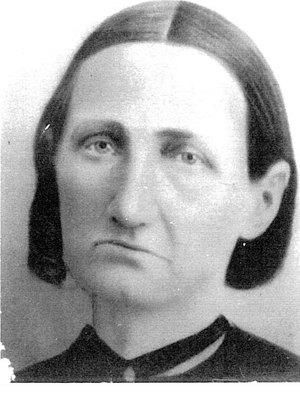
  • Sylvia Desire Wheeler

    Sylvia Desire Wheeler

    Sylvia Desire Wheeler was born in Portage, Ohio, on April 17, 1821. When she was 17 years old she went west to Fort Leavenworth, Missouri to be with other members of The Church of Jesus Christ of Latter-day Saints. While there, she was married to Ransom Asa Beecher on November 22, 1838, by Mr. Grooves. Sylvia and Ransom had twelve children (including two sets of twins), eight boys and four girls. All but three of them grew to maturity and were married.

    The Beechers moved next to Nauvoo, Illinois, where their first three children were born. They were living there when the Saints were being so badly treated by mobs and “Mormon-haters.” Sylvia endured many trials and hardships and remained strong, faithful, and devoted to the cause of Truth. She dearly loved and supported the Prophet Joseph, in whom she had great faith. On one occasion when she was ill and in bed, the Prophet was also ill. Sylvia sent her apron to him to be blessed. He blessed it and sent it back to her with the promise that she would recover. She wrapped it around her head and was instantly healed.

    Sylvia was in Nauvoo during the period of mobbing and fighting. She saw cannonballs roll down the streets and at one time a mob came to her home and commanded her family to leave the city. Ransom was ill with malaria at the time. When the mob was informed of this they withdrew and the Beechers were permitted to remain in Nauvoo until after the martyrdom of Joseph and Hyrum Smith. Sylvia recounted on the night the Prophet was murdered she could not sleep. She knew something horrible was happening. She was so nervous that she walked the floor and wrung her hands. When she was informed of the terrible deed she was not surprised.

    Shortly after this incident the Beechers left Nauvoo and crossed the Mississippi River with their little family and belongings. Sylvia was worn out from worry and overwork so they sought refuge for the night under humble and uncomfortable conditions — whether in a tent or a hut is not certain. Her makeshift bed provided inadequate comfort to her and in these circumstances, she gave birth to twin girls. Ransom delivered the babies with the assistance of Sylvia’s married sister, Ursula. The twins lived, notwithstanding the fact that they were two months premature. They were so small a teacup could cover their heads and rest on their shoulders. Ironically, these girls each weighed over 200 pounds as adults.

    The Beechers resided in Illinois and surrounding states (including Wisconsin) until 1853, when they migrated west to Salt Lake City, Utah. Two more children were born to them when they lived in Wisconsin. They traveled across the Plains in a company of Saints in a wagon drawn by three yokes of steers and cows.

    They lived in Salt Lake four years worked for President Brigham Young as a carpenter. Twin boys were born to the Beechers during this period. Wages were low and there was little employment in Salt Lake, so in 1859 Ransom and Sarah moved to Willard, Utah, known then as Willow Creek, where Ransom established a sawmill and purchased a few sheep.

    Sylvia had a difficult time managing for her family, as there was little income to meet the needs of her family and regular visitors and she had little help. She cared for the little home, made clothing from the wool their sheep provided and assumed responsibility for the guidance of the children.

    The Beechers lived in Utah until 1872, when they moved to Elba, Idaho. Until the Post Office was established, the new settlement was called Beecherville. In this new land, they were once again pioneers, as there were only four families in the entire valley. Times were difficult and they had to haul everything they purchased from Kelton or other distant places. The country was wild and there was little government protection from marauding Indians. Often bands of roving Indians would call at the Beecher home. At other times the settlers gathered at the community center (log cabin) in fear of an Indian attack.

    The Beecher children married and chose homesteads in the valley. Eventually, all of Sarah’s living children, with the exception of William and Lovisa, were living in Cassia Creek, Idaho. She acted as a midwife in bringing many of her grandchildren in this world and she seldom had the help of a doctor.

    Sarah’s life was full of hardships, trials, and overwork. She was delivered from these when she passed away on March 9, 1877, at the age of 56.
  • Ransom Asa Beecher

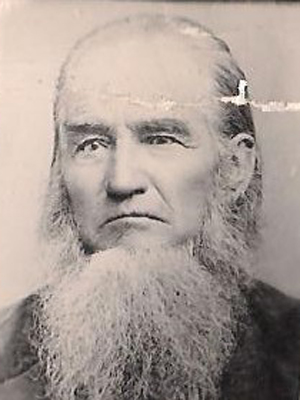
    Ransom Asa Beecher

    Ransom Asa Beecher, son of Lyman Beecher and Sally Wheeler, was born at West Haven, Connecticut on December 10, 1813. When Ransom was about a year old his parents moved west to Vienna, Ohio. They must have joined in the westward movement following the War of 1812. Little is known of Ransom’s youth, but we do know that the family remained in Vienna, Ohio until at least 1832.

    The next we learn of Ransom was when he married Sylvia Desire Wheeler on March 22, 1828, at Fort Leavenworth, Missouri. It appears that Sylvia joined The Church of Jesus Christ of Latter-day Saints and was living with the Saints there at that time. Ransom probably joined the Church about that time, as they moved to Nauvoo, Illinois, where they remained until after the martyrdom of the Prophet Joseph Smith. As a child, I remember hearing him tell of the war in Nauvoo: “A group of Saints was by the schoolhouse under rifle fire. One of them stepped out into the open and was shot. I peeked around the corner of the building and saw two men’s heads above the grass. I aimed my rifle at one of the heads and fired.” When I asked if he hit the man he said, “I did not wait to see.”

    Ransom and Sylvia were forced out of Nauvoo and went across the Mississippi River. They camped there and Sylvia gave birth to twin girls, Lovina and Lovisa. The Beechers remained in the Midwest until 1853, moving as necessity demanded, including to Wisconsin, where their son Reuben was born on October 31, 1851.

    In 1853 they migrated west to Salt Lake City, Utah with a wagon train of fellow Mormons. The family lived in Salt Lake four years, during which time Ransom worked as a cabinetmaker for President Brigham Young. Ransom was a very independent soul and he became dissatisfied with cabinetmaking. He left Salt Lake and moved his family to Willow Creek, Utah (present-day Willard, Utah).

    Life in Willow Creek was difficult for the family as Ransom was restless and venturesome. He took several hunting trips into the lesser-known surrounding wilderness areas. He took some of his sons to the Bear River (Idaho) country, but no definite record of this venture was kept, so details remain dim. His prowess as a hunter was greatly recognized—the Indians called him “Bear Dog” because he seemed to have no fear and loved the new country.

    This venturesome spirit finally took the Beechers to Cassia Creek, a tributary of the Raft River. The new valley was beautiful, with game on every hill and the streams well stocked with trout. Ransom located his family on a homestead at the Narrows and several of his sons and daughters married and likewise filed on homesteads in the valley. The Beechers owned most of the creek bottomland in the valley. They were without question pioneers—the log cabins had dirt floors and dirt roofs. During the winter the floors were covered with straw to help protect bare feet from the cold earth. Cooking was done over an open fire in a fireplace. A small flock of sheep furnished wool for clothing. To make matters worse, Indian scares were frequent, as Chief Pocatello and his people roamed the territory.

    Sylvia, the wife, and mother of 12 children, died March 9, 1877, leaving two boys at home—Orval (17) and Merritt (13). Ransom’s wanderlust was sated and from that time on he concentrated on his children and grandchildren. He maintained his residence in the little log cabin until his death on December 23, 1904. All his children married and Merritt built a fine brick house on the old homestead. He tried to get his grandfather to live with him, but Ransom declined, preferring to live by himself and enjoy the fireplace in his log cabin.

    Ransom was a hardy pioneer—rough, rugged, independent and gruff. He asked few favors, yet he was ever anxious to help others. He was skilled as a workman and there was nothing he would not try to do. He lived a long life and the kind of life that was necessary to prepare a new land for the future. He was a small man about 5 feet 5 inches and weighed about 80 pounds when he was 18 years old. It is doubtful that he ever weighed over 125 pounds. He wore a beard and was very independent in his habits. He certainly would have been at home with the great pioneers of the west. He died December 23, 1904, and was buried in the Willard City cemetery.