We realize that “so much of our future lies in preserving our past.” Our purpose is to promote the memories of Virden and the people that were part of this special place.
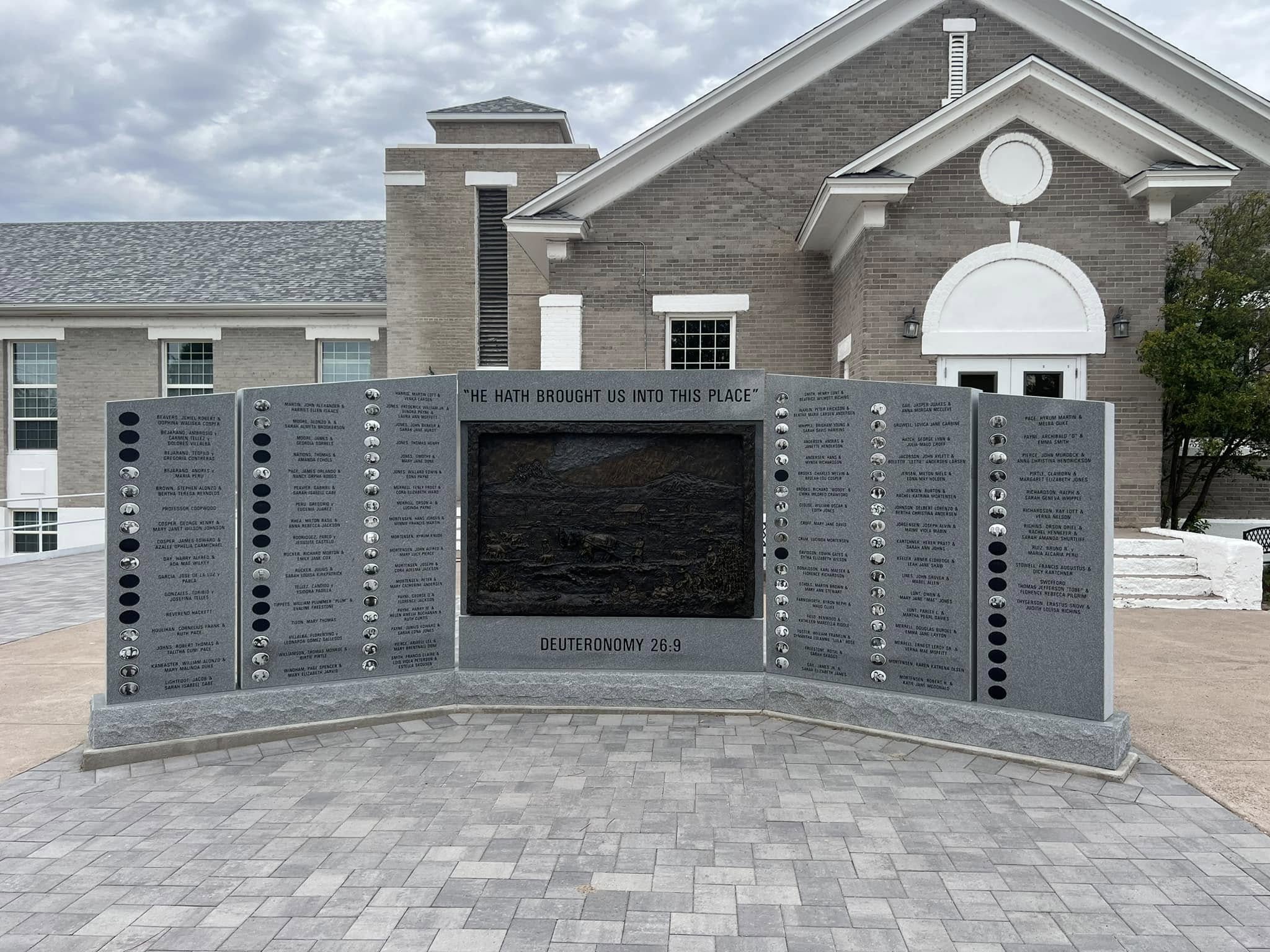
In July 2024, the Virden Historical Society held a Legacy Celebration and unveiled a monument celebrating its one hundredth anniversary.
The Virden Community Center with the 2024 Legacy Monument in the foreground. Photo from the Virden Historical Society.
2024 Legacy Celebration videos:
Virden Ward 100 Year Celebration 2016A brief history of the settlement of the Virden Valley
Virden LDS Ward Chapel in Virden, New Mexico, 1933.
Virden is a small village in northern Hidalgo County, New Mexico, on the north bank of the Gila River.
White settlers also began arriving in the valley during the 1870s. All of these earliest arrivals, both Hispanic and Anglo, were brave men and women, as the surrounding areas were still intermittently occupied by native Apache warriors, and confrontations were not unusual. Some families homesteaded and established farms along the river, while others developed ranches by accessing sections of the river and springs in the surrounding canyons and hills.
A Methodist church, also used as a school, was built on 40 acres of land donated by A.C. Windham, an early rancher in the area. Reverend Hackett, the Methodist minister, was also the school teacher. Those 40 acres became the future townsite of Richmond and what is now Virden. The Richmond name was a nod to the Richmond Mining Company, which had mining interests in the surrounding hills, particularly north of the Gila River Valley.
In 1910, Mormon colonists living in the Mexican states of Chihuahua and Sonora found themselves caught in the middle of the battles of the Mexican Revolution, and soon found it necessary to relocate to the United States for safety. Those refugees temporarily settled in communities along the border, but yearned for the culture and lifestyle of the colonies they were forced to leave behind in Mexico. One group became aware of a tract of more than 800 acres of land for sale by the Gila Ranch Company near Richmond, New Mexico. Representatives were sent to investigate the area along the Gila River, and they returned with a positive recommendation.
Twenty-one families formed the “New” Gila Ranch Company and negotiated the purchase of the land. Each family was to receive farmland and a home site. Parcels were numbered, and each family drew from a hat to see which lot would be theirs, and what their annual payment would be. The purchase price of the 800 acres was $50,000 to be paid as $5,000 down and $5,000 a year at 7% interest per annum on the unpaid balance for the next 9 years. Most of the families in the consortium had to borrow money for the down payment because they had been forced to abandon their homes and investments in Mexico.
Officers for the “New” Gila Ranch Company collected the payments from each family each year and sent them to Mr. Earnest W. Virden, the banking representative for the sellers. Faith in themselves and each other was essential in this arrangement. Each family had to make its annual payment, or the entire 800 acres would become subject to foreclosure. The arrangement fostered tremendous unity, trust, and cooperation in the village as they worked together to meet the annual obligation.
The final payment for the 800-acre purchase was made to Mr. Virden on February 24th, 1924. The people of Richmond decided to change the name of the village to Virden to honor the kindness and fairness shown by Mr. Virden to the “New” Gila Ranch Company consortium during the 10-year contract. Virden, New Mexico, was officially established in 1924.
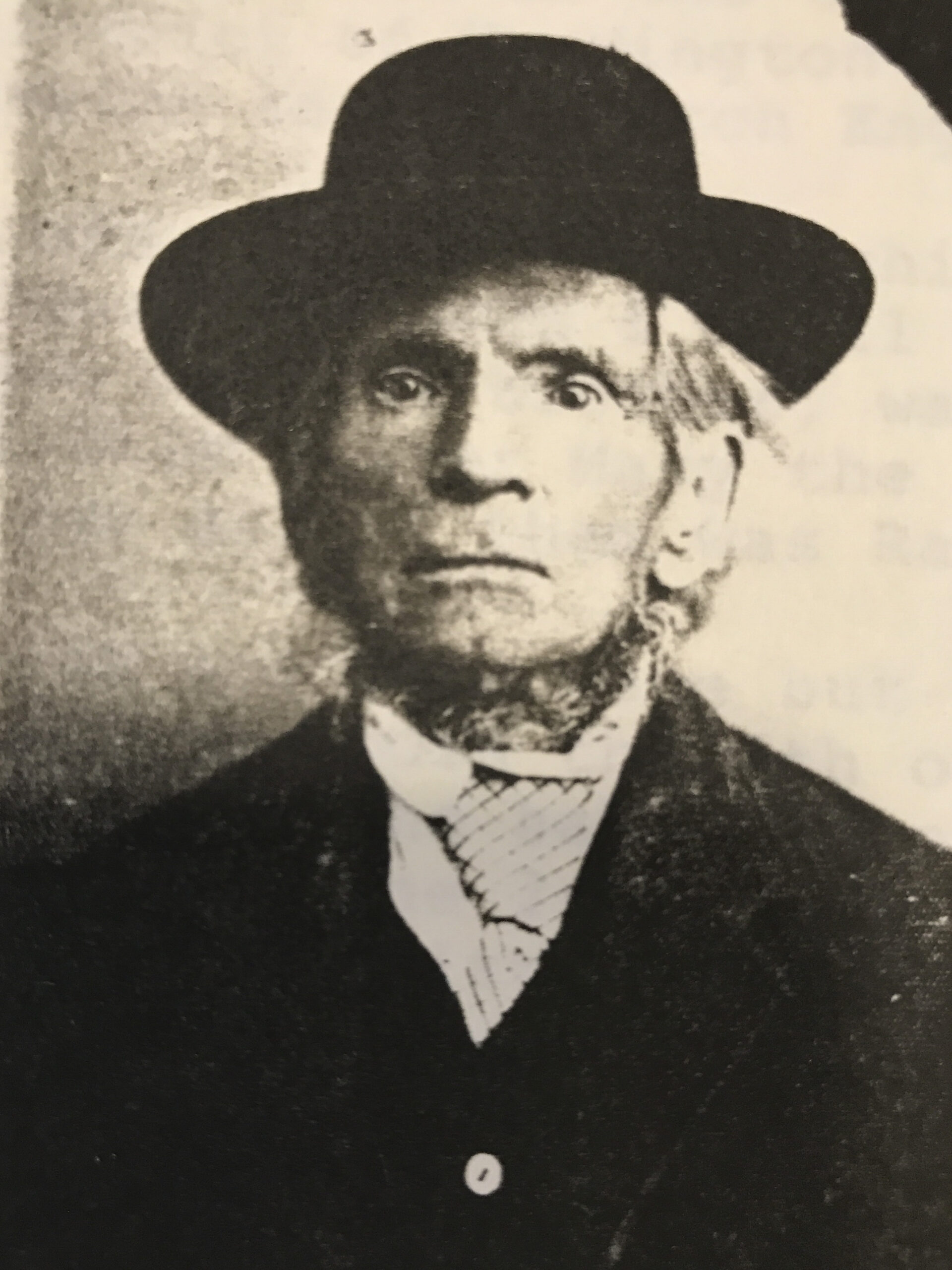
John Warburton Jr was the fourth child born to parents John Warburton Sr and Elizabeth Alsted or Halsted. His birth took place on 16 Jun 1825 in the parish of Radcliffe, Lancashire, England. He had two older brothers, William born 6 April 1810 and Edward born 28 Feb 1815, and an older sister, Mary who was born 12 Feb 1820. His father, John Sr, worked in a mill as a weaver.
When John was two years old his mother died on 7 Aug 1827 while giving birth to a baby girl named Elizabeth. Six weeks later, on 24 Sep 1827, the baby died. Four years after that, his father married the widow of his cousin, Abner Warburton. Her name was Sarah and she gave birth to a son named Joseph on 21 Sep 1831. Family tradition has it that the children did not get along well with their stepmother.
In about 1832, John’s oldest brother, William, married Jane Allan, and in about 1835 his brother, Edward, married Betty Barlow. They both moved to the city of Todmorden where they found work in the mills. After that, John and Mary spent much of their time in their older brother’s homes. Then in 1843, Mary married John Pemberton. John found work in the mills as a ‘corder’ and often stayed with either Edward or Mary.
The city of Todmorden was the largest city near Hebden Bridge Church and was located on the border of Lancashire and Yorkshire. It was noted for its large mills and was called the ‘Valley of the Foxmere’. The lake connected to the Calder River and separated the two counties. On the Yorkshire side of the river was the Church of Halifax, the city of Walsden, and part of the township of Todmorden. The population in the year 1821 was fourteen thousand. The cities in this area were all large manufacturing centers. Stanfield and Langfield were in Yorkshire County and were noted for the manufacture of calico, fustian, denim, sateen, and velvet. The mills were worked by water power and the location was easily navigable, through the canals, from either the east or west oceans. There was also a railroad from Manchester to Leeds that passed through Todmorden and to the south of Burnley. Burnley had one of the largest mills in the county of Lancashire. Many people came to the fairs that were held there to sell wares of manufactured goods. They would come from all over England, especially at Easter time and in the Fall of the year.
John spent a lot of his time in Halifax and it was there that he met Betty Sunderland who had also been born in 1825. She was the daughter of William Sunderland and Mary Law. At the time they met, she was working as a ‘spinner’ in a mill. It was also in Halifax where John came in contact with Mormon Elders and became interested in their teachings. He and Betty then spent all of their spare time listening to the missionaries. Betty’s father had passed away previously but, her mother was a strong member of the ‘Church of Friends’, a branch broken off from the ‘Church of England’. She would have no part of ‘Mormonism’ and was very critical of her daughter’s interest in this new religion. Note: As of the current date, 2002, there has not been a record found of Betty having siblings.
John and Betty’s friendship grew into love and, as they were both of adult age, twenty-one, they did not need the consent of their parents to marry. They published their intentions through banns and their marriage was solemnized on 27 Sep 1846 in ‘The Church of St James’, Parish of Halifax, County of Yorkshire. It was witnessed by John Clarkson and John Hartley who, were friends from the Mormon Church and also workers in the mills. Their marriage certificate gives the following information: John Warburton, age 21, bachelor, occupation ‘corder’, residence ‘Charlestown in Stansfield’, father’s name ‘John Warburton,’ occupation of father ‘spinner’; Betty Sunderland, age 21, spinster, occupation ‘spinner,’ residence ‘Callis in Sowerby Ramble’, father’s name ‘William Sunderland’ (deceased), occupation of father‘weaver’. They both signed their names with an ‘X’ indicating that they were illiterate.
It was almost three years before John and Betty had a child. Their son Edward was born on 5 May 1849 in Hebden Bridge, Yorkshire and they named him Edward after John’s favorite brother, Edward. On the birth certificate their residence is listed as Charlestown, Stanfield, and John’s occupation is a ‘labourer.’ The birth certificate was signed by Betty with an ‘X’. Because of Betty’s mother’s feelings, they took their baby to the ‘Church of Friends’ to have him christened. The fee was sixpence. Note: Apparently, Betty either had difficulty in becoming pregnant or in carrying her babies to term because it was almost three years after her marriage before Edward was born and he was six years old when she died from complications of a miscarriage.
Charlestown, Stansfield, Yorkshire is located on the edge of a little gulf, with the Irish Sea on the West and Scotland on the North. The main part of the town has an old abandoned castle that has been converted into a beautiful summer resort. It was owned by Alexander Sunderland, an Earl to King James III of the 16th century, and is called Sunderland Heights. The city business district is located four miles east from where the Warburton family made their home.
John’s brother, Edward, and his sister, Mary, were supportive of both his marriage and his interest in the Mormon Church and it was through them that he learned about the death of his father, John Warburton Sr, on 19 Apr 1851. His stepmother had passed away previously on 25 Dec 1850. They also learned, at that time, that John’s half-brother, Joseph, had been baptized into the Mormon Church on 26 Oct 1851. Note: Joseph Warburton emigrated in May 1856 and eventually ended up in Salt Lake, Utah where he has a large posterity living today.
John and Betty probably delayed their baptisms, as long as they did, because of Betty’s mother’s attitude. However, in April 1854, on a bright spring day, they were baptized by Elder John Clarkson and confirmed by Elder John Hartley, both of whom had also witnessed their marriage.
After they joined the Church, John and Betty started making plans to gather with the Saints in Zion. In January 1856 the Warburtons left Charlestown traveling on a cargo ship through the canals of Lancashire and into the Irish Sea. Their plans were to sail to Liverpool where they would join with a group of Saints that were then sailing to America. Betty was expecting a baby and on the 2nd day of their journey, as they were going through ‘The Channel’, she became ill. Unable to obtain medical help, she passed away from complications of her pregnancy. Because the ship was then far out at sea, she was wrapped in canvas and lowered into the waters. John and Teddy were devastated and never forgot the sight of their beloved wife and mother being buried in the Irish Sea. Before she died, Betty made John promise that he would continue on to Zion.
Two days later, when they arrived in Liverpool, John discovered that the ship they were supposed to have sailed on had departed the day before. He was in despair until, by chance, he ran into their old friends Elders Clarkson and Hartley. They were saddened to hear the news of Betty’s death and did what they could to comfort John and Teddy. The two Elders had been assigned by the Church to arrange for a ship for missionaries that were returning home and, they were able to find room on it for John and his son. Two days later, they boarded the ship ‘Independence’ with church leaders and missionaries that were returning to America. Note: This is the reason John and Edward Warburton are not found in the Church Immigration Index.
It was the end of February in 1856 when the ship ‘Independence’ docked in New York. John and his son stayed close by the Church and John was able to find some work that helped to care for their needs. A few months later, with another group of Saints, they boarded the Rock Island Railroad in New York and took the North Western route through Chicago to Iowa City. There were coach cars on the train but the Mormon immigrants rode in cattle cars.
When they reached Iowa City, the Warburtons found friends, both old and new, from England. They joined with the Edmund Ellsworth Handcart Company and on 9th June 1856 started across the plains. Their experiences in crossing the American Plains are chronicled in the story “They Crossed the Plains with a Handcart” written by Laural Bushman, 2002.
Utah
The Edmund Ellsworth Handcart Company arrived in Salt Lake Valley on the 26th of Sept 1856. It had been almost nine months since John and Teddy, who was now 7 years old, had left their home in England and buried their beloved Betty in the Irish Sea. On the trip across the plains, they had made special friends with the Thomas Richins family which included Thomas and Harriet Richins, their infant son, Albert, and Harriet’s father, John Deveraux. John Deveraux had also buried his wife in the sea. Harriet was especially kind to Teddy and he enjoyed playing with little Albert. After reaching Salt Lake, the Richins family found a little one-room dugout to live in and the Warburtons stayed with them just long enough to help build on a room and a lean-to. Thomas’ brother and his wife and baby were following in the Willie Handcart Company and would need a place to live when they arrived.
It must have been lonely and bittersweet for John and Teddy to finally reach Zion but without Betty. They stayed in Salt Lake until the following March when President Young issued John a quarter section of land in the northeast part of Battle Creek, now known as Pleasant Grove and Manila. By that time, they had been able to obtain a wagon, some horses and a few head of livestock. After stopping in Lehi and American Fork to visit friends, they settled in Battle Creek where John built a little adobe house in the fort. John Warburton was not large in stature but was a healthy strong man with a great will to work. He farmed for a time, as well as, worked as a blacksmith and wheelwright.
When Ted was fifteen years old, John married a woman named Sarah Williams Green on 24 Jan 1864 in Battle Creek. Sarah had been born in about 1829 to parents Thomas Williams and Elizabeth Vauhn in England. She had left her husband, Mr. Green, in England and immigrated alone with her three children Saddie, Sarah, and Thomas. Her son Thomas died shortly after she married John. To John and Sarah there were three children born; Elizabeth on 19 Jul 1865, James Thomas on 22 Jan 1870, and Abraham on 1 Mar 1871.
According to family tradition, Sarah was resentful and hard on Ted and after they were married he spent much of his time in the homes of friends. The Thomas Richins family had since moved to Battle Creek and their son Albert and Ted Warburton were best friends.
John had a special love for his oldest son and was very saddened by Sarah’s attitude towards him. When Ted was 25 years old John, without Sarah’s knowledge, gave him his quarter section of land. John then made his living as a blacksmith and wheelwright but, as more of this kind of material became available from other places the business became slow. As he grew older and his health declined he took up the trade of a watch and clock repairman.
On Valentine’s Day in 1876, Edward (Ted) Warburton married Alice Mirentha Richins in the Salt Lake Endowment House. She was the oldest daughter of Thomas and Harriet Richins, whom the Warburtons had crossed the plains with. When they returned home from their honeymoon, they found that John had secured a larger house for his family and fixed up his small adobe one for them. The 1880 Federal Census record gives the following information about John’s family: John Warburton, age 56, birthplace England, occupation laborer; Sarah Warburton, 51, birthplace England, keeping house; Elizabeth 14, James 10, and Abraham, 9.
John and Sarah’s children grew up, married, and moved away. Elizabeth married Albert Drounds and lived in Salt Lake. James Thomas married Flours Foutz and they both died a few years later leaving a small daughter. Abraham married Anna Hey and they made their home in Roosevelt, Duchesne County.
John’s health became poor and on 19 May 1896, at age 73, he passed away and was buried in the Pleasant Grove Cemetery. All his children and grandchildren loved this kind and thoughtful man very much and missed him greatly.
John Warburton was one of Christ’s sheep that recognized His voice and the truthfulness of the Gospel when he heard it. He embraced it and lived it until his time on earth was finished. He bore his trials and tribulations with patience and endured to the end. Betty Sunderland sacrificed everything she had for the Gospel of Jesus Christ. She not only gave up her home, family, and native land but, she paid the ultimate price and gave her life.
John and Betty Warburton left a name and a legacy that their posterity can be very proud of. It is my honor to pay tribute to these two great people.
Note: After John’s death, Sarah sold their home and spent her remaining years with her children. She passed away at the home of her daughter Elizabeth on 5 Aug 1905 and was buried next to John in the Pleasant Grove Cemetery. For reasons not known, a grave marker had never been put on John and Sarah’s graves. This oversight was corrected when an engraved stone was put in place on 10 July 1999 by the grandchildren of Edward’s daughter, Clyde Harriet Warburton Carlson. John Warburton was a handcart pioneer and a great man. It is only right that he remembered with honor.
Bibliography
Proctor, Eva Mirentha Warburton, Life Story of Edward Warburton, unpublished, no date.
Proctor, Eva Mirentha Warburton, The Life Sketch of John Warburton and Betty Sunderland and their son Edward Warburton, unpublished, no date.
Based on the lives of Orson James Richins and Mary Emma (Richins) Patten
Mary tucked the children in bed and sighed. It had been a hard year. A year ago, they had moved to Arizona by horse and wagon. The journey was hard enough with the small children, but a wrong turn out of Las Vegas had turned the 6-week journey into three months. Long days of traveling and food shortages had tested their young family. Mary had done her best to feed her family with rabbits from the desert, dutch oven biscuits and watery gravy, but by the end, food was extremely scarce. Even a puddle of water left by the rain was considered a gift.
Mary had not complained during the journey, and not even her family had known that she had endured all these trials while expecting their next baby, who arrived a few months after moving to Duncan, Arizona. Her husband, Cohn, had returned to Mesa to retrieve some of their belongings. Mary smiled to herself as she remembered her brother, Orson James, coming to get her when she had arrived in Hachita, New Mexico. Orson had arrived in a buggy to move Mary and the children and he was a sight for sore eyes.
Orson was only a few months older than Mary, and when Mary’s own mother had passed on, Orson’s mother took the children in to raise as her own. Orson and Mary had become close since they were so near in age, and others often mistook them for twins because they were together so much. Mary always thought of Orson as her guardian angel, and once again, Orson was rescuing her. As a child, she had fallen into a tank of water and Orson had pulled her out. Another time she had fallen into a barrel half full of swill, and it was Orson who had rescued her.
It was there in Orson and Edna’s home that little Lurline was born, a darling little red-haired baby girl. Mary stroked the hair of her other four daughters, Maybeth, Nelda, Thelma and June, and her only son, L.A. – short for Lachoneus. How sweet they looked as they lay there, trying hard to go to sleep. Mary had told them to go to bed early so Santa could come. They had dressed excitedly in their nightclothes and piled into bed. Mary sighed again. She hoped she had not built up the excitement for Christmas too much, knowing how very little she had to offer her children. Mary could endure many hardships herself, but it was much harder to watch her children suffer.
A loud knock at the door startled them all. The children sat up tall, anxiously looking at the door.
“Alright there, hush now. I wonder who’s at the door.” Mary walked quickly to the door, just as curious as the children.
“Ho Ho Ho! Merry Christmas!” came Santa’s jolly cry. Santa walked in with a pack slung over his back.
Mary gasped in surprise and put a hand over her mouth in delight as she recognized dear Orson who resembled Santa Claus. The children’s reactions were even better. Little LA was jumping on the bed, squealing in delight, and June had run to Santa and thrown her arms around his legs with Thelma not far behind. Nelda and Maybeth grinned from ear to ear, their eyes locked on Santa’s bulging bag slung over his back.
“Have you been good little girls and boy?” Santa asked with a cheerful smile.
“Oh yes!” they all replied in unison.
Mary smiled, tears slipping down her cheeks, which she hurriedly wiped away. Santa winked at Mary and focused his attention on the children.
“I am glad to hear it,” Santa said, as he pulled out a gift and handed it to Thelma. “This is for you.” Santa continued to pull out a small gift and hand it to each child, tousling each one’s hair or giving them a hug.
“Here’s some candy Mrs. Claus made for you, too. Put the gifts under the tree and you can open your gift and eat your candy tomorrow. And if you go back to bed, I will be back to leave more toys.”
The children scurried to place their gifts under the tree and get back in their beds.
Mary smiled gratefully at Orson. He had figuratively pulled her out of the water tank again tonight.
Maybeth pushed the curtain aside and peeked out the window. “He is riding away on a big white horse.” Mary guided her back to her bed and tucked her in once more with a kiss on the cheek.
As part of tradition, on Christmas morning, the children woke early with excitement to see what Santa had left for them. And following tradition, Mary said, “Let me light the fire in the heater and I will peek to see if Santa has been here.” The heater had been prepared with paper and wood ready to light. Mary would tiptoe into the room with the tree and say in surprise, “Santa has been here. You can get up now.” Then Mary looked for each child’s gift. “Oh look what Santa brought L.A.”
When each of the children had opened their gifts and eaten their candy, Mary gathered her children around her. “It wasn’t easy for Santa to come see you last night. He had to cross the swollen Gila River to get to our house, but he did it for you.”
The children all agreed that Santa’s visit was the highlight of their Christmas. Mary agreed, but she knew it was her guardian angel’s visit that had been the highlight of her Christmas.
Joseph Oriel strutted down the road in front of the building they used as the church house, school house and dance hall. His hat was cocked on the side of his head, a smug grin on his face.
“Joseph Oriel thinks he owns the ground he walks on. I hate him,” Lodema exclaimed to her friends, Mitt and Maud, who just laughed. “C’mon, we’ll go around him. I can’t stand him.” Thirteen-year-old Lodema dragged her friends around the block in an effort to avoid Joseph Oriel.
“I don’t understand why we have to walk a block out of our way just to avoid that boy,” whined Maud.
“I do it all the time. I don’t want anything to do with him. He’s so proud and stuck on himself,” Lodema protested as she walked faster, carrying her ahead of the other two girls.
“Well, we need to hurry so we can finish planning the surprise for your brother, Elmer, and we’re going the long way around,” Maud said heatedly.
Lodema turned to face her friends, but continued walking. “We’ll still have plenty of time. This detour isn’t going to take that long –” Lodema stopped abruptly when she collided into something or rather, someone. The look on Maud’s face warned Lodema and she turned slowly to face her collision.
Joseph Oriel had reached out to grab Lodema when she collided into him. He was a good six inches taller than her and he smiled. Lodema looked up into the face of someone she had sworn to hate, but with his hands on her arms steadying her, the light shining on him just so changed something within her. Lodema tried to remember why she hated him but she came up blank.
Joseph Oriel reached up and pulled the hat off his head. “Lodema, I was hoping I’d run into you today.”
Lodema’s heart started beating a little faster. Had Joseph Oriel always been that handsome, or was it the light shining on him just now?
“I was wondering if you would like to go with me to Elmer’s surprise party.”
Lodema blushed. “Sure, I would love to.”
“I’ll see you, Lodema.” Joseph Oriel walked away, whistling a saucy tune.
Lodema turned slowly to face her friends who stood staring, their mouths open. Mitt came to her senses first. “I guess this means that you don’t hate him anymore,” she said smugly and Maud giggled. Lodema would forever remember March 13th. It was the day her brain figured out that she didn’t hate Joseph Oriel.
Over the next four years, Joseph Oriel and Lodema went out together off and on, much to the disapproval of her mother.
“Lodema, I think you’ve been seeing too much of that Richins boy. You’re too young,” Mother would say. “I don’t want you going out with him tonight.”
“Mother, I’m not going with Joseph Oriel tonight. I’m going with Nels,” Lodema said as she kissed her mother’s cheek. Lodema pinched her cheeks just as a knock sounded at the door from Nels.
Lodema walked with Nels to the dance hall where they met up with Maud and Joseph Oriel. They promptly traded partners – Maud’s mother hadn’t wanted her to go with Nels, so it worked out for both couples.
One night, after walking Lodema home, Joseph Oriel held her hands and said huskily, “I don’t know how to break this to you, so I’m just going to tell you. I’m moving to Mesa, Arizona for school. I’m going to stay with my aunt there. Will you write to me, Lodema?” Lodema blushed and nodded shyly.
But two weeks later, Lodema still hadn’t received a letter from him. Joseph Oriel thought she would write first and Lodema thought he would write first. Joseph Oriel wrote a letter to Agnes and asked many questions about Lodema and what she was doing and requested that she ask Lodema to write to him. Lodema laughed when Agnes told her, but still she didn’t write to him. When Agnes reported back everything that Lodema was doing, Joseph Oriel quickly remedied the letter situation. He wrote to her three letters a week for the rest of the year he was gone. But still Lodema didn’t return his letters. In irritation, Joseph Oriel wrote his step-sister that “Lodema wasn’t the only pebble on the beach,” which of course was reported back to Lodema.
Broken-hearted, Joseph scribbled some words on a scrap of paper and mailed it to Lodema. She opened the mail to read, “’Tis sweet to love, but Oh! Bitter, to love a girl, and then not get her.” Lodema considered writing him, but she had waited too long.
In December, Lodema went to church with Abner Keeler. Abner sat with the choir and Lodema sat with friends. She looked up to see Joseph Oriel walk into the building and sit down with the men. She looked away quickly, but everyone was watching her. Several times during the meeting Lodema stole a glance at Joseph Oriel and found his eyes on her. The hour dragged by and seemed twice as long as normal. When the closing prayer was finally said, she watched Joseph Oriel get up and walk to the door to the ladies’ side to wait for her, as he used to do.
Biting her lip, Lodema sat, thinking furiously. She had come with Abner Keeler. She couldn’t leave without him – could she? She excused herself and left with Abner, refusing to make eye contact with Joseph Oriel. Surely he would understand.
The following day, Joseph Oriel saw Lodema in front of the school house. He walked within a foot of her and passed her, being careful to not even look in her direction, even though he was painfully aware of her every movement. Several more times she found him within a few feet from her, but he didn’t acknowledge her.
Lodema knew she had hurt him by leaving with Abner yesterday, but she held her head high and didn’t let it show.
“Ann.” Lodema’s ears perked up when she heard Joseph Oriels’ voice speaking to her sister. She turned to watch. “I picked this apple from our orchard. I wanted you to have it.” Lodema looked at the biggest, most beautiful apple she had ever seen. She swallowed down the bitter jealousy that threatened to come out and turned on her heel and walked away.
Ann felt bad and gave Lodema a bite of the apple, but Lodema was upset that Joseph Oriel hadn’t given it to her so she could eat the whole apple. That night she let the tears fall, thinking she may have lost Joseph Oriel forever.
On Monday, Lodema was at the ball game with Leslie and Agnes in the buggy. Joseph Oriel strutted by, showing off as much as he could without speaking to her. Lodema felt sick about all of it, but had planned on going to the dance anyway. There was to be a lunch basket auction at the dance as well, and the girls were making baskets together. Boys would place bids on the baskets and “buy” a basket and would eat lunch with the basket’s owner. They drove to Agnes’s home to get cheese for the baskets and Joseph Oriel happened to be at the house.
Finally Joseph Oriel could stand it no longer. He strode over to Lodema and asked if they could talk. Lodema followed him into a separate room. “Lodema, please forgive me for whatever I have done. I haven’t been able to stop thinking about you since I left.”
Lodema nodded and grabbed his hand. “I forgive you, Joseph Oriel. I’ve missed you too.” Joseph Oriel pulled out a watch on a chain. “I got this for you, Lodema. May I?” She turned her back to him and he clasped the chain gently around her neck. Lodema admired the delicate watch. None of her friends had ever received anything half so lovely from a beau. “So I’ll see you at the dance tonight?”
Lodema hid the watch from her mother, afraid that she would make her give it back. That night, everyone wanted to see it. “Lodema, what time is it?” Agnes asked. Lodema laughed and held out the watch so Agnes could see the time.
During the auction, someone tipped Joseph Oriel off as to which basket was hers. Joseph Oriel bid $5 for the basket, because the other boys kept bidding to make him pay, knowing he was desperate to eat with Lodema. They burst into raucous laughter when the owner of the basket proved to be Lodema’s sister, Abby.
Joseph Oriel gritted his teeth and smiled, not wanting to make Abby feel bad. A hand on his shoulder made Joseph Oriel turn to face his friend, Ed Richardson. “I know which basket is Lodema’s.”
“I think you’re a little late to the party. I’ve heard that one before.”
“No wait. If it’s not hers, I’ll pay for the basket. I know Lodema’s basket.” His eyes looked sincere and Joseph Oriel nodded. When Ed gave him the signal, Joseph Oriel bid again. The bidding ran up to $3 before he won the basket. Lodema’s basket had cost him $8 total, but totally worth it. He got to eat with the girl of his dreams.
On March 13, four years to the day after Joseph Oriel asked her out the first time, he braved asking her one more time. This time he had a ring, “Lodema, will you be my wife?” Lodema squealed with joy. She had almost lost him once before because she hadn’t wanted to let him know how she felt. Not this time. She was happy to marry him.
And they lived happily ever after … even though they faced many trials and hardships, because they faced them together.
Rachel looked at the return address on the envelope that came in the mail. “Box B” in Salt Lake City could mean only one thing. She sighed and closed her eyes for a moment, then swallowed down the anxiety and lifted her head toward heaven and nodded. Her 34-year-old husband, Orson Oriel had two families to support. Sadie, Orson’s third wife, lived in town with a little store while Rachel lived on the dairy ranch two and a half miles from town.
When Orson walked into the house that evening, Rachel directed him to the unopened mail. Orson fingered the envelope and shared a glance with Rachel.
“Dated October 1896. Dear Brother Richins. You are hereby called to serve a mission to labor in the Northern States Mission for a period of twenty-seven months.” Orson looked up and caught Rachel’s eye. It was an honor to be called upon to labor as a missionary, but Orson knew it would be difficult to leave two wives and eleven children behind. Sadie could manage the little store in town and Rachel … well Rachel would need to manage the dairy ranch.
With both excitement and dread, Orson made the necessary preparations to set off on his mission. With one last look around the ranch house, Orson spied the almost empty flour barrel and sighed heavily. How could he leave his family with barely enough flour to make a batch of bread?
Rachel sensed his concern and crossed the room toward him, placing her hands on his shoulders. “Don’t worry, dear. The Lord will provide.” Tears came unbidden to his eyes – Rachel was a woman of faith. Her words comforted him. Surely the Lord would bless her faith and his service. Orson was ordained a Seventy by the hand of Apostle George Teasdale on October 30, 1896, and headed to the Northern States with headquarters in Chicago, Illinois.
Orson was often gone from home when he went freighting, so Rachel was used to being alone on the ranch with the children, but that didn’t make it any easier. After all this time on the ranch, she still hadn’t gotten used to the wild animals or the roving Mexicans and they frightened her. Rachel shook her head and her fears and set to work. Evening was drawing near. “Judith, round up the children and bring in the cows, dear. It’s time for the milking.”
Judith and the other children trudged out onto the range to round up the cows. It wasn’t a favorite job, but had to be done. The brush caught at the hem of her skirts, but she pulled it free. The cows didn’t like to be rounded up either, but once you got one or two of them going in the right direction, usually the rest followed. “Hey there, Bessie, let’s get a move on.” Judith slapped one of the cows in the rear and got her headed toward the corral. “Parley, I saw a few cows run off in that direction, can you go after them?”
Seven-year-old Parley nodded and grabbed a piece of long grass to chew on. He headed in the direction Judith had pointed and started walking.
“Did you get all the cows, Judith?” Rachel asked.
“Parley went after the last three. They were headed toward the river.”
Rachel nodded and tucked some stray hair behind her ear. While the children separated the calves from their mothers, Rachel started the long process of milking. The older children would step in to help as well.
Rebecca carried the last steaming jug of milk into the cellar to store. Rachel stood and stretched. Milking twenty-eight cows wasn’t an easy task. Tomorrow she and the girls would churn the milk and make cheese and butter that they could sell in town.
It was dark before Parley returned with the cows, but he had a story to tell. “I was down by the river, rounding up the cows. Some Indians walked by, some men, women and a few small children, one right after the other. So I hid in the brush.” Rachel stilled. The river was five miles away.
Parley continued, “One of the women broke off from the group on the opposite side of the brush from where I was, right where there were hundreds of morning glory growing. She squatted down right there and pretty soon I heard a baby cry. She came out of the brush with her baby and hurried to catch up with the rest of them. I stayed quiet the whole time so they didn’t see me.” Rachel shuddered. This was hard country to live in. She praised God for keeping her babies safe. Even though Parley was Caroline’s, Orson’s second wife who died four years earlier, Rachel loved Parley and his two siblings as though they were her very own.
In the morning, the children and Rachel milked the cows once more, before turning them out of the pen to pasture with their calves. “Mary, go gather the eggs.” Mary grumbled, but did as she was asked.
When the cheese and butter were churned, Rachel took stock. They had enough food to last a few more days. She would have cheese aged by then to take in to sell. Her devoted chickens were good layers and they could sell the eggs, too.
When the cheese, butter, milk and eggs were sold in town, Rachel had money to buy flour and other food and clothes.
A few months later, the evening milking had been done and all the children were in bed asleep. Rachel lay in bed, the covers clenched tightly in her hands. She could hear the roving Mexicans shooting their pistols not far from their ranch. She had heard them for a while now and had seen them earlier in the day. Finally, she threw off the covers and got dressed, calling for the children to do the same and be ready to get in the wagon.
“Mother, where are we going?” the children asked.
“To Grandfather’s.” The grim line on Rachel’s face told the children all they needed to know. Quickly, they dressed and were ready to get in the wagon.
Charles Richins, Orson’s father, opened the door at Rachel’s knock. “Come in, come in. What is it?” But one look at Rachel’s face and he understood. His farm was only a half mile away from her home, so he must have heard the ruckus from the Mexicans as well. It was comforting to have him so close and she knew that he would protect them.
The years passed. Orson’s mission was a success. He had made many friends and converts and was an honorable missionary. While in the area, Orson visited the Carthage Jail where the Prophet Joseph had been martyred by the angry mob. The stains of the Prophet’s blood were still on the floor, though they tried to cover it with a carpet. “They have tried to remove these stains,” thought Orson, “but it cannot be done.”
When Orson finally returned home on 29 January 1899, there was a happy reunion in Colonia Diaz, Mexico with his two wives and children. He surveyed his happy, healthy family and found that Rachel had purchased and contracted for enough bricks to build a new brick home and two full barrels of flour inside. Orson shook his head in amazement. “We prospered and we are all in good health, although I probably wouldn’t have made it through the difficult times if it weren’t for Grandfather,” Rachel said quietly. “The Lord indeed blessed us while you were on your mission.”
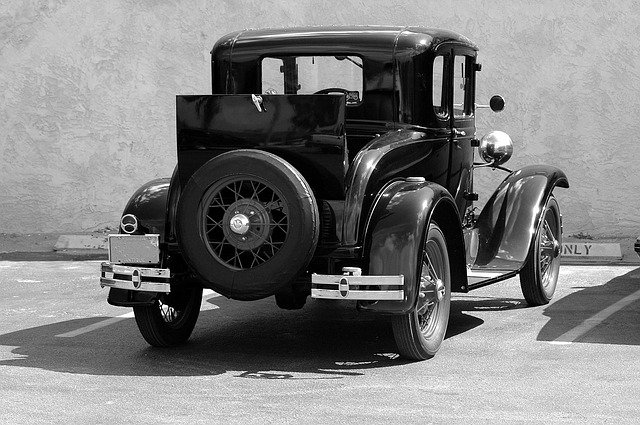
Orson Oriel looked down at four-year-old Sidney on the seat beside him, who was excited to ride in Grandpa’s old Model T Ford. It was fall of 1921 and the air was crisp after the heavy rains from the last few days. The breeze blew through Sidney’s hair. He loved riding in the old Model T and he loved his Grandpa. Orson Oriel whistled a happy tune and ruffled the top of Sidney’s head.
Orson had taken Sidney with him to take care of some business on the Hachita homestead yesterday. Now they were on their way home and Orson was looking forward to a hot meal.
The old road that went near the old Brockman Ranch had turned into a mud bog. Sidney chattered beside him, gleefully watching the mud splatter all over the car. The Model T could go 30 mph on good roads, but with this mud Orson slowed down, trying to balance the need to go fast enough to keep from getting stuck with the need to stay in control, until the mud bogged down the car for good.
“Grandpa! Why did we stop?” Sidney asked impatiently.
Orson grunted and put the car in reverse, with no luck. Putting the car in gear didn’t help either. Sighing, Orson climbed out of the car. He was going to need a shovel to get out of this mess.
Orson ran his hand through his hair and put his hat back on his head, scanning the area. He spotted a ranch house about three quarters of a mile off the road. He weighed his options.
“Sidney, I think it’s best if I walk over to that ranch house and ask if I can borrow a shovel or something to dig out the car. I need you to stay in the car. There’s a lot of dangers out here and you’ll be safest if you stay in the car.”
Sidney nodded his head solemnly, his eyes wide with concern. Orson headed off the road toward the house, hurrying so he wouldn’t have to leave Sidney alone for too long. When Orson arrived at the ranch house, there were no signs that anyone was home. Looking around, Orson spied a shovel leaning against the weathered barn. Knowing that it was necessary to dig out the car in order to get his grandson home safely, he borrowed the shovel and made the walk back to the car. He breathed a sigh of relief when he found Sidney sitting in the car, pretending to drive. Orson laughed – boys will be boys.
Quickly he set to work digging out the car. Grateful for the nice weather, he dug out around the wheels. At last the car was free. He stood, stretching his back and looked around. With no
road to the old ranch house, Orson would need to walk back to return the shovel. By now it was midday. He pulled out some bread that would be their lunch and handed it to Sidney.
I am going to walk back to the house and return this shovel. I need you to promise me Sidney that you will stay in the car. There are wild animals or you could get lost in the thick brush and I might never find you. Will you promise to stay in the car?”
Sidney nodded his head once again, but his mouth was already stuffed with bread. Orson hoped that Sidney would stay in the car as he set out once again for the ranch house. He quickened his pace as his mind conjured scenarios of a four-year-old boy chasing a rabbit into the brush. The tall brush would easily swallow up the small boy. Soon the shovel was returned and he started back to the car. Deciding that a shortcut through the brush could save at least 10 minutes, Orson changed direction.
Without warning, Orson’s feet gave way beneath him and a shout escaped his mouth as he groped for leverage. The earth had caved in beneath him, and he found himself dangling in a hole which must have been an old well. Fortunately for him, his arms had caught hold and he was hanging on with his arm pits. The rotting wood dug into his arms, but he held on for dear life.
Orson swallowed hard, reasoning through the best way to get unstuck. He swung his legs, reaching with his feet toward the side of the well, hoping to get a foothold. His feet never touched anything. He swung his leg to the side, but still no contact. Determining that he would need to push himself up and out of the well, he wiggled forward on his elbows. The ominous cracking noise that followed stopped him in cold fear. Pushing his weight onto his elbows to raise himself up, he heard more creaking sounds. Sweat was running down his back and into his eyes and he longed to wipe his forehead.
A vision of little Sidney getting bored and wandering away from the car forced his body into action. He muttered a quick prayer before inching to the left on his elbows to get closer to the side of the well so he could touch the well wall and get some leverage to push himself out. The extra weight caused the rotten board to crack. He dug in even harder with his elbows into the wooden planks that covered the opening of the well to keep from falling when the rotting boards gave way.
Orson felt cold fear snake down his back. How long had he been gone? How long until he found his way out of this mess? How long before he could expect help? It wasn’t his own life that he worried about – he worried for Sidney, all alone in wild country. What if he wandered off? He would be lost forever.
Desperately, he bowed his head and pled for help from above. Orson poured his heart out, pleading that he might be freed from this ordeal. “Heavenly Father, I need you. I have tried to free myself and cannot. I ask thee to spare my life and free me from this hole so that I might return to my grandson. I pray that thou will watch over and protect him until I can return to him.” Orson prayed and prayed for Sidney, losing all track of time – his only concern the well-being of his grandson.
Some time later, he awoke, opening his eyes against the bright late afternoon sun. His back ached and he stretched. His feet dug into earth and he froze, realization slowly dawning on him. Orson was lying on his back on the ground. Slowly he sat up, looking about him. Next to him were the broken planks of the well opening. How did he get out of the well? How long had he been lying there?
Orson crawled away from the well, worried it might continue to cave in and he would be trapped once more.
His feet ate up the remaining distance to the car, adrenaline coursing through him, making him forget the scratches on his arms and the aches and pains of his ordeal. “Dear God,” he prayed, “Let me find my grandson safe.” He broke into a half run, careful to watch his step, but the intense need to get to Sidney pushed him faster.
Stumbling toward the car, he surveyed the area around him, fearfully aware that there was no sign of Sidney. He leaned heavily on the frame of the Model T and peered inside. There, in the back seat, Sidney was curled up, fast asleep.
Orson’s knees dropped to the ground, his lips already forming the words of a prayer of thanksgiving for blessing him, delivering him out of the well and protecting his grandson so he could find him safe.
Shakily, Orson drove the car back to Duncan, Arizona. It was early evening when he arrived and found Orson James chopping wood and Ena carrying it into the house. Orson Oriel sat down heavily on a large stump and related the experience to them. Tears streamed down his face as he shared his pleading with the Lord to spare him and for Sidney’s safety. “I am a man of great faith and I’ve always known that the Lord hears and answers prayers. Today is an undeniable example of answered prayers.” Orson never wanted to speak of it again. Some things are too sacred, but he vowed to make sure his children understood that God hears and answers prayers.
The following account was documented in a 1917 affidavit sworn by Orson James Richins, Sr.
On February 12, 1917 just seven miles north of the Corner Ranch in the southwest part of New Mexico, Andy Peterson, Milton Jensen, Lem Spilsbury, Monie Adams and a Jackson man [were] rounding up cattle at Camel Wells and the Corner Ranch. Andy Peterson also had several cowboys working for him. Some [went] to Camel Wells and some to the Corner Ranch. On arriving at the Corner Ranch [the cowboys] assumed the men [they found] there were working for [the] Polomos Land and Cattle Company…they invited the men to eat dinner with them. As [the cowboys] got off their horses [the Mexicans] pulled their guns on them and took [the cowboys’] only rifle. They took the men as prisoners and started to Mexico traveling on the southwest side of the Corner Ranch. They cut the line fence in several places and ran horses back and forth to keep anyone from following.
When Andy and his men [Burton Jensen and Hugh Acord] didn’t return at the set time a group of fifteen men (including myself) volunteered to go search for them. We went into Mexico three miles to a ranch where we thought they might be. Lem Spilsbury was in charge of the group and said we would have to make a fast attack on the ranch house. He said, “Orson, you go to the left and ride ahead a half mile.” Two men were to go to the right in case the traitors were in the house, so that we would be prepared and catch them when they came out. We found no one there so we returned to the border and hunted for fresh tracks and found they had cut the fence in three places when they crossed into Old Mexico, trying to cover their tracks.
Lem Spilsbury, Milton Jensen, Monie Adams, a Jackson man and myself volunteered to continue the search. The others thought of going home, but continued on in another direction. We continued a half mile and about 3:00 PM we found the three prisoners (Jensen, Peterson, Acord). It appeared that they had been killed as long as two days. We could see that they had been beaten. Burton Jensen was brutally torchered [sic], stripped of his clothing and butchered up badly, his fingers and arms were broken and the top of his head was blown off. We continued fifty yards farther and in a half moon circle and there lay Hugh Acord. His boots were off and half of his jacket removed which gave the appearance of fear and leaving in a hurry. Both jaw bones had been broken with the butt of a quirt and his skull had been beaten to a pulp. Another fifty yards lay Andy Peterson. He had been shot. The first bullet had burned his wind pipe. The next one pierced through the heart. He was not abused at all.
When we found the bodies we called back the other ten men. Carl Pierce and myself were sent up on a high knoll as guards. We stayed overnight on the border line of Mexico during disagreeable weather. Two shots were fired over the group showing us that someone was watching.
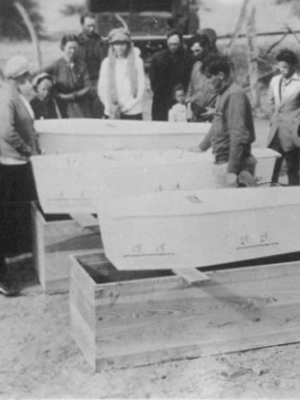
Fred Barefoot was sent to Dog Springs, New Mexico (near Columbus) to get soldiers for help and was shot at twice. We had to go to the Corner Ranch for a wagon. Finally at about 8:00 PM we got the bodies across the line and arrived at Camel Wells. We prepared them for buriel [sic]. They were buried at Camel Wells February 14, 1917.
Albert Francis Richins was the son of Joseph Richins and Jane Morse Richins. He was born at Sheepscombe, Gloucestershire, England, on May 3, 1855. He was baptized on October 8, 1864, at Caudle Green, England, by John Dalton, and confirmed on the same day by Robert Jones. He immigrated to Utah with his parents in the fall of 1872, as converts to the LDS Church, settling in Henefer, Utah, where he went to work for Bishop Charles Richins. He was about seventeen years old at the time. He later worked as a section hand on the railroad for a time.
He formed a friendship with Mary Jane Jones and they were married on November 16, 1874 in the old Endowment House in Salt Lake City, Utah by Wilford Woodruff, Albert being nineteen years of age and Mary Jane being sixteen. He was ordained an Elder the same day by William J. Smith. They went to Salt Lake City with Sandy Glenn, who was taking a load of grain. The load being heavy, it was necessary for Albert and Jane to walk up all the hill and then they would ride on the load downhill.
After their marriage, they returned to Henefer to make their home. They lived in the home of William Betteridge, where their first baby boy, Sidney, was born on August 8, 1875. He died on August 16, 1875 of prematurity. The following winter they moved to a house closer into the settlement where their daughter, Eliza, was born on October 9, 1876.
In the winter of 1877, there appeared in the Deseret News a letter from Isaac Kimball, son of Heber C. Kimball, giving an account and description of the Grouse Creek Valley, saying that it was a good place for settlers. A few days later, five young men, desirous of finding places where they could build homes, decided to go to Grouse Creek and look the situation over. Those who made the trip were: William Betteridge Sr., William P. Paskett, R. Allen Jones and Albert F. Richins and Philip A. Paskett. They left Henefer on March 16, 1877 and arrived in the Grouse Creek Valley on March 21, 1877.
The Heneferites, as they were known, decided that two men should remain at Grouse Creek and hold the land while the others returned to Henefer for their families. Richins, Jones and William Paskett returned by train from Terrace to Henefer in April. Allen Jones decided he did not want to move. On May 24, 1877, Albert Richins and his wife and small daughter and James Simpson and his wife and child, left Henefer for Grouse Creek. They traveled by ox team in the same wagon, with a milk cow tied behind the wagon, her calf riding in the wagon and a coop of chickens tied on the back of the wagon. It was a long, slow journey with plenty of trouble. At Uintah their wagon broke down, which delayed them three days, and it rained on them most of the journey.
When they reached Locomotive Springs, they turned their oxen loose to graze for the night. They strayed away and got mixed with a large herd of cattle scattered in the swamp land. The cattle were in charge of one white man, one Indian and a Negro. Albert and James Simpson walked for miles the next day trying to find their oxen. Jane was also in search in another direction, when she came upon the Negro. She told him about their trouble and he helped locate the missing oxen. He was on a horse, which he rode out into the swamp to bring the oxen out.
Arriving at Dove Creek, some forty miles east of Grouse Creek, they were met by William Betteridge and Philip Paskett. They left Dove Creek and were at what is known as Pucket Springs, when Jane became sick and asked to get out of the wagon. There being a steep mountain to climb, the rest of them went on to the top. Albert then came back to where Jane was and helped her on up to the wagon. She had hoped that they would not return for her. She was so sick. They were soon on their way again, arriving at Grouse Creek on June 10, 1877. Then, upon their arrival, William Betteridge and Philip Paskett returned to Henefer to move their families, which they did the following October.
Farming in Grouse Creek
Albert and James built a one-room dugout, in which both families lived until they could build a house for Albert on the piece of ground he chose at the mouth of Cook’s Canyon. He moved there in the spring of 1878. The dugout which they shared with Simpson’s was located on the lower part of the creek where the old Mecham place is now.
The land Albert located on proved to be the best land for farming in the valley. It was covered with about sixteen acres of white sage, which was good winter feed for cattle. The following spring, after the settlers had started working their farms, Albert lost both of his oxen from weed poisoning. They were found dead close to the house. This was one of the biggest heartbreaks of his pioneering.
In the fall of 1878 Albert and William Paskett went to Ogden, each with a load of wheat, to obtain flour for the winter. It was found that there was smut in Albert’s load and the mills at Corrine and Brigham City would not have the wheat at any price. He was thus forced to haul it to Ogden by ox team, where a miller there gave him 200 pounds of flour and a sack of sugar for the entire load. On their way home they worked at a molasses factory for five gallons of molasses each. When Albert arrived home, he was greeted with the news that his son, George, had been born on October 26, 1876, at the Simpson home.
The following winter there was very little snow, and so Albert herded sheep for Hubbard & Company in the Pine Creek Country. The outlook for summer water was so very bad that he even offered his entire holdings in Grouse Creek for $100.00.
In the fall of 1879, all the families moved up on the flat near Cook’s dam. They wanted to be close together where their children could go to school and where they could gather together in church, all the settlers being members of the LDS church. A ward was organized and a one-room schoolhouse was built, about where the old Hadfield house now stands. Annie and Louisa were born while the family lived there.
In the spring of 1884 they moved back on their farms, and that year they raised good crops and gardens. Albert raised 1,300 bushels of oats and wheat that year. One day while Albert and others were cutting and binding the grain, one man was heard to say, “I’m going to Salt Lake and take this land. Richins cannot hold it. He is not a citizen and he has no papers to show that he can hold it.” So while the other men were eating their dinner, Albert went into another room, got ready to leave, borrowed a horse from William Paskett and rode to Terrace. There he borrowed $30.00 from S. H. Cave and went to Henefer by train, where he obtained witnesses. From Henefer he went to Salt Lake City and took out his citizenship papers and secured his land the same day.
Piller of the Community
Albert was ordained a Seventy on December 28, 1884 by Lorenzo Hunsaker. Alma was the first one of their children to be born on the original homestead.
Children of Albert Francis Richins & Mary Jane Jones
Children
Birth Date
Birth Place
Albert Sidney
August 8, 1875
Henefer, Utah
Eliza Harriet
October 9, 1876
Henefer, Utah
George Robert
October 26, 1878
Grouse Creek, Utah
Annie Jane
October 24, 1882
Grouse Creek, Utah
Louisa Emaline
December 24, 1837
Grouse Creek, Utah
William Alma
June 29, 1885
Grouse Creek, Utah
Wilford Francis
November 20, 1887
Grouse Creek, Utah
Orson Chester
December 10, 1889
Grouse Creek, Utah
Joseph Ether
January 29, 1892
Grouse Creek, Utah
Newell
June 1, 1894
Grouse Creek, Utah
Wellington Irvin
April 29, 1897
Grouse Creek, Utah
Orita Ellen
November 12, 1899
Grouse Creek, Utah
Nola Mary
September 13, 1903
Grouse Creek, Utah
In 1892 Albert Richins started in the store business, which proved to be a big help to the people on Grouse Creek. He was a very liberal man and gave much of his merchandise out of credit. When he went out of business many years later, he had many outstanding customers’ debts, which were never collected.
He was ordained a High Priest on April 20, 1896, by Moroni Pickett, and sustained as a counselor to Bishop David Harry Toyn on the same day, a position he held for twenty years. Being in the Bishopric, he saw the need of a granary in which to store grain and other farm produce, as it was customary in those early days to pay their tithing in kind. Albert headed the building of this granary, which was built of sandstone and equipped with bins, scales, etc. The building still stands.
Albert was made the postmaster of Grouse Creek on December 1, 1894 and held that office until June 1915. For several years he served as Justice of the Peace and was a Notary Public until the time of his death.
He was called to serve a mission to England when Nola, his thirteenth and youngest of his children, was only two months old. He left home in November 1903 and returned in 1905, having filled an honorable mission.
Three of his sons also served on missions: George went to Australia in 1900, before his father, Alma served in England and Wilford went to the Dakotas.
Albert was instrumental in carrying out many community projects, which added convenience and prosperity to the people of Grouse Creek. In 1908, when it was decided to run a pipeline from Buckskin Springs to the community, a distance of three miles, Albert was the main push behind that project. The Bishopric at that time, David H. Toyn, William Paskett, and Albert F. Richins, went to Salt Lake City and talked with President Joseph F. Smith and through his influence, they borrowed the money to complete the project, Albert taking the main responsibility.
In 1912, the same Bishopric, upon the permission and vote of the ward members, decided to build a new chapel. It was built of sand rock at a cost of $10,000.00. Albert took the lead and shouldered the main load of responsibility of this project. The money was raised, Albert taking the responsibility for the wages of the masons. He and Jane boarded fifteen of the masons who worked on the chapel.
Albert was the first person to have gas lights in his house. It was a considerable expense, but quite enjoyable. However, they were a lot of trouble to use, as the gas had to be brought into town in large cans, air pumped into the tanks and the lights ignited with wood alcohol, and it required more time than he could devote to the project, so the gas lights were finally abolished.
Albert owned a lot of range land and for years he pastured and cared for horses belonging to J.G. Read of Ogden. He bought harnesses, saddles, etc., from Read Brothers. He also installed the first commercial and livestock scales that were on Grouse Creek, for the use and convenience of the community as a whole.
When Philip Paskett was brought home to Grouse Creek from Basalt, Idaho, sick and destitute, Albert gave him a piece of ground to get started on and helped him build his house on it. The piece of ground was located between the old Dry Canyon Creek and the Allen Tanner farm. Although some thought that this gesture was more than they could afford, it proves the generosity of this great man.
Besides raising lots of grain, Albert had a good potato crop each year. He used to get the Indians to help harvest the potatoes.
Father raised lots of white-faced cattle, and the surplus was sold each fall to raise money for their winter expenses. At one time he bought fifty head of purebred Jersey cows at Ogden and had them shipped to Grouse Creek via the railroad to Lucin. He sold the cows to the farmers to supply good milk and butter products for their families. He bought a cheese press so the ladies could make their own cheese.
Also, Father built a smoke house where he cured his own meat, as well as that of many of the others. He provided for his family well and taught us all to work, help and share, all the basic virtues that make up the useful fulfillment of one’s life. His desire was to build a home that would be a sanctuary for themselves and for their family, and hopefully for their grandchildren.
Albert and Mary Jane celebrated their Golden Wedding Anniversary on November 15, 1924.
I remember the old log house by the creek and the blacksmith shop. Many times I have turned the bellows for Father as he did his blacksmith work. I remember the well and the windmill by the old house, the sheds, especially the old shed in the dry creek bed where the cattle sheltered in winter and where we would gather mushrooms in the spring.
I remember large stacks of hay and bins full of grain, potatoes, apples and garden produce, fat, well-kept horses and white top buggy that took us on trips occasionally, our pet horse, Baldie and the old black dog, Toby.
I remember the threshing crews we used to feed. The townspeople bought a threshing machine in later years, which they ran with a horse-powered machine. The threshing crew consisted of from fifteen to twenty men.
Father believed in the security of family prayer. We were called together every morning, each one taking their turn at saying the prayer. Many times we were late for school because Father kept us on our knees for longer than we thought necessary. Father took us to our church meetings and taught us that Sunday was a day to worship the Lord.
He was free and generous with his money, and as a result, he was taken advantage of many times. He was stern, but he had his good qualities. He lived the gospel and taught his family the best he knew how. I never saw Father ever use tobacco or strong drinks. He did drink tea for his breakfast and felt justified in doing so.
Grouse Creek had long, hard winters, usually with lots of snow. But we made our own good times, sleigh riding, parties, dances. One winter the whole town was stricken with smallpox. There were some very bad cases, but no deaths. At another time, there was a typhoid fever epidemic. Louisa, the 17-year-old daughter of Father and Mother, became fatally ill with the dread disease and died on October 11, 1899. Their young son, Ether, was also severely ill for three months with the same dread disease.
Two sons, Wellie and Ether, were called to serve their country during World War I. Both were fortunate enough to be able to return home after the armistice.
One by one, the large family left parents and home and were married. Each of the eleven who grew to maturity were married in the Salt Lake Temple, a record to be proud of.
The drought, the depression and the effects of the war, together with his advancing years, slowed down Father’s pace so that the prosperity of the old farm and home began to deteriorate.
Father enjoyed really good health most of his life and worked around the place as much as he could. In the fall of 1931 he became ill with a kidney ailment. On January 17, 1932, after some persuasion, he was taken to Ogden to Eliza’s home. He passed away on April 26, 1932 and his body was returned to Grouse Creek where the funeral and burial took place on April 30, 1932.