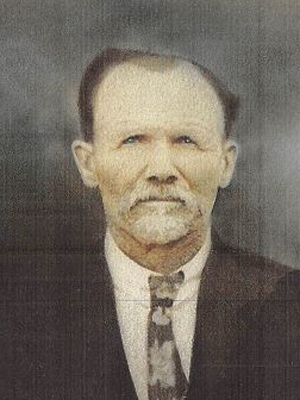
Family: Richins

  • They Crossed the Plains with a Handcart

    They Crossed the Plains with a Handcart

    Preface

    During the summer of 1855, Elder Edmund Ellsworth, who was serving a mission in England, received a letter from President Brigham Young asking if he would lead a company of Saints to cross the plains on foot. (Walker, p44)

    On 29 October 1855 the First Presidency issued the Thirteenth General Epistle, regarding immigration to Zion: “The [Perpetual Emigrating] Fund is designed to deliver the honest poor, the pauper, if you please, from the thraldom of ages…Let all the Saints who can, gather up for Zion…Let them come on foot, with handcarts …[Thereby] the main expense of the immigration will be avoided, consequently thousands more than heretofore can receive assistance.” (Walker, p45) By this means of travel, the emigrants could journey from Liverpool, England to Salt Lake City for about forty-five dollars. (Berrett, p280)

    Latter-Day-Saint Elders in England, instead of returning directly home, were informed that they were to aid those who planned to emigrate during the coming season. In March of 1856, Elder Ellsworth was with 529 Saints that embarked on the sailing ship Enoch Train. They set sail at Liverpool bound for Boston. This was the first group that would travel with the aide of the Perpetual Immigration Fund and cross the plains with handcarts. (Walker, p45)

    The Enoch Train

    Deveraux and Richins Families

    Also on the Enoch Train were five of my ancestors, John and Ester Deveraux, their daughter Harriet, her husband Thomas Richins and their 1-year-old son, Albert Franklin. Fifteen years previously, the Deveraux family had been baptized by Apostle Wilford Woodruff in a small pond on the John Benbow farm in Herefordshire. They had been among the 600 members of the United Brethren converted by Apostle Woodruff. When Harriet was 13, she was baptized on 30 July 1846 by Elder William Webb. (Fischio) Thomas Richins was baptized, at age 24, on 1 Jan 1850 at Sheepscomb, Gloucestershire. (Richins, p5)

    Ester Deveraux was 60 years old and in poor health when she left England and had been advised not to start on such a long journey. But, her faith was so strong that she said she would rather die on the way to Zion than not to make the attempt. When the ship was about ten days out, Ester passed away from consumption and was buried in the sea. (Fischio; Mormon Immigration Index)

    Warburton Family

    In January 1856, two months before the ship Enoch Train set sail, John and Betty Warburton, with their six-year-old son Edward (Teddy), had left Yorkshire and sailed on a cargo ship through the canals of Lancashire and into the Irish Sea. Their plans were to sail to Liverpool where they would join with a group of Saints that would then sail to America. Betty was expecting a baby and on the 2nd day of their journey, as they were going through The Channel, she became ill. Unable to obtain medical help, she died from complications of her pregnancy. Because the ship was then far out at sea, she was wrapped in canvas and lowered into the waters. John and Teddy were devastated as they watched their beloved wife and mother buried in the Irish Sea. Before her death, Betty made John promise that he would continue on to Zion. (Proctor)

    Two days later, when John and his son reached Liverpool, they learned the ship they were supposed to have sailed on had left the day before. John was in despair until he ran into some old missionary friends and they arranged for him and his son to sail on the ship Independence with church leaders and missionaries that were returning home. (Proctor)

    Note: This is the reason John and Edward Warburton are not found in the Mormon Immigration Index.

    It was the end of February 1856 when they landed in New York. John and Teddy stayed close to the church where John was able to find work and earn enough to care for their needs. A few months later, with another group of Saints, they boarded the Rock Island Railroad in New York and took the North Western route through Chicago to Iowa City. There were coach cars on the train but the Mormon immigrants rode in the boxcars. (Proctor)

    The Enoch Train

    After five weeks and five days on the ocean, the ship Enoch Train landed at Boston Constitution Wharf on 1 May 1856. The immigrants then went to New York by boat and rail, and by train to Rock Island, Illinois. Crossing the Mississippi River on a boat, they then boarded a train of boxcars. The cars had no seats; the travelers had to sit on their trunks and baggage and had no room to lie down at night. They reached Iowa City late at night on May 12 and had to walk four miles to the camp. The next five weeks were spent making handcarts and preparing for their journey across the plains. (Fischio; Walker, p45)

    Iowa City

    When John and his son reached Iowa City they found old friends from Yorkshire and new friends from other parts of England. They joined with the Edmund Ellsworth group where they met Thomas and Harriet Richins and John Deveraux. John Deveraux was 56 years old, Thomas was 30, Harriet was 22 and their little son, Albert, was 16 months. John Warburton was 33 and Teddy had just turned 7. (Proctor)

    The handcarts were made of hickory and oak with axles of strong hickory or iron. The shafts were six feet long with three or four cross bars from the back part to the front. There was a space of four feet for the lead person to pull the cart. Canvas was stretched over the crossbars or boards, which was topped by a box frame three or four feet long and eight inches high. This cart held all the family’s belongings. (Fischio)

    John Warburton was a great help in building the handcarts and getting them into shape. He had experience as a wheelwright and was a healthy, strong man. Though not large in statue, he had a great will to work. He also helped to repair the handcarts during the journey. Every tiny bit of oil and grease was important to keep them from drying out and falling apart, especially the wheels. They were built of wood to keep the carts as light as possible for the people to pull them. Thomas Richins, who was a blacksmith by trade, also contributed much to the success of the trek. (Proctor)

    According to the Walker article, the members of the company were given one tent and four handcarts to twenty persons. However, in John Warburton’s life sketch it says that John and his son were issued a handcart of their own but they shared it with the Richins family. Harriet Richins wanted badly to take along her rocking chair. Her sewing machine was allowed in the supply wagon because sewing machines were in short supply in the valley. (Proctor)

    To each company of twenty handcarts, there would be two or three covered wagons drawn by a span of oxen, a few milk cows and some beef cattle. The herd boys, who included Teddy Warburton, cared for the animals. The boys’ shoes wore out rapidly and after a few patchings they took burlap to wrap their feet in when the going was rough. They seldom complained. (Fischio; Proctor)

    Mary Ann Jones, another member of the Ellsworth Company, wrote: “We left Iowa City 9 June 1856 and traveled to Florence, leaving there 16 July. The handcarts were flimsy and were continually breaking down…Our company [Edmund Ellsworth, captain] consisted of 274 members, the other passengers of the ship were in the second company [Daniel McArthur, captain]. We traveled from ten to twenty eight miles each day.” (Walker, p45)

    The ox teams started with them in the morning but would be from one to three hours behind getting into camp at night. The Ellsworth Company was a happy group and had little misfortune. There were four babies born, two died and one mother. All was good with them if the babies came in the night while they were in camp. But if they came in the daytime, the carts and wagons would just keep rolling along. Sometimes the supply wagons would have two mothers to care for at one time. (Fischio)

    When the Saints would die along the way, they would dress and prepare the bodies, wrap them in blankets or canvas and dig a shallow grave in the evening. The next morning a short service would be held and the company would go on. Two or three men would stay behind to finish the burial and often John Warburton would be called upon to perform this service. They would say an extra prayer that the Indians or wild animals would not molest the grave and also leave a message for those coming on behind. (Proctor)

    Provisions became scarce so they were put on rations, one pint of flour per person per day. This they cooked as best they could. One day Harriet mixed too much water with the flour and all they could do was drink it. One time Thomas was so hungry he cut pieces of rawhide from the cart to eat. (Hilton)

    Harriet told how a band of Indians came into their camp. One of the Indian squaws who had a papoose saw a hungry pioneer woman trying to nurse a little undernourished baby. The Indian mother felt so sorry for them she took the baby in her arms and nursed it. However, it made the baby sick because it was not used to such rich milk. (Fischio)

    The travelers did have some meat. Occasionally a deer or elk was served out and once Brother Ellsworth killed a cow. On the sixth of August they saw thousands of buffalo. Four were shot. The next day their hungry appetites were satisfied with buffalo meat, but they had to dig for water and it was very thick. A few days later, all or most of them had bad diarrhea or purging. They didn’t know whether it was the buffalo meat or the muddy river water that caused it. (Fischio)

    Mary Ann Jones, wrote:”Some stomachs may reject a supper cooked with water taken from a buffalo wallow and on a fire of buffalo chips, but to us the food was good…A very remarkable thing happened while we were at the Platte River. One of the oxen used to pull the wagons, died. Brother Ellsworth asked the brethren what could be done. Should we place a cow in the team? One brother said; Look, Brother Ellsworth, at that steer on the hill…The animal worked as well as the others. When we were within two days of Salt Lake City we met some wagons sent with provisions to help us the remainder of the way. The next morning, when gathering animals, that steer was gone. After hunting for him for several hours Brother Ellsworth said, the Lord loaned him to us for as long as we needed him.” (Walker, p47)

    “The Handcart Song”

    They traveled through dust storms, electrical storms, and bright sun that sunburned and baked them. To keep their spirits up as they traveled they would sing:

    "The Handcart Song"
    Ye Saints that dwell on Europe’s shores,
    Prepare yourselves with many more
    To leave behind your native land
    For sure God’s Judgments are at hand.
    Prepare to cross the stormy main
    Before you do the valley gain
    And with the faithful make a start
    To cross the plains with your handcart.
    Chorus:
    Some must push and some must pull
    As we go marching up the hill,
    As merrily on the way we go
    Until we reach the valley, ho. (Walker, p49)

    They camped about nineteen miles from Fort Laramie and there they had plenty of wood to burn. It was quite a treat after burning nothing but buffalo chips for so long. (Fischio)

    On 18 September 1856, while the handcarts of the Ellsworth Company were traveling up the hill west of Green River, they were surprised to suddenly come upon seventeen missionaries bound for Great Britain and other locations. Thomas Bullock, one of the missionaries, wrote,

    When reaching Fort Bridger and the mountains, the way became harder and they could not make as good a time. However, knowing that they must go through the mountains before reaching the promised valley, they pressed on. (Proctor)

    After almost four months of weary traveling, having been delayed by sickness and deaths and the breaking down of handcarts, which were made of unseasoned lumber, the Edmund Ellsworth Company reached Salt Lake on the 26th of September 1856. The company was met in Emigration Canyon by Brigham Young, the Nauvoo Band, and a large number of Saints. They were given a hearty welcome. Harriet used to tell of them bringing watermelons to them on their arrival. (Fischio; Walker, p49) What a joyous day that would have been for Thomas and Harriet Richins to finally reach their destination after traveling such a long and difficult journey from their home in England. But, for the two Johns who had both buried their wives in the sea, it must have been bittersweet.

    Church Emigration publications give the following report of their arrival in the Salt Lake Valley:

    “In the evening of September 25th, 1856, it was reported that Captain Edmund Ellsworth’s company was encamped at Willow Springs for the night. Consequently, on the 26th, Presidents Brigham Young, Heber C. Kimball, and Daniel H. Wells and many other citizens in carriages and several ladies and gentlemen on horseback, with a part of Captain H. B. Clawsen’s company of lancers, and the brass bands under Captain William Pitt left the President’s office at 9:00 AM with the view of meeting them back of the Little Mountain.

    President Young ordered the party to halt until the handcarts should arrive, and with President Kimball drove to meet them. Soon the anxiously expected train came into sight led by Captain Ellsworth on foot, and with two aged veterans pulling the front cart, followed by a long line of carts attended by the old, middle-aged, and young of both sexes.

    When they were opposite the escorting party, a halt was called and their captain introduced the newcomers to Presidents Young and Kimball. This followed by joyous greetings of relatives and friends, and an unexpected treat of watermelons. While thus regaling, Captain Daniel D. McArthur came up with his handcart company, they having traveled that day from the east of Big Mountain.

    From the place of halting to the public square in the Sixteenth Ward the following order of march was observed, under the supervision of Captain Clawson: 1. lancers, 2. ladies on horseback, 3. Presidents Young, Kimball, and Wells carriages, 4. the bands, 5. Captains Ellsworth and McArthur companies, 6. citizens in carriages and on horseback.

    The line of march was scarcely taken up before it began to be met by men, women, and children on foot, on horses, and in wagons, thronging out to see and welcome the first handcart companies and the numbers rapidly increased until the living tide lined and thronged South Temple Street.

    The procession reached the Sixteenth Ward Square about sunset, when the lancers, bands, and carriages formed in a line facing the line of handcarts; and after a few remarks by President Young, accompanied by his blessings, the spectators and escort retired, and the companies pitched their tents at the end of a 1,300 mile walk.” (Fischio)

    Mary Ann Jones described their arrival: “It was a day never to be forgotten. We had reached our goal, traveling on foot all of the way….We had left comfortable homes, fathers, mothers, brothers, sisters, and friends, all for our testimony of the Gospel of the Lord Jesus Christ and for the privilege of hearing a prophet’s voice and to live with the Saints of God.” (Walker, p48)

    Of the 274 people who embarked upon the journey of the Ellsworth Company, 13 persons died from consumption, diarrhea, and whooping cough, except for the death of Henry Walker who was killed by lightening. (Walker, p48)

    Thomas and Harriet found a little one room dugout in the foothills, on the East Bench of Salt Lake Valley to live in and John and his son stayed with them just long enough to help build on an extra room and a lean-to. Thomas’ brother, John Richins, his wife, and their baby, were following in the Willie Handcart Company and would need a place to live when they arrived. That company, unfortunately, started too late in the season and got caught in mountain blizzards in Wyoming. When they arrived in Salt Lake they were in need of much help. (Proctor)

    The Richins family stayed in Salt Lake for five years until they were called by President Brigham Young to move south and help settle Goshen, Utah County. Thomas engaged in farming and worked at his trade as a blacksmith. (Proctor)

    John and Teddy Warburton stayed in Salt Lake until the following March when President Young issued John a quarter section of land in the northeast part of Battle Creek, Utah County, now known as Pleasant Grove. They moved to Battle Creek where John built a small adobe house in the fort. (Proctor)

    On 10 Jun 1857, John Deveraux married a widow named Mrs. Ann Perkins Price. (Ancestral File) In the 1870 Federal Census Records, John is listed as age 65, living in a community called Newton in Utah County, with a wife named Anne who was 60. He was a farmer, owned personal estate worth $200 and property valued at $275. He could read and write and his birthplace was England. It may be that President Young also issued John Deveraux a piece of land.

    Twenty years later in 1876, Edward (Ted) Warburton married Alice Mirentha Richins, a daughter of Thomas and Harriet Richins that had not yet been born when they crossed the plains together. Ted and Alice were my great grandparents.

    Note: There is a discrepancy between English records and American records regarding John Deveraux’s birth date. English records have him born in 1800 while American records list his birth as 1805.

    Bibliography

    Berrett, William Edwin. The Restored Church. Thirteenth edition, Deseret Book Company, 1965. Salt Lake City, Utah.

    Church of Jesus Christ of Latter-Day-Saints. Ancestral File. Copyright 1987, August 1993.

    Church of Jesus Christ of Latter-Day-Saints. Mormon Immigration Index. CD-Rom published by Intellectual Reserve, Inc. Copyright 2000.

    Fischio, Afton Gene Richins. “A Short History of Thomas Richins and his wife Harriet Deveraux.” Unpublished, 1982.

    Hilton, Gladys Richins. “Biography of Thomas Richins,” written for Daughters of Utah Pioneers. Unpublished, no date.

    Proctor, Eva Mirentha Warburton. “The Life Sketch of John Warburton and Betty Sunderland and son, Edward Warburton.” Unpublished, no date.

    Richins, Hazel. “Richard Richins and Charlotte Priscilla Wager.” 2000 edition, Richins Surname Association. Family Heritage Series website: www.familyheritageseries.org.

    Walker, Newell R. “They Walked 1,300 Miles,” Ensign, July 2000 , pp 44-49. Salt Lake Distribution Center. Salt Lake City, Utah.

  • Sarah Amanda Shurtliff

    Sarah Amanda Shurtliff

    Introduction

    Sarah Amanda Shurtliff was born January 22, 1865 in Harrisville, Utah. Her father, Luman Andrel Shurtliff, accepted the Gospel after hearing Joseph Smith speak. He was confirmed a member of the Church of Jesus Christ of Latter-day Saints August 21, 1836 by David Witmer. During his fruitful life, he accomplished many things. He filled eight missions, three home missions, and was a Patriarch for eleven years. He had four wives and thirty-three children. He was a strict man and a strong tithe payer and he emphasized the importance of tithing to his children. Sarah’s parents endured many hardships for the Gospel. Luman and his families gave up their homes many times when they were called to colonize other places to build up the Church. Due to the strenuous conditions present in the early days of Utah, the family often found themselves in difficult circumstances.

    Sarah’s mother, Mary Eliza Adams, died when she was only eight years old and Sarah had to go into other homes and work to help earn her keep. She worked hard, as all pioneer girls had to do, but she loved all her brothers and sisters and took great pride in helping any way she could.

    Marriage and Two Families

    Silas Benjamin Harper courted and married Sarah on April 2, 1885 and they lived in Payson, Utah where two little girls, Mary Blanche and Elsa Vinetta, were born. Tragedy struck again in her life—shortly after Elsa was born, Silas was killed in an accident while riding a load of hay. Sarah was left with two babies to care for.

    When her sister Lovina Wilson, who had been sent by the Church to help colonize Mexico, heard the news she invited Sarah to join her in Mexico. Sarah accepted the invitation and traveled with other Church members to Mexico. When she reached Mexico she worked for “Aunt Fanny Harper” in her boarding house. Later she married Orson Oriel Richins, becoming his third wife. He was a loyal husband and a good father to her daughters. Through this union Sarah bore six more children: Marland Lumin, Carrie Roween, Sadie Esther, Colola Beth, Orson Oriel, Jr., and Olive Olga.

    Sarah’s life continued to be one of hard work and true devotion to her family. While living in Mexico, she managed a store and a restaurant and made cheeses to sell. She was a devoted member of the Church and when Orson Oriel was called on a mission to the Central States in 1896, she happily supported her family and assisted her husband in fulfilling his mission.

    According to the last pages of his missionary diary, he returned from his mission to find all his families enjoying good health and all were happy at his return. He wrote that Sarah was with the others at the depot in Guzman to meet him and he told of many happy events and parties that were held on his behalf. He was surprised at how his little son, Marland, had grown and how Blanche and Elsa were young ladies.

    Leaving Mexico

    The next few years were happy, but hard, for the growing families of Orson Oriel Richins. Life in Mexico ended in 1912 due to the Mexican Civil War. When the Saints entered the United States again, the families had to separate, so Sarah took her family to El Paso, Texas. She felt a big responsibility upon her shoulders, but she knew that the Lord would watch over her and help guide her in every way. She never lost this simple faith and tried to instill it into all her children. Marland, while but a boy, immediately went to work to support the family. The girls did likewise as they became of age.

    Sarah became a midwife and was in great demand among the Saints in El Paso. She spent a great deal of time nursing the sick. “Aunt Sade”, as she was called, seemed to be needed everywhere.

    Sarah was a strict tithe payer, as her father had taught her in her youth. Many times her tithing was all she had, but then it really wasn’t hers—she considered it the Lord’s—so it was paid to Him. She recalled, “We were never without. The Lord always blessed us.” This grateful and humble spirit was manifest throughout her life.

    When the Saints were advised to buy farms and colonize Red Rock, New Mexico, Sarah moved into a home there Orson had built for her and her two youngest children. Her son Marland and her daughter Beth and her husband also purchased farms there. Orson Oriel wanted as many of his children as wanted to join him in this venture, so they could all be together. Life in Red Rock was hard and the farming venture proved unsuccessful. Consequently, many of the settlers moved to nearby Virden, New Mexico where they could be near friends and relatives from the Mexican colonies.

    The Final Years

    Sarah lived in Virden the remainder of her years. She loved her little home there and would leave it only to visit her children and grandchildren or to work in the Temple in Mesa, Arizona. She very much enjoyed her time in the Temple.

    “Aunt Sade” passed away in the home of her daughter Blanche in Virden, New Mexico on October 25, 1947, with her children, grandchildren and great-grandchildren around her, as she wished. The day she passed away a new great-grandchild was born-a new spirit to live on and to glorify the Gospel that Sarah loved so dearly. Her descendants number eight children, 29 grandchildren, 67 great-grandchildren and 3+ great-great-grandchildren.

  • Thomas Richins & Harriet Deveraux

    Thomas Richins & Harriet Deveraux

    Thomas Richins

    Thomas Richins, was the fifth child of parents Richard Richins and Charlotte Priscilla Wager. He was born June 6, 1826 and christened five months later on November 26, 1826 in Sheepscomb, Gloucestershire, England. He was given the name Thomas after his fathers grandfather, Thomas Richins. There is a family tradition that he had a twin sister named Charlotte Priscilla. There is no record in the Parish Register of her birth or death and it is thought she died at birth. (Richins, p 5)

    Thomas had ten brothers and sisters, including his twin. Only five of the eleven children grew to adulthood and married. His oldest sister Hannah and his brother William both died from consumption. Hannah was 18 and William only 9 years when their lives were taken by this dreaded disease. His brothers John Edward and Edwin and, his sisters Mary Ann and Charlotte Priscilla, all passed away in infancy. His brother George emigrated to Canada while, Thomas and the rest of his brothers, John, Charles, and Edward joined the Church and emigrated to Utah.( Richins, pp 3-7)

    Both of their parents died young. Priscilla was only 42 when she died of complications of childbirth on September 21, 1842…Richard died of intemperance at his mother’s home on December 8, 1848. (Richins, p 8)

    In the 1841 census, Thomas was listed as 15 years old and living at home. He was still living at Sheepscombe when he was taught the gospel by Mormon Elders and baptized, at age 24, on January 1, 1850 by Elder William Davis. In the 1851 census he was listed as unmarried, age 24, an agricultural laborer, and visiting at his Uncle Williams home. Three years later, Thomas was in the city of Gloucester awaiting the reading of the banns so he could marry Harriet Deveraux, a daughter of John Deveraux and Ester Ann Cockshut. (Richins, p 5)

    Harriet Deveraux

    Harriet Deveraux was born December 29, 1833 in Dymock, Herefordshire, England to parents John Deveraux and Ester Ann Cockshut or Cockshed. She had five brothers and sisters. Only three grew to adulthood and married. Harriet and her brother Joseph both married, joined the Church and emigrated to Utah. Her sister Ester married and stayed in England. Ann grew to adulthood but passed away as a young woman, John died shortly after his first year, and Emanuel passed away in infancy. Harriet also had an older half brother named Paul. It is unknown when he died. (Ancestral File)

    Harriet’s parents, John and Ester Deveraux were tenant farmers who were very religious-minded. They belonged to the Wesleyan Methodist Church until, becoming dissatisfied with it, they joined with a group called the The United Brethren. In 1840 they were among the 600 members of the United Brethren that were converted and baptized by Apostle Wilford Woodruff on the John Benbow farm in Herefordshire. (Kenison, pp 1-2; Richins, p 5; Fischio)

    From the journal of Apostle Wilford Woodruff we read,

    “The power of God rested upon us and upon the mission … The Lord had a people there prepared for the gospel. They were praying for light and truth, and the Lord sent me to them, and I declared the gospel of life and salvation unto them.” (Kenison, p2)

    Harriet was 6 years old at the time. When she was 13, she was baptized on July 30, 1846 by Elder William Webb. (Fischio)

    Some of the wealthier members of the United Brethren emigrated to Nauvoo soon after they joined the Church (Kenison, p 2), but the Deveraux family did not have the money and had to wait fifteen years until the Perpetual Immigration Fund was started to aide the poor who wanted to go to Zion. (Richins, p 5; Fischio)

    Thomas and Harriet Richins

    After the reading of the banns, Thomas Richins and Harriet Deveraux were married in the city of Gloucester, at the Saint James Church, by the Reverend James Hollis, on December 15, 1853. Jeremiah Wager and Harriet’s mother, Ester Deveraux, were witnesses to the marriage. 
    (Richins, p 5)

    When Thomas was married he was listed as a waterman, which referred to one who traveled the waterways on a barge. When they returned to Harriet’s hometown of Eastnor in Herefordshire, he was an agricultural laborer again. They were living in Herefordshire when their first son, Albert Franklin, was born on January 30, 1855. (Richins, p 5)

    Enoch Train

    On March 23, 1856, Thomas and Harriet Richins, with their infant son Albert, and Harriet’s parents, John and Ester Deveraux, embarked on the sailing ship Enoch Train. They set sail at Liverpool, England, bound for Boston, Massachusetts. This was the first group of Saints that emigrated to Zion with the aide of the Perpetual Immigration Fund, and they were also the first experimental handcart company to cross the plains on foot. (Hilton; Fischio) By this means of travel, the emigrants could journey from Liverpool, England to Salt Lake for about forty-five dollars. (Berrett, p 280)

    The captain of the ship was Henry P. Rich. The group of Saints were organized with Elder James Ferguson as President and Edmund Ellsworth and Daniel McArthur as counselors. The company was split into wards numbered one, two, three, four, and five. The ship carried 534 Saints including 415 people age eight years and up, 98 children ages one to eight, and 21 infants under a year. They represented the following countries; England, Scotland, Ireland, Wales, Denmark, America, Switzerland, Cape of Good Hope and East India. There were 12 Elders returning from missions and a band from Birmingham. (Fischio; Mormon Immigration Index)

    Ester Deveraux, who was 60 years old and in poor health when they left England, had been advised not to start on such a long journey, but her faith was so strong that she said she would rather die on the way to Zion than not to make the attempt. When the ship was about ten days out, she passed away from consumption and was buried in the sea. (Fischio; Mormon Immigration Index)

    From the journal of Archer Walters, a Saint who was on the same ship, we find these entries:

    “April 1st: A sister died during the night named Ester Deveraux from Herefordshire Conference, age 60 years. A rough day. Ship rolled and boxes rattled, bottles upset. Bedsteads broke down and cooking did not please all for the saucepans upset in the jelly. Some scaled and some fell and hurt themselves. A thing to try the patience of some. Went to bed, ship rocked and rolled about: did not sleep well but all night the President and captains of the different Wards did their best for all and all good Saints feel well.

    April 2nd: The dead sisters body committed to the deep. It was the first I ever saw buried in the sea and I never want to see another. A rough day all day.”

    From the same journal we learned that trumpets blew at 6:00 AM for rising and again at night for prayers. Each man had to take his turn at standing watch. Rations of beef, pork, salt, sugar, vinegar, rice, potatoes, and peas were mentioned. The passengers did their own cooking. Babies were born and, at least, one more died and was buried in the sea.

    Archie Walters’ journal entry for April 25, 1856 reads:

    “April 25: A very cold morning. A child died at 4 :00 AM…12 Oclock the ship still. Quite calm. The little boy committed to the deep. Brother Ferguson spoke before the plank was drawn. Quite a solemn time for the children and the parents as well; indeed all sailors bowed their heads.

    “There was a great deal of sea sickness on the ship and many grumbled about the food.” Archer Walters wrote, “…if they grumble now what will they do before they get to the valley?”

    It must have been a hard voyage, but they all had some good times on the ship. Another entry from Walters’ journal says:

    “A fine morning. Almost all on deck. Some few below sick…The band from Birmingham is playing merrily. The ship rocking now and then sends them sprawling and makes them laugh, if one fell on top of another or four or five together. 11:00 AM and then we are out of a days supply of water and no extra water for cooking at all, but all night we are happy….”

    They held meetings on board and some of the subjects of the sermons were obedience, tobacco smoking, and cleanliness. At one meeting, a committee was appointed that was called the louse committee. The journal entry for April 6, 1856 reads:

    “April 6: A beautiful morning. No cooking, only tea kettles boiled. Most all up 7:00 washing and preparing for a good time today. All my family are well and I thank my Heavenly Father for it. I do not know how to feel thankful enough. If I was a Methodist, as I once professed to be, I should shout glory and hallelujah.

    “Two porpoises were seen but they were thought to be whales. Soon a whale made its appearance and threw the water into the air at a great height, all eyes looking at it and my children all astonished and asking a thousand and one questions which I could not answer.

    “The sea is very calm and the ship almost standing still and the sun shines with a beautiful clear sky. Water served to the different Wards.

    “Two more fine whales seen rolling about on the top of the water. Meeting called to order by President Ferguson and he said we might as well hold it as a conference as it is the 6th of April, as it is held this day in Zion. The Authorities were then presented and carried by their uplifted hands and we all said Aye at the same time. Brother McAllison open by prayer.

    “The Band played God save the King, and then Brother McArthur spoke on the Kingdom of God and being one law in all ages and His people one in all things. There was then a song by the congregation and Brother Ellsworth spoke upon cleanliness. Song, Prayer. The children were blessed that had been born on board. The first was a boy named David, the second, also a boy, named Enoch Train, the other a girl, Rebecca Enoch.

    “Conference adjourned until the 6th of April next in Utah. A beautiful day. All retired to rest cheerful and happy. Trumpet sounded for prayers.” (Fischio)

    After five weeks and five days on the ocean, the ship landed at Boston’s Constitution Wharf on May 1, 1856. (Fischio; Mormon Immigration Index) The story of Thomas and Harriet’s experiences while crossing the American Plains are chronicled in the paper titled, “They Crossed the Plains with a Handcart,” by Laural Bushman, 2002.

    Salt Lake Valley

    Upon their arrival in the Salt Lake Valley, the Richins family found a little one room dugout in the foothills on the East Bench to live in. Their friends, John Warburton and his son Edward (Teddy), who had crossed the plains with them, stayed long enough to help build on an extra room and a lean-to. Thomas brother, John Richins and his wife and baby were following in the Willie Handcart Company and would need a place to live when they arrived. That company had the misfortune of starting too late in the season and were caught in mountain blizzards in Wyoming. The John Richins family were among the survivors and when they arrived in Salt Lake were in need of much help. Thomas found work as a blacksmith and the following spring planted some crops. (Proctor)

    Thomas and Harriet’s second baby and first daughter was born in Salt Lake on January 22, 1858. When spring came and they could travel, they took her to the Latter-day Saint meeting place in the Bowery in Salt Lake settlement to give her a name and a blessing. The name they chose for her was Alice Mirentha Richins. Albert Franklin, who was 3 years old by that time, was also given a special blessing because, he had not been well since they had entered the valley. On April 6, 1860, another daughter was born and they named her Ester Ann. She passed away at 2 months of age and was buried in Salt Lake. On August 8, 1860, Thomas and Harriet went to the Endowment House in Salt Lake where they received their endowments, and were sealed to each other for eternity. It was a wonderful and special day for them. (Proctor)

    In the spring of 1861, some Indians came into the settlement begging for food. Harriet had just taken some loaves of bread from the hearth and was about to cover them with a cloth when, a shadow fell across the threshold. She looked up to see a big Indian and before she could cover the bread and take Alice in her arms, he was across the room, demanding her to give him the bread or he would take her papoose. Harriet had no choice but to give him all the bread their weeks supply of flour would make. (Proctor)

    Thomas had been away to a meeting with President Young and his councilmen who were choosing families to move to different areas. The Richins brothers, Thomas and John, were called to take their families and settle in Goshen, Utah County and, they were to leave before their crops were harvested. (Proctor)

    The wagons were repaired and their meager belongings packed. They were to meet with the council for instructions on the 4th of July 1861. The Salt Lake settlement held a celebration in the Bowery that day for those families that were moving to other valleys. Prayers were offered in their behalf and the wagons were all inspected. The Richins went to bed early in their wagons so they could get on their way before the sun came up in the morning. Harriet was expecting her fourth baby in August so they crossed the Jordon River south of the Point of the Mountain and traveled along the side of Utah Lake, rather than going around the mountain because it was smoother traveling. (Proctor; Fischio)

    As they neared the river, the oxen Thomas was driving, being thirsty, made a rush for the water and went down a steep bank into the deep water. The wagon box tipped off and floated down the stream. Thomas managed to catch hold of the cattle and they swam to the bank. The women and children were in the other wagon with John. A small keg Thomas had in his wagon went bobbing down the stream and in the excitement, Harriet, thinking it was he, cried in alarm, “Save Tom! Save Tom!” Then she saw him safe on the other bank. After the danger and fright were over, they had many a laugh at this incident. The wagon box and some of the things were recovered a few miles down the river. (Proctor; Fischio)

    The first evening they camped just northwest of the town of Lehi, on the banks of the Jordon River. The next day they stopped off in The Forks (American Fork) and visited with friends and relatives. They then went on to Battle Creek (Pleasant Grove) where they stayed overnight with friends. The next day they picked up a few more cattle and some fresh oxen and supplies and reached Goshen (south of Utah Lake) the next evening. (Proctor)

    While living in Goshen, Thomas again engaged in blacksmithing and farming. Three more sons were born to them there: Abner Evangelic, August 31, 1861, Arthur Edward, October 5, 1863, and Thomas Alexander, May 15, 1866. Alice Mirentha, the only daughter, was a great help to her mother. There seemed to be nothing that she could not do and she was always mature beyond her years. (Proctor)

    After living in Goshen for six years, in 1867 President Young called Thomas and John Richins to move their families again. This time they were to go to Battle Creek (Pleasant Grove) where a soft rock deposit had been found. The Richins brothers had come from southern England where they had learned the trade of excavating and preparing soft rock into building blocks. When they moved, Alice, Albert, and Abner walked and drove the stock. It was cold, chilly weather, and it took them three days to make the trip. (Proctor)

    Note: The soft rock quarry was located on land owned by John Warburton who had crossed the plains in the same handcart company as Thomas and Harriet. Many houses in Utah Valley were later built from this rock and many are still being lived in today (2002). Soft rock makes extremely comfortable homes because of its insulating qualities.

    In Battle Creek, Thomas built a new log house north of the flour mill on the road to the canyon. The logs for this house were split on the old pit saw in Battle Creek Canyon. Here, another daughter was born to them on December 22, 1868 and given the name Harriet Priscilla. (Proctor)

    Note: In a short history on the life of Alice Mirentha Richins Warburton written by her oldest granddaughter, Eva Mirentha Warburton Proctor, is found an interesting story that conflicts somewhat with the story in Hilton and Fischio’s biographies of the lives of Thomas and Harriet. I don’t know which records are correct so, I will include both. Eva’s story seems more logical to me because President Brigham Young had asked Thomas to go to Battle Creek to work in the soft rock business and Thomas Richins was not the kind of man that would have left an assignment given to him by the Prophet. Also, in Edward Warburton’s life story it states that the Richins brothers were engaged in a soft rock business on his land. It is probable that during the eleven months they were visiting in Henefer that Thomas did work as a blacksmith, because he would not have been idle all that time. The Echo Canyon story could also have happened at that time. Both stories were written many years after they occurred, by persons who were not alive at the time, thus providing room for possible error.

    Hilton and Fischio records: Thomas’ brothers, Charles and Edward, who had settled at Henefer, Summit County, wanted him to come there and work as a blacksmith. So in 1869 they moved to Henefer. The railroad was being built down Weber Canyon at that time, so there was much work there. On November 9, 1870 another son, Oscar John Deveraux Richins, was born in Henefer. (Hilton; Fischio)

    While living in Henefer Thomas had occasion to go through Echo Canyon. As he was driving along, a band of Indians on horseback stopped him, took out their bows and arrows and circled around the wagon. Thomas thought his time had come, but after some words from their chief they rode away. (Hilton; Fischio)

    When they had lived in Henefer a little over a year, the blacksmith shop burned down, so they moved back to their home in Battle Creek. On their journey back from Henefer Albert, then 16 years old, and Alice 14, walked and drove their stock. Albert walked barefoot all the way. The mill ditch had been dug right next to their home while they had been away, so they had to move farther east on their property to avoid being so close to the water. (Hilton; Fischio)

    At that time, the United Order was in affect in Battle Creek so, Thomas took his blacksmith tools and worked in the Order shop which was located east of the old mercantile store. Their last two children were born in Battle Creek after they came back from Henefer; Marcus E., January 1, 1873 and Nettie E., February 7, 1875. (Hilton; Fischio)

    Henefer, Utah

    Proctors record: In April 1870, Thomas decided to take a long delayed visit to Henefer where two of his brothers had settled. He and Harriet put a few belongings in their covered wagon and with Arthur 6, Thomas 4, and Priscilla 2, they set off for the ninety mile trip to Henefer. In a covered wagon that was a long trip to take. Albert, Alice, and Abner waved goodbye with the promise that if they were good they could go next time. Albert was 15, Alice 13,and Abner going on 9. They felt they were able to care for things at home as Thomas only intended to stay for a few weeks. But the business took longer than he expected it to and then one by one the children came down with the measles. By the time they were well, Harriet was too close to the birth of her eighth child to travel and was advised to wait over until after the baby was born before making the long trip home. Baby Oscar John Deveraux Richins was born the 9th of November 1870 and by that time winter had set in. (Proctor)

    Thomas and Harriet’s worries about the children they had left at home in Battle Creek were relieved somewhat when some relatives who, had passed through there had visited the children and Alice sent them a letter. She assured Father and Mother they were all well and although they missed their family, they would carry on and be all right. The wisest thing to do was to stay until the weather broke and they could travel safely. (Proctor)

    The weather was bad until the second week of March when a report came that the road through the canyons was passable. They packed their wagon with quilts and blankets and put a new canvas on it. They put warm bricks in among the bedding and everyone in Henefer contributed something for their journey. It took them five days to reach Salt Lake where they stayed overnight and warmed up the bricks. The roads were better from there on and they could make better time. Home had never looked so good. A trip that had intended to be only a few weeks had lasted eleven months and baby Oscar was nearly 4 months old when he met his two older brothers and his sister Alice. (Proctor)

    They were overjoyed to all be home safe and sound. However, Alice had been having quite a time with Abner. He looked like a little Hindu with a towel wrapped around his head to hold a bread and milk poultice in place over his aching ears. A few days later he broke out with a high fever and it settled in his eyes and ears. All his hair fell out and he was a very sick boy. Albert had stepped on a nail and was hobbling around on one foot. It was a blessed day when at last the family was all together again and Thomas vowed he would never leave like that again. (Proctor)

    On New Years Day, January 1, 1873, in Battle Creek, another son was born into the Richins family and given the name of Marcus Emanuel. Their last child, a daughter named Nettie Emmaline was born February 7, 1875, also in Battle Creek.

    Thomas and John’s soft rock business kept them very busy and Harriet and Alice never seemed to have an idle moment with caring for the little ones, baking, and sewing. In those days every stitch of clothing had to be made by hand and those that were fortunate enough to own a sewing machine were in constant demand. Harriet had brought her sewing machine all the way from England. (Proctor)

    Besides caring for her large family, Harriet did much toward their support by taking in sewing. Her special line was making mens suits and overcoats. She also made fancy gloves from leather, which was obtained from the Indians, and stitched them with bright colored silk thread. She had learned the trade of making kid gloves when she lived in England. (Fischio)

    The children helped too, by gleaning wheat after the fields had been harvested and by gathering ground cherries which were made into preserves or dried to sell. They had one pair of shoes each fall and went barefoot much of the time to make them last longer. (Fischio)

    Harriet was often called on to help with the sick, sometimes being both nurse and doctor. Her aged father, John Deveraux, who had become blind, came to live with her and she cared for him six years before he passed away. Most of the time he was bed-ridden. She did everything she could to make him comfortable. He was always very appreciative of everything anyone did for him and prayed his Heavenly Father’s blessings on those who were caring for him. He used the expression, “God bless and save you.” (Hilton; Fischio)

    When her brother, Joseph Deveraux, came from England with his wife and six children, she and Thomas took them into their small log house to live with them until her brother could make a home for his family. Later, Thomas built a larger soft rock home, which is still standing, although it has been remodeled and built-on to. (Fischio)

    The Richins home was a busy and happy one and visitors were always made welcome. Edward (Ted) Warburton, who had crossed the plains with them, spent much of his time in their home. He was close friends with their oldest son, Albert, and later fell in love with, and married their daughter, Alice Mirentha.

    Both Thomas and Harriet were affected with deafness in their later life, and this was a great handicap to them. But although they were denied the privilege of hearing the gospel preached, they always enjoyed reading their scriptures. (Fischio)

    Thomas and Harriet Richins were the parents of ten children, six boys and four girls. Two children passed away: Ester in infancy and Marcus as a young man. Four pioneered in Ashley Valley (or Vernal, Uintah County): Albert, who married Helena Nielson, Abner E., who married Frances Fage, Arthur, who married Emily Dee, and Priscilla, the wife of Henson Eaton. The other four remained in Pleasant Grove where they married, lived, and died: Alice, wife of Edward Warburton, Thomas, who married Ellen Jay, Oscar, who married Hulda Anderson and Nettie, wife of William Green. (Fischio) Thomas and Harriet loved and enjoyed their numerous grandchildren.

    Harriet passed away May 14, 1896 at age 63. Two of her sons rode from Vernal, Uintah County on horseback to be present at her funeral. (obituary) She was buried May 18, 1896 in the Pleasant Grove Cemetery. Six months later, on Christmas Eve 1896, Thomas suffered a stroke and died three days later on December 28, 1896 at 70 years of age. He was buried in the Pleasant Grove Cemetery on December 30, 1896. (Fischio)

    Our wonderful grandparents stood steadfastly by the Church in the early days, even at the cost of life itself, and left home, country, and comfort to conquer the Great American Desert for the privilege of worshiping in the Lord’s appointed way and building up the Kingdom of Heaven. What a debt of gratitude we owe these stalwart pioneer ancestors of ours! (Fischio)

    In the eyes of the world, Thomas and Harriet would not be considered great people, but in the eyes of the Lord, they will be numbered among the greatest. The sacrifices they made for the Gospel of Jesus Christ and the legacy they left for their descendants will insure them of an Inheritance in the Kingdom of God for Eternity. We can be proud to carry their name.

    Bibliography

    Berrett, William Edwin. The Restored Church. Thirteenth edition, Deseret Book Company, 1965. Salt Lake City, Utah.

    Church of Jesus Christ of Latter-Day-Saints. Ancestral File. Copyright 1987, August 1993.

    Church of Jesus Christ of Latter-Day-Saints. Mormon Immigration Index. CD-Rom published by Intellectual Reserve, Inc. Copyright 2000.

    Fischio, Afton Gene Richins. “A Short History of Thomas Richins and his wife Harriet Deveraux.” Unpublished, 1982.

    Hilton, Gladys Richins. “Biography of Harriet Deveraux,” written for Daughters of Utah Pioneers. Unpublished, no date.

    Hilton, Gladys Richins. “Biography of Thomas Richins,” written for Daughters of Utah Pioneers. Unpublished, no date.

    Kenison, David and LDS-Gems (website), “Wilford Woodruff’s Preaching in England,” Copyright 1998.

    Proctor, Eva Mirentha Warburton. “Life story of Alice Mirentha Richins Warburton.” Unpublished, no date.

    Richins, Hazel. “Richard Richins and Charlotte Priscilla Wager.” 2000 edition, Richins Surname Association. Family Heritage Series website: www.familyheritageseries.org.

    Walker, Newell R. “They Walked 1,300 Miles,” Ensign, July 2000, pp 44-49. Salt Lake Distribution Center. Salt Lake City, Utah.

  • John Richins & Ann King

    John Richins & Ann King

    Introduction

    For over 50 years, the Richins family has searched for the christening records of Henry Richins, our first common ancestor. So far, the christening date has eluded all our researchers. Henry’s [LDS] Temple Index Card gives his birth as April 9 1769 at Rodbury. We have been unable to find a town or village with the name of Rodbury. There is a Parish called Rodborough, but there was no christening there for Henry Richins.

    In the search for Henry, a will was found for a John Richins of Horton who named Henry as a grandson and a son of his son Thomas. This enabled us to discover that Henry’s father was Thomas and Thomas was the son of John Richins, which extended the Richins line back two generations.

    John Richins died at Horton, Gloucestershire, England. The monumental inscription at Horton indicates he was born in 1697/1698 and his wife, Ann, was born in 1695/1696. We searched the area for their christenings dates, but did not find them. The first entry we found for them was their marriage at Hawkesbury, Gloucestershire, England.

    The entry of marriage listed John Richins of Winterbourne and Ann King from Hawkesbury. We eagerly searched these Parishes for their christenings, but were disappointed, for John Richins was not christened at Winterbourne, nor Ann King at Hawkesbury. We will continue to search for their christenings so as to extend this line.

    John and Ann were married by banns, so the announcement of their intent to marry had to be published in both the groom’s and bride’s Parish and both had to be present. This usually took place over a period of four weeks. If the Parishes were some distance apart, it was customary for the groom to take up residence in the bride’s Parish for the reading of the banns in church. This was apparently what John did.

    The Parish of Hawkesbury, Gloucestershire, England

    When John arrived at Hawkesbury, the Parish contained about 150 homes and had a population of about 598-650 people. The Parish included the towns of Hiley, Trisham, Kilcot, Settlewood, Wast and Hawkesbury.

    The eastern part of the Parish lies upon the hill and spreads out into open country. It is called Hawkesbury Upton. The Cotswold ridge divides Hawkesbury Upton from the vale below. The church is located in the vale below the ridge and is dedicated to the Virgin Mary. It is a large church with four aisles and a tower on the west end of the church. The church is capped with battlements and parapets as seen on many of the castles. The Reverend John Ryder was Vicar of the Parish.

    A note painted on a smallboard at the church reads, “It is desired that all persons that do come to this church would be careful to leave their dogs at home and that all women would not walk in their patterns.” It was customary for the sexton of the church to carry a whip along with his keys to drive dogs out of the church. It was also his responsibility to keep women from walking in patterns—wooden sandals with clogs for walking in damp and muddy places. The women secreted their patterns in some convenient hedge a short distance from the church and retrieved them on their return home.

    Sir Bank Jenkinson, a baronet, was Lord of the Manor. He had holdings in other Parishes and chose not to live at the Manor House in Hawkesbury. Left unattended, the Manor House soon fell into disrepair. In his absence, the Manor was probably left under the care of an Overseer. The Duke of Beauford also held land in Hawkesbury. The clergy held some acres and the freeholders, yeomen and farmers held the remaining ground.

    In most European countries, the people lived in the towns and commuted to their farms in the country. In England, the farmhouse was usually in the center of the farm and accessed by a narrow lane leading from the main road. Hedges, trees or stone walls divided the farm into fields. Birds, rodents and rabbits found refuge beneath the thorny hedges of berries or wild rose. Poor women made a practice of walking along the thorny hedges where the sheep grazed to gather wool the thorns had snagged. She used this wool to spin yarn for caps, stockings and other clothing.

    The stone walls built by the Cotswollers were built without mortar. Each stone was placed so it locked into another stone. Some of the walls have stood for over 500 years. The skill of the Cotswallers has been handed down for generations. It is said they could do anything with the Cotswold stone but eat it.

    Winterbourne is southwest of Hawkesbury. John took the Bristol road that went from Bristol to Cheltham. It is about 10 miles as the crow flies, but the winding, narrow roads made it much longer.

    John had to leave Winterbourne in early March or late February to be in Hawkesbury for the reading of the banns. One wonders how he traveled—by horseback? By stagecoach? This would take much longer than by horseback because of the many stops. Many people who were fortunate enough to own a horse traveled by cart. Whatever way, he must have been relieved to see the homes and farms of Hawkesbury and know he would soon be in the warmth of a cottage or inn.

    There is nothing in the records to indicate in what occupation John was employed. Was he an Overseer who came to supervise some gentleman’s estate? A tenant farmer, who leased land from a landowner? We do know that at his death he was listed as a yeoman.

    A yeoman was a gentleman farmer who owned a small estate in the country. He was classed under the Gentry, Squires and Clergy, but above the tradesmen, shopkeepers and working class. Yeomen were required to defend their country from invasion and riots. Since most owned horses, they would form a cavalry, called yeomanry. The work yeomanry had the connotation of being true and faithful. So we see that John Richins belonged to an upper class.

    Life in England changed under the explosion of the Industrial Revolution—first, water-powered mills replaced the hand looms. Weavers who had earned their living by weaving at home were put out of work and angrily marched against the mills, intent on destroying them. However, they failed to stop the progress of the emerging industrialization. Then steam engine revolutionized the mills and factories. The water-powered mills had difficulty keeping up, so industry began centering around cities rather than country streams.

    As people sought work in villages by the mills and factories, housing became scarce. As a result, small cottages were divided to accommodate several families under very crowded conditions. Some found shelter in people’s attics and some even lived in cellars. The crowded situation resulted in unsanitary conditions, which fostered the rise and spread of epidemics and plagues.

    Villages grew into cities as mills and factories sprung up along the streams used to power them. Stagecoaches began to run between larger cities to better facilitate the transportation of merchandise and people, but the roads were not suited for such traffic. Better roads were in dire need.

    New farming methods were introduced, so agriculture began to flourish. Turnips were introduced to feed cattle during the winter months, which was a great benefit to the farmers, such as John and Ann.

    George III was King of England, but he was not universally liked. Many thought he had blundered in handling the American Colonies, who were fighting for their independence. During all the changes, Hawkesbury and Horton, being farming communities rather than industrial centers, were left quite untouched.

    Marriage and Family

    After John’s arrival at Hawkesbury, the Vicar read the banns for several weeks. Since no objection was voiced against the marriage, John Richins and Ann King entered the roofed gate of the church exchange their wedding vows on March 29, 1722. As with most couples, they would have nervously approached the altar where Reverend John Ryland performed the wedding ceremony. There were probably friends and family members to witness the marriage.

    When the ceremony concluded, the church bells rang out to announce their marriage.

    Church bells were an important part of the church. They rang to call people to church, to announce a wedding or a holiday, such as Christmas. They tolled mournfully for a death and clang vigorously to give warning of fire or flood, or other emergency.

    John and Ann made their home in Hawkesbury, where they lived for 20 years. All their children were born and christened in Hawkesbury. On March 29, 1723, they celebrated their first wedding anniversary and were making plans for the arrival of their first child. The baby was due in July. Most parents in those days desired their first child to be a boy—an heir to carry on the family name. Babies were born in the home with the help of a neighbor or midwife. It was also the practice for girls to go home for the birth of their first child.

    Fourteen months after John and Ann had spoken their wedding vows, they proudly presented their son and heir to the Vicar for christening July 18, 1723. Reverend Ryland took the baby in his arms and holding his head above the font, sprinkled the baby’s head with holy water and christened him John after his father.

    The stone font had a hollowed-out basin that stood upon a pedestal secured by a base. A lid covered the holy water and in times of epidemics and plagues, the font had to be locked to prevent people from taking the water, believing it would heal the sick.

    The christening, or baptism, took place soon after the birth of the baby, especially if the baby did not seem strong and healthy, for it was taught that a child who died before they were baptized would never be able to live with God. What an unjust God they were taught to believe in! What torment the parents must have suffered when their babies died before they could be christened.

    Two years after the christening of their son John, a daughter was added to the family and she was christened on May 13, 1725 and given the name Mary. There was no set rules for spelling, so the parish clerk wrote down the name as it sounded to him. Since the families could not usually read or write, it was left in the hands of the clerk to record the name as he felt it should be spelled. So we find the Richins children with surnames spelled in several different ways: Richings, Ritchins, Richins, Richens and occasionally, Hitchins.

    In the year 1727, two boys were added to the family. Our ancestor Thomas and his brother William were christened on November 22, 1727. They were apparently twins, although not listed in the records as such. This made a family of four children in less than five years. We can imagine Ann had her hands full, as everything was done by manual labor. The laundry was scrubbed by hand; the clothes and sewing done by hand with a needle and thread; wool was washed, corded and spun into yarn and then knitted into stockings, caps and sweaters.

    Meals were cooked over a fireplace with a swinging iron arm. A kettle of food was placed on the hooked end and swung back over the fire to cook. The oven was built next to the chimney. Water was carried from a well for the laundry, scrubbing and cooking. There was a lot of hard work in life during those times.

    Three years after Thomas and William were born another daughter arrived. She was taken to the church on to be christened on May 4, 1730. The Reverend Potter Cole performed her christening and gave her the name of Elizabeth. Thus far, all of John’s and Ann’s babies had survived and there was a pattern of boy, girl, boy, girl and true to the pattern, a boy followed Elizabeth. It was exactly two years from day that Elizabeth was christened that they arrived at the church for the christening of their son, Richard—May 4, 1732.

    Following the family tradition, the next child was a daughter. She was christened on September 23, 1735 and given the name Ann, after her mother. Names were important to families at his time in England. It was an honor to carry a family name that had been handed down for generations. Many times if a child with a cherished family name died, the next child was also given the name to carry it on in a family.

    We can often find more than one child in a family with the same name. Some of the early families named two sons the same name and call them “ye elder” and “ye younger” as in John ye elder and John ye younger. Children were named after parents, grandparents, uncles and aunts. In the more wealthy classes, a child could be named after a friend or loved family member who was called a Godfather or Godmother. The Godparents often reciprocated the honor bestowed upon them with a gift to the child. On the Godparents’ death, the child would probably receive a token of money.

    After Ann, Sarah broke the family pattern by being a girl instead of a boy. She was christened on September 18, 1738. Ann was 43 years old when Sarah, her last child, was born, making John and Ann the parents of eight children. There were four boys: John, Thomas, William and Richard; and four daughters: Mary, Elizabeth, Ann and Sarah. The family ranged in age from John, about 15 or 16, to Sarah, a newborn.

    Horton, Gloucestershire, England

    Sometime after Sarah’s christening, the family moved from Hawkesbury to Horton, a Parish just south of Hawkesbury. In fact, it was a deanery of Hawkesbury with a Curate under the Vicar of Hawkesbury to perform the church’s christenings, marriages and burials.

    Horton contained about 80 homes and 332 people. It too, lay half in the vale and half on the hill above. The church is half way up the hill and is dedicated to St. James. It has a tower with a clock on the west end. The Lord of the Manor, Mr. Paston, used the rent from two homes and some farmland to keep the church repaired. His Manor house was near the church and the rectory.

    John bought a small estate in Horton, which he held under the Lord of the Manor. He apparently prospered, for at his death he had acquired securities, property and over 275 English pounds, which was a goodly sum in those days.

    However, not all went well for John and Ann, for their first entry in the church records in Horton was the burial of their first son and heir. Their son John was about 21 years old when he died. There is no indication in the records as to the cause of his death. Rector William Wickam conducted the burial service, which took place on March 26, 1744.

    With the death of John, the next son became the heir. Although Thomas, our ancestor, and William were christened on the same day, William must have been born first, as he inherited his father’s property, while Thomas was made the executor of the estate.

    The Next Generation

    John’s eldest daughter, Mary, was the first that we have any record on to be married. She married Samuel Cook from Hawkesbury. They were married in Horton by banns. After the reading of the banns for several weeks, the marriage ceremony took place on February 22, 1746 and was performed by Edward Draper, who became the Curate of Horton at the death of Reverend Wickam. Mary was a young lady of 21 years.

    Mary and Samuel lived at Hawkesbury, where their four children were born. Soon after the birth of their fourth child, Samuel died. Mary was only 32 when she was left a widow. We have not been able to identify her burial date or place, but in her father’s will dated 1776, he listed her as lately deceased.

    William, the eldest twin, married a woman named Elizabeth. However, we have not been able to find the marriage entry for them in the church records. Apparently, there were no children born to them. William made a will on March 22, 1794, in which he left all his property to his wife Betty—otherwise known as Elizabeth. He listed his household cottage that belonged to his father, John Richins, which he had leased to William Rodway and Jacob Pride. He also held the property under the Lord and Lady of the Manor in Horton.

    William was buried at Horton on January 16, 1801 at the age of 75. Elizabeth proved his will on June 23, 1801.

    Their second daughter, Elizabeth, married Thomas Davis, but again, we have not found their marriage record. They named their fist son Thomas, but he died in infancy. Their next child was also a son, so they gave him the name Thomas also. Two months after his christening, his father, Thomas Sr., either became seriously ill or there was an accident, for he died the day he made his will—July 15, 1749.

    The will listed him as a “horse-driver,” so this could have been an accident. In the will he named his father-in-law, John Hitchins, his wife Elizabeth, and son, Thomas. He left the messages, tenant garden, orchard and dwelling house in Hawkesbury, called Oakhole, to his wife. The rent from the property was to keep her the rest of her life. She proved the will on July 19, 1749, just five days after his death.

    Thirteen months after Thomas’ death, Elizabeth married Daniel Horwood Parks of Kingswood. The marriage took place on August 20, 1750. They lived at Kingswood and were the parents of seven children. Apparently, Thomas Davis, Jr. did not go to Kingswood with his mother, but stayed with his grandparents. Elizabeth Davis Parks died at Kingswood and was buried there on March 10, 1798, at the age of 68.

    When John Richins made his will, he did not list Thomas Davis with the Parks children, nor leave him the usual five pounds he gave his other grandchildren. Rather, he made him an executor, along with his son, Thomas Richins. After they had paid the terms of his will and paid the funeral expenses, they were to divide the remaining money, securities, personal property and household articles between themselves. So it appears he was looked upon more as a son than a grandson.

    Richard, the youngest of John and Ann’s sons married Sarah Cooper at Horton by banns on September 25, 1758. The Reverend Edward Draper performed the ceremony. They lived at Horton and were the parents of seven children. Richard lived to be 84 years old. He was buried at Horton on November 25, 1815.

    Ann was considered an old maid at age 26 when she married William Canning. He was a yeoman from Bath Eaton. They were married by license, which indicates he was prosperous. Reverend Edward Draper married them in the Parish church at Horton on January 21, 1760. The license listed his age as 36 and Ann’s as 26. One would expect William, a yeoman, to have returned to his estate in Bath Eaton. However, two months after their marriage he was buried in the Parish churchyard in Horton on April 5, 1760. There was no indication as to the cause of his death.

    There were only two marriages performed in the year 1760 at Horton and they were both Ann’s marriages. Joseph Cooper, a widower, began to court Ann. He and Ann were married by banns at Horton on December 18, 1760. They were the parents of four children. Their youngest, a son, was only two years old when Ann died. She was buried at Hawkesbury onSeptember 6, 1771.

    Sarah, the youngest child of John and Ann, was married to William Rodway from Hawkesbury May 24, 1759. They were married by banns at the Horton church by Reverend Edward Draper. They lived at Hawkesbury, where their five children were born. Two of their children died in early childhood. There were too many deaths of “Sarah Rodway” to correctly identify which date was our Sarah’s burial date.

    Ann, who was two years older than John, was the first to leave this life’s existence. She died at Horton on October 1, 1774. The services were conducted by the Reverend Edward Draper and she was buried October 4, 1774 in the Horton churchyard. John had a memorial inscription made to honor her.

    Two years later John decided to make a will to divide his estate among his children and grandchildren. His will was dated March 10, 1776. In the will he left all his children 20 pounds in money. Then realizing that William had already received his share of the property, he added a codicil to the will five days later to change William’s share of the money from 20 pounds to 1 shilling. This was the legal amount required by law to be left to an heir to prevent a suit by a family member.

    He left Richard 20 pounds in money and Richard’s children, 5 pounds each: William, Thomas, Joseph, Ann, Elizabeth, John and Sarah.

    He bequeathed 20 pounds in money to Betty (Elizabeth) Parks and her eight children, namely, Peter, Rebecca, Ann, Elizabeth, Mary, William, Sarah and Thomas Parks: 5 pounds a piece.

    To his grandchildren, John, Ann, Elizabeth and Thomas Cook, children of of his daughter Mary (lately deceased), he gave 5 pounds each.

    To his grandchildren, Urania, Febe, Tabitha and Seth Cooper, he gave 15 pounds each. These were children of his daughter Ann, deceased. The extra 10 pounds were probably an inheritance from their mother, left in the hands of her father for her children.

    He bequeathed 20 pounds of money to Sarah and to each of her children: John, William and Temperance Rodway, 5 pounds each.

    To Thomas, our ancestor, he bequeathed 20 pounds besides sharing with Thomas Davis in the remainder of the inheritance. To his grandsons Thomas and Henry, he left 5 pounds each, to be given to them when they reached the age of 21.

    lived over a year after making his will. He died, according to his monumental inscription, October 3, 1777 at the age of 80. However, the Parish Register gives his burial date as October 20, 1777, age 80. This is seventeen days after his death. One has to be an error, perhaps the monumental inscription. The Reverend Edward Draper conducted the burial service.

    After John’s death, the family began to disappear from Horton. William died without having any posterity. Some of Richard’s family moved to Yate. Thomas disappeared from the records until we found his wife’s burial at Painswick.

    So closes the days of John Richins and his wife Ann King Richins.

  • Thomas & Sarah Richins

    Thomas & Sarah Richins

    Introduction

    For many years the Richins Surname Association has searched for the marriage record for Thomas Richins and Sarah and the christening dates of their two sons, Thomas and Henry. So far, we have failed to find them.

    Thomas was the son of John Richins and Ann King. He and his brother William were christened at Hawkesbury, Gloucestershire, England on November 22, 1727. Apparently twins, they were born into a family that consisted of eight children. An older brother, John, and a sister, Mary, preceded them and they were followed by a younger brother, Richard and three sisters—Elizabeth, Ann and Sarah. The family lived at Hawkesbury the early part of Thomas’ and William’s lives. Hawkesbury was a rural village and the church was the center of activity. Even the whipping post and stocks were placed near the church so the people could see the lawbreakers punished and heed the warning. The felons received little sympathy from the townspeople, who would gather to jeer and taunt them, or even make a sport out of throwing rotten eggs at the captives. Even the poor vagrant tied to the whipping post sometimes received his 20 lashes to the cheer of unsympathetic onlookers. The trials and hardships of their time caused people to harden their feelings so not to be overcome.

    With no newspapers, telephones or radios, the church bells were the voice of the village. If they clanged vigorously, it was a warning of danger, such as fire, flooding or a call for volunteers. The chimes each Sabbath called the people to worship. The bells rang to announce a wedding or tolled mournfully for a death. Their cheerful ringing announced the opening of the fair or the beginning of the holidays.

    There were two turnpike roads leading into Hawkesbury. One came from Bath, a popular health resort with warm mineral waters believed to cure many ailments. This road led north to Gloucester and on to Cheltenham. The other turnpike came from Bristol and continued on to Oxford. In good weather, the people of the village could see the travelers passing through the parish on their way to the larger cities and towns.

    The Lord & His Manor

    Most of the English farmlands were still under the manorial system, which had gone through many changes since the days of the Feudal Lords when serfs were little more than slaves of the Manor. Though the days of the serfs were long past, there were still laws the Lord of the Manor held over the people of his Manor. No one could sell land or homes without the consent of the Lord and Lady of the Manor.

    The tenant farmers were still bound to the Manor and could not leave without consent from the Lord. There was a time when they could not go out of the limits of the Manor without being fined or put in jail. Some of these restrictions were gradually eased or rescinded, but some remained. People could not build a cottage without license or consent from the Lord. The tenant farmers elected a Reeve who presented their complaints in a Manor Court. The Lord was usually represented by his Bailiff or Steward.

    The land of the Manor was divided into four classes:

    1. Deminse: Land the Lord kept for family use. He hired an Overseer to supervise this home farm.
    2. Tenant Land: Land leased or rented to his tenant farmers.
    3. Commons: Land set aside for the tenant farmers to pasture a few head of cattle or sheep.
    4. True Hold Land: Land free of rent or lease; freemen could purchase a tenure of this land to hold under the Lord and Lady of the Manor.

    A tenure was the length of time a person desired and could be handed down to the heirs of the family upon paying a death fee or giving a gift to the Lord and Lady of the Manor. Freemen usually inherited this privilege from one of their ancestors who had served the King as a Knight. They were called freemen, but they were still obligated to give service to the King in case of riots or invasion.

    The Industrial Revolution

    Life in England changed under the explosion of the Industrial Revolution—first, water-powered mills replaced the hand looms. Weavers who had earned their living by weaving at home were put out of work and angrily marched against the mills, intent on destroying them. However, they failed to stop the progress of the emerging industrialization. Then steam engine revolutionized the mills and factories. The water-powered mills had difficulty keeping up, so industry began centering around cities rather than country streams.

    As people sought work in villages by the mills and factories, housing became scarce. As a result, small cottages were divided to accommodate several families under very crowded conditions. Some found shelter in people’s attics and some even lived in cellars. The crowded situation resulted in unsanitary conditions, which fostered the rise and spread of epidemics and plagues.

    Villages grew into cities as mills and factories sprung up along the streams used to power them. Stagecoaches began to run between larger cities to better facilitate the transportation of merchandise and people, but the roads were not suited for such traffic. Better roads were in dire need.

    New farming methods were introduced, so agriculture began to flourish. Turnips were introduced to feed cattle during the winter months, which was a great benefit to the farmers, such as John and Ann.

    George III was King of England, but he was not universally liked. Many thought he had blundered in handling the American Colonies, who were fighting for their independence. During all the changes, Hawkesbury and Horton, being farming communities rather than industrial centers, were left quite untouched.

    John Richins was a freeman and purchased a tenure of land and a home in Horton. He was known as a yeoman, meaning a gentleman farmer with a small estate in the country. John moved to Horton sometime between 1738 and 1744. Thomas and William were in their teens. After moving to Horton, a tragedy struck the family when John, the eldest son, died at the age of 21 years.

    William became the apparent heir. He stayed at Horton and inherited his father’s property. He married Elizabeth (Betty), but we have not found the marriage entry to discover her maiden name. There were no children born to them and at his death in 1801, he left the property to his wife Betty. In his will he mentions the property that belonged to his father, John Richins, under the Lord and Lady of the Manor.

    Painswick, Gloucestershire, England

    Thomas apparently did not stay at Horton, as his name never appears in any of the records. He was probably receiving training in a trade in another Parish. It is my belief he was trained to become a Bailiff or Steward or an Overseer to supervise the estate of a gentleman. He must have remained a bachelor until his late 30’s, as he was 40 when Thomas was born and 42 when Henry was born.

    From his father’s will we learned that Thomas had married and had two sons, Thomas and Henry. Although we have not yet found their christening records, we have discovered when they were born. Thomas was 24 when he was married in 1701, making his birth year 1767. From Henry’s age at death and other entries we know he was born in 1769.

    When their grandfather, John Richins, made his will, Thomas (the younger) was about nine years old and Henry about seven years old. Although the rest of the grandchildren received their inheritance when the will was proven, Thomas and Henry were not to receive theirs until they were 21 years.

    Thomas Richins (the elder) and Thomas Davis were the executors of the will in 1778. Thomas received his 20 pounds along with his living brothers and sisters, except for William, who received one shilling, as he already had his share in the property. One shilling was the legal amount required by law to be left to an heir so a will could not be contested.

    After Thomas proved the will, executed the requirements of the will and divided the remaining inheritance between Thomas Davis and himself, he seems to disappear from the records for twelve years. At that point, he and his family—wife Sarah and sons Thomas and Henry—were well established in Painswick, Gloucestershire, England.

    The first entry for the Richins family in Painswick is the burial of Sarah Richins, wife of Thomas Richins. She was buried May 28, 1790. John Masley was the Vicar of Painswick at this time. Thomas became a widower at the age of 63, and his two sons, Thomas and Henry, were young men of 23, and 21. Both should have received their grandfather’s inheritance of 5 pounds each.

    About a year later another entry appears—the marriage of Thomas (the younger) by license. The allegation of the marriage on March 7, 1791 lists Thomas as a yeoman, age 24, a bachelor of Painswick and Ann Wilkins as a spinster, age 21. They were married two days later on March 9, 1791. It was a surprise to see that Thomas was a yeoman at age 24. Did he buy land with his inheritance or did he inherit it from his father? To find the answer, I asked our researcher in England to check the land tax record to see when Thomas had purchased the property or if he had inherited it from his father. The findings only raised additional questions regarding how Thomas acquired the land.

    The researcher found Thomas’ brother, William, on the land tax record in Horton in 1792 and 1795, but there were no records of a Richins in Painswick or Sheepscombe, Stroud, etc. However, a Mr. Hitchins was found on a Tocknell estate in 1794. I believe that this Mr. Hitchins is our ancestor, Thomas Richins for the following reasons:· The Gloucestershire dialect added “H” to many words and names and deleted the “H” from words starting with “H.” · John Richins was listed in his son-in-law’s will as John Hitchins and Thomas’ sister was listed as Hitchins on her marriage record.

    The land tax record of Bisley Hundred, which encompasses the Parish Painswick, among others, listed the following for the Tocknell estate:

    Proprietor (legal owner)Occupier (to dwell in)
    Mrs. Newland for TocknellHerself and Mr. Hitchins

    I researched the Tocknell family in earlier years, as they are ancestors of the Richins-Wager line. The Tocknell family owned a large mill on the Painswick stream near Gardners at Damsell. They built a large mansion home nearby. In the 1670s Edward Tocknell lived at Tocknell, but he also had holdings in Bristol.

    Edward had a daughter, Elizabeth, born in 1696/1697. She married George Newland, a merchant from Bristol. They inherited Tocknell and made alterations to the home. Their grandson, George Newland, inherited Tocknell and lived there. According to the history of Painswick, he was sincerely loved. He married Elizabeth Chapel. He died January 5, 1791. Elizabeth, Chapel Newland, his widow, was the Mrs. Newland, owner of Tocknell mentioned above. For Mr. Hitchins to be dwelling at the residence indicates he was probably the Overseer of the estate. 

    An Overseer supervised and hired the labor to run the deminse farm, oversaw the tenant farmers and made sure they paid their rent or lease and they kept the property in good condition, repair, etc.

    I have not discovered if Locke was part of Tocknell or a separate property, as they did not name a proprietor, only an occupier. Was this the same Mr. Hitchins or were there two? England gave names to homes and farms, such as Castle Hale, Sheephouse, Ludloes, etc. Land received names, such as Washbrook, Samsell, Ebworth, etc.

    Additional evidence that Thomas might have been the Overseer is the fact that fathers usually taught their first son their trade. Although Thomas (son) was listed as a yeoman in his marriage allegation (1791), he became an Overseer in 1823.

    The third entry for the Richins family is the final chapter of Thomas’ life—he was buried at Painswick May 23, 1801.

    The few entries for Thomas Richins leave much unknown about his life, but they are tantalizing and build up a curiosity to know more. The Richins Surname Association will continue to seek for his marriage record to find Sarah’s maiden name and to find the christening dates of Thomas and Henry.

    Thomas Richins & Ann Wilkins

    Thomas, son of Thomas and Sarah Richins, was born sometime in the year 1767. He came to Painswick with his parents and was married by license to Ann Wilkins. The allegation did not show who paid the bond, but it listed Thomas as a yeoman of Painswick, a bachelor, age 24. The allegation was dated May 7, 1791. It listed Ann Wilkins as a spinster, age 21. She was the daughter of William and Mary Wilkins. The legal age for people to be married without their parents being present to give their consent was 21 years of age. However, Ann’s christening record indicates she was 19 or 20 at most. She was christened at Trocester December 6, 1772. Perhaps it was easier to list the legal age than to have her parents come to Painswick to be present to give their consent. Her age at death agrees with the date of the christening.

    Thomas and Ann were married May 9, 1791 by the Reverend Mosely. They had six children christened at Painswick. Their first son was christened July 3, 1791 and named William after Ann’s father. Just a year later, another son was christened Thomas after his father July 4, 1792. This made three generations named Thomas. A daughter, Elizabeth, was christened January 24, 1794. She was followed by Mary Ann, who was christened July 20, 1796. John, their third son, was christened February 3, 1798. Harriet, the last child, was christened March 26, 1800.

    The Vicar listed Thomas as an Overseer in 1799. An Overseer had to be mobile, as he might need to travel to oversee several estates held by the gentleman, move to another property to live and work or move with the family to various estates. Thomas’ many locations provide further indication that he was an Overseer. This would also explain the scattered deaths of the family:· Thomas’ wife, Ann, died at Cricklade, St. Samson, in the county of Wiltshire, age 47. Her body was returned to Painswick for burial February 10, 1819.· The youngest daughter died at Brimscombe, Gloucestershire, age 18 and she was buried at Painswick March 10, 1819.

    Thomas died at Churcham. This is many miles northwest of Painswick. His body was also returned to Painswick and buried October 28, 1835. His age at death was in error, as they reversed the numbers and had 76 instead of 67, which agrees with his age on his marriage license, while 76 does not. It also would make 11 years between Thomas and Henry instead of two years, which is more reasonable and fits other information.

    The fact that Thomas could afford to bring the bodies back to Painswick to be buried indicates he was earning a higher than average wage.

  • Heber George Richins

    Heber George Richins

    I was born April 6, 1917 in Cosmopolis, Washington. That was the day that USA declared war on Germany. I don’t know if all that had anything to do with an early labor or not. It was also my Grandmother Charlotte’s birthday. Dad was working in a lumberyard at the time.

    My folks left Cosmopolis (It rained so much they thought I would be getting web feet) and moved to Portland, Oregon where dad worked in building wooden Liberty ships. They used wood because they would not attract magnetic mines.

    Sometime after that we moved to Salt Lake City. I don’t know how long my folks stayed there. Dad got a job with the railroad and was sent to Shasta, Nevada. It was here that my memory first stored a few bits of data that I can recall.

    Shasta was a water stop for the trains. Dad worked with the [railroad] in this regards. He even moved an engine from one place to another and I can remember riding in the engine with him. That was exciting. Not too exciting when I got my finger badly cut on a coal shoot. I still have a bad scar on my right index finger. One time a trainload of Shriners stopped and a man gave me an ice cream cone. First one I can remember. With all the trains coming and going, somehow I got a cinder in one of my eyes and they had to take me by train to Salt Lake City to have a Doctor take it out. Shasta had a total population at that time of 50, 5 of which were in our family. One lady had school for all the kids–6 or 7 of us. I remember a snow that was just about as deep as I was tall.

    Sacramento, California, Here we come. Mother didn’t like it at Shasta so we moved. Mother’s sister Elsie lived there which was another reason for the moving. That is where I started school in the first grade. I was to meet my sister after school at a certain spot and I got lost. Did I cry? I just remember that she finally found me…

    When we were kids [mother] sent us to Sunday School. I remember going one Sunday morning to find that the church had burned down. We quit going for a while. Someone came to our door canvassing the neighborhood an invited us to Sunday School. I, being the oldest, took my 3 younger brothers and went to the Westminister Presbyterian Church in Sacramento, California, which is just across from the State Capitol on 13th and N. Streets. We went there for several years. I somehow got the thought in my mind that I was too old for Sunday School and we all quit. I have always been sorry that I quit, but thankful that I had the Word of God in my heart, even though I had not accepted the LORD Jesus as my Savior at that time. That happened when I was in the navy…

    One day, my friend Corkey said to me, “Heber, let’s join the Navy.” I thought it over and said, “OK.” Guess what happened? We called him Corkey because he walked with a limp. That’s right, I passed the physical and went to the Navy Jan 10, 1936 and Corkey stayed at home. I don’t remember seeing him again. I was in the Navy from Jan 10, 1936 to Jan 10, 1940.

    Boot Camp – Sand Diego, California

    I was billeted next to a slow talking man from Texas, named Oran Bell. We marched side by side in our squad. He became a good friend of mine. The fleet at that time was going to make a cruise to South America and they hurried our company through boot camp so that we could join the fleet for that trip. However, I became very sick with pneumonia and was rushed to the naval hospital. That was the days before anti-biotics and I had to sweat it out in intensive care for several days before the fever left me. I remember being so sick that I didn’t even enjoy the presence of a pretty navy female nurse – that’s sick. Eventually they put me on the USS Texas. I didn’t think I knew a soul on board. Then one day I ran into Oran Bell. I was real glad to see him. Something had happened to him since we were last together. He had been a nominal Christian when I first met him, but now he had dedicated his life to the LORD and was serving HIM.

    My New Life

    Oran witnessed to me and I went to church with him. It seems like a civilian worker in the navy yard in Bremerton invited us to their church and it was that evening that I went forward seeking the LORD. However, it was not until a few weeks later, after our ship returned to Long Beach, that I really found the joy of knowing my sins were forgiven and that I was then Born Again. This happened at a meeting of the Navigators in Long Beach where Dawson Troutman was in charge. I raised my hand when he asked who wanted to accept the LORD. He took me aside and showed me from my Bible how I can have eternal life and KNOW it. That is when I had a real turn about in my life. “If any man be in Christ he is a new creation” 2 Cor. 5:17. Christ did something for me that I never could have done. I was a changed man. Christ, whom I now love, became the motivation that not only blessed my life but also the lives of others I have met, this includes my family. This will be seen later on in this manuscript.

    Fellowship and Service

    I discovered that there was a Christian group aboard the ship who were meeting for Bible Study. I joined them and also attended the Navigator meetings ashore. These meetings along with memorization of God’s Word gave me a good foundation for my future service. About 6 weeks after being saved, I went to Sacramento to visit my folks on a leave. I told my brother Vernon that I had something special to tell him. We went into the bedroom and the best I could, I went through God’s Plan of salvation with him. He said that he wanted to accept Jesus Christ as his Savior. We both got on our knees and prayed together. He invited Christ into his life. We hugged each other and had a “bawl game.” Vernon immediately got involved in church work. He later married and raised a family. Vernon and his wife Louise were killed in an auto accident in March of 1957. They left 4 children, all who are serving the Lord today. Two are in Germany doing the Lord’s work.

    The Lord used my testimony and witnessing to win others to Christ.

    USS Mississippi

    The USS Texas was being decommissioned by the navy and was going to the east coast to be used as a training ship and I was transferred to the Mississippi. I had already met some of the Christian men on that ship at our Navigators meeting ashore. I immediately joined them in their Bible study. It was during this time, that the Navigators had a gospel team, which was composed of Christian sailors from various ships. We would be invited to a church or mission to give our testimonies and one of the men would give the message. I enjoyed this very much. I can still remember how scared I was the first time I gave my testimony before a group of elderly people. It was an encouragement to me to have someone come up afterwards and say something like this, “God bless you, sailor boy, we enjoyed your testimony.” Later on the Navigators considered me their key man on the ship. I was involved in our group Bible study and had Sunday School in the ship’s library for anyone who wanted to attend. Before I left, there were as many as 40 men out.

    I could relate many experiences that the Lord gave me while in the navy, but I will spare you. My term of service was to expire in a few months and I prayed much about what I should do. I felt like I would like to be in the Lord’s work and so decided to go to Bible Institute of Los Angeles (BIOLA) when I was paid off. On Jan 10, 1940 I left the Navy in Bremerton, Washington, and bought a one way ticket to L.A. Of course I stopped off in Sacramento to visit my family for a week or so. I started BIOLA the last part of January in 1940.

    Bible Institute of Los Angeles (BIOLA)

    I found studying hard my first semester but I learned and got better grades the rest of my 3 years. Quite a few of the students at BIOLA had part time jobs to help pay the bills. I worked in the cafeteria of a large department store (Robinsons) 3 or 4 hours a day. I got 2 of my meals there besides the 38¢ and hour they were paying. I later got a raise to 45¢ an hour. Remember, that was 1940-1943.

    Phylis worked at a restaurant, dime store, and at Robinsons.

    BIOLA students were all required to have practical work assignments. Phylis taught Sunday School in 2 or 3 different churches; had an open air class for Hispanics; and did hospital visitation. I was also involved in the same activities as Phylis was. I was asked by an old navy buddy (Harvy Myrick) to help him as Sunday School Superintendent in a new church he was starting. I worked there for over 4 years. Our first Sunday we met in a home with 50 people present. Later it became necessary for us to build a church to accommodate our increasing number. To make a long story short, Phylis and I were married in that church on June 10, 1943. We served there together for another year before leaving for Nigeria. This church supported us while on the mission field for 24 years. I was also ordained in that church.

    Backing up a little, I was introduced to Phylis by Wilma (Lambert) Nash in April 1942. I found her to be a delightful girl. During the summer of 1942 Phylis returned to Kansas to be with her folks. Her father was seriously ill. He died that summer. Later I visited her on the farm in Kansas and there became engaged in August of 1942. Phylis thought she would have to stay on the farm to help her mother, but she was able to find some one to help, so that [she] could return to BIOLA. Once when Phylis’ mother Daisy Swinney was praying, the Lord indicated to her that Phylis was going to be a missionary in Africa. This came to pass. This may have had something to do with Phylis’ mother being anxious that she return to school.

    Summer Institute of Linguistics (SIL)

    We left for Muskegon, Oklahoma after we were married. We traveled in a car with three other Biolans who were also going to attend the SIL. The wartime speed limit was 35 mph and it took us two nights and two days to arrive there from Los Angeles. We drove non-stop except for gas and food. The course there was very difficult because we arrived several days late and it took a lot of work to get semi caught up. We did not go to that school because we thought we would be doing Bible translation work, but in order to help us learn a language when we arrived in Nigeria. It was a great help.

    After school was over we visited Phylis’ mother on the farm in southeastern Kansas. Shortly afterwards we headed back to Los Angeles so that Phylis could finish her schoolwork at BIOLA. I heard that they needed a dentist in the mission field, so I enrolled in a Jr. College to start getting a foundation in dentistry. It didn’t take long for me to discover that was not my calling, so I dropped out of school. In the meantime I was working as a mechanic’s helper for the Los Angeles Motor Coach Co. When we returned to Los Angeles after our SIL training we got a small apartment in the rear of a university professor. They gave us free room and board in exchange for cooking and housekeeping. This lasted a few months and because it was not allowing Phylis the time she needed for her studies, we moved into an apartment for $38 a month, just a few blocks from BIOLA.

    Deputation Work

    This started out on a sour note when one church in Santa Ana didn’t give us any help when they seemingly were looking for a missionary to help. That was discouraging, but we knew that the LORD was leading and we started to move. We left Los Angeles after Phylis finished at BIOLA and visited my mother and father in Broderick, California (across the river from Sacramento on the west). While there and waiting to hear from the mission about church openings, we had 30-50 kids in a Vacation Bible School in a church just a few blocks from my parents’ house. In the meantime I worked as a clerk in the YMCA.

    We had little money for anything. A friend sent us $50 and immediately after that the Mission asked us to come to New York. Well, the $50 got us as far as Kansas on the train. While there we had meetings at some of the Churches Phylis knew about and then had enough money to take us to New York. At that time the Mission had just moved into an old eight-story apartment building and we helped out there getting things cleaned up. We then got a call to go to Michigan for a Mission Conference. To make a long story short, the Bible Church in Three Rivers, Michigan, and the First Baptist Church in Howard City, Michigan, Mr. And Mrs. Jim Hokezma, and our home church in Bassett took on all our support.

    There just remained $1,300 for transportation to Nigeria. Phylis stayed in the New York Mission Headquarters while I went to Wisconsin to participate in two missionary conferences. The Lord provided the rest of the money that we needed for us to sail for Nigeria. He was sitting on the platform when the people were asked if they would like to help in the outgoing expenses of the Richins. One widow lady stood up and said, “I need a new chimney for my house and have been saving up money for it, but I feel that the Lord wants me to give it for the Richins’ travel to Nigeria.” It was a good-sized sum for those days. Someone else stood up and said, “I’ll give $500.” Another and another and when I boarded the train for the trip back to New York, the Lord had provided all our transportation money. I had the check in my pocket. Isn’t God faithful?

    Sailing for Nigeria

    On January 30, 1945 we boarded the SS Serpa Pinto in Philadelphia, Pennsylvania. The War was on at that time and the only travel that could be obtained had to be on a neutral ship. All ships traveling during the War were blacked out at night, but our ship had the word “PORTUGAL” painted in letters so large that it took up the whole side of the ship. They were illuminated at night as well as their flag and the rest of the ship. The ship was stopped on its way to America by a Nazi sub and they asked for a certain passenger by name and the ship had to deliver that person to the sub. We had no problem on our crossing. We arrived in Lisbon, Portugal February 11, 1945 and were there a month before we could get another ship out. While there we got to do a lot of touring and visiting old castles, forts, churches, etc. It was nice. We left Lisbon on March 10th aboard the SS Lourenco Marques (Portuguese ship). Accommodations were hard to get and the men had to all sleep in the same rooms and the ladies also. By doing this they could carry more passengers.

    On March 25 we were transferred via launch to a small riverboat and went up the Congo River to Boma. We stayed at a mission station there. We had met the folks there in New York in 1944. It was nice to see them, but I had a throat infection with a temperature of 104° F. I had to get to a Belgian doctor who gave me sulfa tablets. I was allergic to them, but endured until my fever was down. We then proceeded up river to Matadi for the night and boarded a train to Leopoldville where we were hoping to get a plane back to Nigeria. They were booked for weeks; finally we were able to cross the river into French Congo, get an all night train to Point Noire on the coast where we were for a couple of days before we got a plane to Nigeria. While at Point Noire we met some Swedish missionaries who were about to return home, having been away for over eight years because of the war. We were able to give them some of our clothes: suit, dress, etc. They were glad to get them as they didn’t have anything to go home in.

    We left there April 7, 1945 and flew to Douala in the Cameroons. I was still sick and spent the day in bed in the hotel while the rest of our party did some sight-seeing. The next day we traveled to Nigeria and few days later we took a train north to Minna where we arrived Friday, April 13th.

    Language School at Minna, Nigeria

    We were met at the train depot by Wilma Nash. She was the girl that introduced us to each other in 1942. She was also the Maid of Honor at our wedding. There were many others from the language school who met us at the depot also.

    It didn’t take us too long to get settled [into] our two-room mud block house. There was a veranda on the front. We had running water-you ran after it. The outhouse was nearby. That explains how modern it was. We used kerosene lamps also.

    Because of the conditions in the Congo, Phylis arrived with amoebic dysentery and was in bed the first two weeks that we were in Minna. Before we left we both had malaria also. Any way we got busy with our language study and kept at it for seven months. We all had exams at the end of our time there.

    May 7th was VE Day and there was a celebration in town. Then not too long after there was VJ Day and we were all glad that the war was over.

    During our time at language school we were involved in various activities. We cycled to a town four miles away to teach the children-we went there many times. The chief had fifteen wives living and four that had died. I worked with the Boys Brigade. Most of these kids knew some English and we were able to help them. One afternoon three boys accepted the LORD. We also visited the villages to try out our new Hausa language. We took a mind up phonograph with Hausa records and played it to the people. We always got a good crowd.

    Our language study involved classroom work with a missionary teacher. We would learn grammar, etc. Then in the afternoon we would have a Hausa informant to help us get the correct pronunciation.

    Wilma and Joe Nash were married on June 23rd in the church in Minna. I performed the ceremony; Phylis was the Matron of Honor and Joe Mooney was the Best Man. One African got the couples mixed up and went to Phylis and Joe Mooney, thinking they were the bride and groom and said, “May God give you many children.” This is an accepted greeting after a wedding.

    At Minna we made friends with many missionaries. Walt and Ruth Erbele were real special among them and still are. They are now retired in Salem, Oregon.

    While in Minna a messenger came to say that Al Diamond, a missionary fifteen miles away, was very sick with no one to look after him. The powers that be appointed me to go and look after him. I had to take medications: quanine if he had malaria, and sulfa if he had spinal meningitis. The latter was quite prevalent in the area. He didn’t have a stiff neck that is caused by spinal meningitis, so I treated him for malaria and in four or five days he was better. It was a hard bicycle ride there, as I hadn’t ridden one for a longtime.

    We were assigned to Zambuk by the field Council and headed that way in November. We got permission to visit the newlyweds for a few days on our way to our station. We had no transportation, so Dr. Harris drove us to our station, which was a 200-mile trip from headquarters on a dirt road. It was three years later that he delivered our firstborn, Charlotte.

    Zambuk, Nigeria (December 1945 – April 1949)

    The people of Zambuk are of the Tera tribe – over 20,000 people living in over a dozen villages in an area roughly 25 miles long and 25 miles wide. Zambuk is approximately in the center of the tribal territory, and was the third largest village in the area, with approximately 1,000 people at the time we arrived. Later it increased in size. Each town was ruled by a local chief, which was responsible to the Emir of Gombe, who was not a Tera, but rather a Fulani. The Tera resented this, and a few years later they were granted their own Paramount Chief.

    The English District Officer called all the chiefs together, and asked them to choose the man they wanted for their leader. Of course, they all wanted the leadership, but no one would say anything except, “Long may you live. Whoever you give us, we will follow.” This was not what the District Officer wanted to hear. After several meetings he gave up, and decided to appoint one himself, but he was unsure how to proceed. One day when I was in the District Office, the District Officer asked me who I thought would be a good man for the job. I suggested a name, and he was appointed when we were on furlough.

    The new tribal leader was from the second largest village, and very friendly to the mission. Of course, the chief from the largest village, who was “anti-Mission”) thought he should be the tribal leader, and refused to follow the man appointed by the District Officer. The District Officer had to send a truckload of Government police to dissident’s town to move him out to a remote village. He was told to stay there, and keep out of trouble, or he would be arrested.

    During the time the government was determining who would be the Paramount Chief I had several of the local chiefs ask me, “You are a white man, and you know the ways of the white men. Can you tell me what to say to the D.O. in order that I would be appointed Paramount Chief?” I gave none of them encouragement. I wanted to keep out of it, or I could get in trouble.

    The Tera people fled from the Muslim conquest years and years ago. They were Animist at the time, but at the coming of the mission, they were mixed – Animist and Muslim. I have no good statistics for this area, but the last I heard, Nigeria as a whole was 50% Christian.

    Missionaries began working in Zambuk in 1930. When we arrived in 1945 there were 80 people attending the church. Five out-station churches also had been built. Shortly after our arrival a conference was held in Zambuk for all the area churches. It was a joy to see 300 hundred people attend our little church, which was built for 150. To accommodate the extra attendees, the front wall of the church was removed, and replaced by straw mats. After the conference the church was enlarged. Within a few months the Lord brought in more people, and we enjoyed a congregation of 180 people in a short time.

    In January 1946 we had nine young men leave for Bible school training – a few also took their families. A few years later these and others who followed in their footsteps were used of the Lord to build up the church. By the time we left Zambuk in 1959 there were over 1,000 people in all our combined churches. Several more out-stations were opened. In order to progress you have to train the nationals.

    When the missionaries first arrived in Zambuk none of the people could read or write. The missionaries began teaching them to read and write. Later they opened three schools for children with mission-trained national teachers ¬– one at Zambuk, and one each at two other villages. Adult education continued, in association with tour Bible teachings.

    The house we moved into had been renovated by Alex Ireland, from whom we took over the supervision of the mission station. It was a good-sized house with seven rooms. The kitchen was out back in order to keep the heat of the wood stove away from the house. One of the first things we did was to screen the house to keep out the mosquitoes and flies, as both are disease carriers.

    Locally we could get eggs, chicken, and tough meat from the market. They butchered on market day, which happened to be Saturday. There were cattle in the area and we were able to get milk. When the milk arrived at our house we had to process it before we could safely drink it. First we strained out the flies and other stuff. Then we boiled the milk to pasteurize it. Local fruit and vegetables were readily available. Oranges, grapefruit, mangoes, limes, and guavas grew on the grounds of the mission station on trees planted by our predecessor. We really appreciated his foresight. African grains, peanuts, tomatoes, onions, okra, and squash were also available. We ordered other foodstuffs such as sugar, flour, spices, coffee, tea, and canned fruit once a month from the mission headquarters. After the first year we enjoyed fresh vegetables from our own garden – string beans, corn, cucumbers, tomatoes, eggplant, and lettuce. I also was able to keep us supplied with wild game, such as gazelle, wart hog, bush fowl, and occasionally, a goose.

    Building materials like cement, lumber, glass, corrugated sheet metal roofing panels had to be ordered from Jos [?] and came by truck. Once in a while I had a team of sawyers come through and they would find a good tree locally, and saw it into the size of boards I needed. It was very crude. For example, a 2 x 6 would likely be 1½ x 5 at one end, and 2½ x 7 at the other end. Some of the fellows did fairly good work. Years later, someone started a sawmill in the area 250 miles away, and we were able to get very nice lumber.

    We had a dispensary for treating the people. We had one African dispenser with a helper. Shortly after our arrival the mission sent us a nurse to look after all the medical work. She was a midwife, and we built a delivery room for her. She started delivering babies, and caring for them. This was a great help to the people. We also had an African woman who was a midwife, but she was not as well trained as our nurse.

    Eva, our nurse, arrived just in time to save the life of a man bitten by a viper. The poison of a viper thins out the blood so that a person starts bleeding from any old would or even the mouth and eyes. This man was losing a lot of blood from where the snake bit him. Eva put a clamp on the blood vessel to stop the bleeding. His people didn’t like that, so they tried to remove the clam, and take him away. Eva had to argue (almost fight) with them and said, “If you take him away now, he will die.” They finally agreed to let the man stay in Eva’s care. The next morning the patient was bright and smiling, and had a normal pulse. He went home well. Over the years we treated a lot of snakebites. If they got to us in time, we could usually help them. If not, they died.

    We had to always be on the lookout for snakes. During the time we were in Nigeria we found six vipers in our house. One was wrapped around a curtain rod. Another time, when Charlotte was small, she called, “Mommy! There is something behind the trunk. It’s too big to be a worm.” It was in fact a viper. We educated our kids early to watch out for snakes and scorpions. Later, when they were older, the children would go around the yard, pick up stones, and see how many scorpions they could find and put in a jar. It made us a little nervous, to say the least. One day I found a cobra nest in our backyard, and killed ten snakes. However, the mother snake was not to be found.

    One of our Christian women had her tenth child in our maternity hut. She only had one other child living. She didn’t have enough milk to feed the baby, so we rigged a bottle for her to use. I soldered the shell of a bullet onto the too of a jar, and we attached the rubber top of an eyedropper to it, creating a bottle. We kept the lady supplied with milk for her baby.

    Every year around Christmas we would have a three-day Bible conference for all our believers. Some walked from as far away as 17 miles. We had over 350 people attend, and I baptized eleven of them. The meetings were not always held in the same town. Over the years the numbers kept on growing. I will not mention this further, except to say that by the end of our last term at Zambuk in 1959, we had close to 1,000 present. We always had a baptismal service during these conferences.

    In 1947 were ready to go on a much-needed holiday when permission came through for us to build a house for our nurse. If we waited until our month vacation the rains would arrive and we would be unable to make the brinks. Besides this, all the people we could get to help us would be working on their farms. We tore down an old house and used the clay to make new brinks. These were sun-dried and then piled on the edge to form a large kiln. We had wood brought in from the bush and fired the kiln for two days. After that we started the building. We worked hard for six weeks and finally got the roof on. Then we left for vacation. It was a four-room house with a porch in the front and back. This was my first and last experience firing bricks.

    We didn’t know the language well enough to start any preaching, but we did start having Sunday School classes. I would get together with a teacher and help him prepare his sermons. This was a help to the teacher and also a learning experience for me. After our second year I felt confident enough to start preaching in Hausa.

    In June 1947 we were able to buy an old used motorcycle from a missionary friend of ours. It was a great help in getting around. We did have a bicycle, but that was all.

    Eva finally got everything set to start weighing babies. There were 17 babies to weigh the first week; over 20 babies the second week; and over 40 babies the following week. Weighing included giving the baby any necessary help to ensure the well being of the child. The women were coming out to church in greater numbers, and the clinic played a significant part in this.

    We have a story about a woman named Tukum whose husband is a fine Christian. His name is Dogo, which means “tall.” Tukum used to never come to church unless someone went for her, and then, very often she would refuse. She seemed to have the attitude, “They’re not going to get me to follow Christ.” While we were away for our rest, she had a baby at our clinic. When we returned she was a changed woman. Her baby was getting along fine, and she continually brought it to the clinic to have it checked and weighed. She always had a bright smile for us, and she went to church every Sunday without anyone going after her.

    When we asked her husband about it, he said he had noticed the also. Dogo said that before, when he would make Yohanna (John) get ready for church Tukum would get mad at him, but now, when the bell rings for church, she starts getting Yohanna ready herself. Christ can give new life. Years later their hut burned down, and they lost everything, including their Bible. The people found Dogo crying, and asked, “Why are you crying?”

    He said, “My Bible is burned up.”

    “Why cry? Your life doesn’t depend on that.”

    “Oh, yes it does,” he replied.

    The Christians helped him get his house repaired, and we made sure that he got a new Bible – free.

    Dada was a Longuda who lived over 50 miles from Zambuk. His mother died when he was quite small, and he was raised by an uncle, even though his father was alive. You see, according to the customs of these people, a child is the property of the mother and her side of the family. So after his mother’s death, he had to go live with an uncle.

    One day he heard an evangelist preaching in town. In his heart he accepted Christ. After hearing this, his uncle did everything he could to get Dada to give up his “religion,” but Dada said he couldn’t. His uncle made it hard on him, so he ran away, and one Saturday afternoon, he arrived at our mission station for any help we could give him. He was around 18 or 19 years old at the time. We needed someone to help with our yard work, so we gave him a job, and also got him into elementary school in the afternoon. He learned rapidly, and proved to be a good worker, and a strong Christian. A few years later he went back home, and by this time his uncle was willing to accept him as he was. He got involved in the local church.

    There was a good good-sized church in Difa, six miles away from Zambuk, and the Christians wanted an elementary school built. By this time we had nationals who were graduates of our teachers training schools and were qualified to teach. We did a lot of work to get the school built. The local Christians did most of the work. Finally, school started, and we began having good success.

    There were a lot of Muslims in town who didn’t want the school, and wanted the government to build a school for them. We are not sure what happened, but several years later the school burned down during a storm. Some say the school was hit by lightning, but the Christians feel the Muslims torched it. Immediately the government stepped in and built a school with Muslim instructors.

    Sometime around 1970, after Nigeria gained its independence from England, the government nationalized all schools and hospitals. Whatever the mission had control of had to be turned over to them. However, there was still freedom to teach Bible classes in the school for those who wanted to come. Even before the nationalization of the schools, I held Bible classes in two schools in Gombe, 15 miles from Zambuk. One class was in the higher Teachers Training School, and the other in a craft school.

    Phylis wrote her mother on November 16, 1947 as follows:

    “This morning before breakfast a fellow came from our farthest outstation with a letter from the evangelist. He said a big palaver had come up there and he wanted Heber and the elders to come at once today. Heber jumped on his motorcycle and ran into town to call the elders. I had the cook make some biscuits for his lunch, as we had toasted our last bit of bread for breakfast. We have a camp cot there and he took a blanket. It’s almost 6 [PM] and he isn’t back yet, so I’m a bit doubtful about his coming today. I guess he’ll have to have a chicken cooked with rice in a native pot for supper. Maybe he can fill up on boiled eggs for breakfast.

    Next day. Just as I finished writing the above, Heber came. He was tired, and shaken up, but O.K. He brought home a big catfish, which we enjoyed. The outstation is near a river. The palaver was one (Christian?) was seeking the church leader’s wife when he happened to be away for a day or two. Things like that seem to be so common among the people out here. Oh, me! They certainly need our prayers.”

    Phylis wrote again on March 9, 1948:

    “We enjoyed our time on trek very much. The women there were so eager, and anxious for the little help I could give them in the week I was there. Sometimes we get a bit discouraged at their indifference here. Heber taught the men Revelation with the chart he made in Biola. They were just thrilled with it. Sometimes their ‘½ hour’ class would stretch to 2 or 2½ hours. They wanted to be sure he finished the book before we had to leave. We enjoyed our time with them, but were glad to get back to the comforts of home again. It as real hot while we were there. This wee we’re having dust again, and some cooler weather.

    The chief here at Deba has always hindered the work to some extent. He is Muslim, and one of the kind that keeps his wives inside the 4 walls of his compound. His first wife of about 35 or more years had been very sick. The chief asked Heber to come in to see if we could help her. (Muslims do not allow any men to come in their homes to see their women folks.) Seeing the condition of the woman, Heber told him he needed to take her to Zambuk to see our nurse. Can you imagine suggesting that to a Muslim? Surpise of all surprises, he agreed, and she is now in Zambuk receiving treatment. Everyone is amazed. Perhaps the Lord is softening this hardened heart.”

    (She later returned home well.)

    On the 11th of March, Phylis went to Jos to be near the hospital to wait for Charlotte’s arrival. Dr. Harris gave her injections of iron and other medication to build up her blood. He said that she didn’t realize how tired she was. During this time, I was left behind at Zambuk to do some trekking, finish building a school, and do some dry season repairs. On April 15th I left for Jos to be with my wonderful wife.

    Phylis started labor and went into the hospital the evening of April 25th. She slept better that night than I did. Anyway, Charlotte made her presence known at 7:38 AM on the 26th. Phyls had an adherent placenta, so she had to have a D&C to remove it. While Dr. Harris was waiting, and wondering what to do next, another mission doctor just happened to drop by the hospital and was able to help. “Just happened to drop by” – later a lady in Michigan [USA] said that on the day this was happening the Lord laid Phylis on her heart, and she did a lot of praying for her.

    I had a lot of trouble with my throat since arriving in Nigeria, and I went into the hospital shortly after Phylis did, and delivered twins – one named “left tonsil,” the other “right tonsil.” This was my second operation of this nature.

    While Phylis was at Miango gaining her strength back, the mission sent me to Zobolo, 20 miles from Jos, to help the Christians put a new roof on their church. I had to supervise and help in putting together the A-frames for the building. It took us a week to complete the job. Two lady missionaries there kept us well fed, and kept bringing cold orange juice to us as we worked in hot sun.

    Charlotte was five weeks old when we returned to our mission station. We had a crib ready for her. It was one that was left behind by former missionaries. We had it cleaned and painted. Charlotte had a lot of trouble with diarrhea and fever during teething. She finally got her first tooth at nine months. At six months Phylis took her to Jos to see the doctor. She had her small pox vaccination at this time.

    The Africans were delighted to see a white baby. Many of them had never seen one before. For some reason they all wanted to touch her, or hold her hand. Some of them may have just wiped their own baby’s bottom, and since they wouldn’t think of washing their hands, Phylis felt nervous. After they left she would immediately take Charlotte into the house, and wash her hands and arms.

    The time finally came for us to leave for our furlough. We had to pack away a lot of our things in a spare room in the house. We then left for Jos on the first leg of our journey. After arriving in Jos, we got word that our ship was delayed for a couple of weeks. The mission then asked us to go to Miango, and help out in Kent Academy with supervision of the kids. It was while we were in Lagos that Charlotte took her first steps.

    We boarded the Norwegian Motor Ship Talisman Sunday afternoon on May 15, 1949. We arrived in Accra, Ghana where we were for 3½ days loading 12,000 bags of cocoa beans, and 100 mahogany logs. Our next stop was 200 miles away in Takaradi, Ghana. We waited four days in the breakwater before we could get to the dock. We did a lot of loading and unloading, and finally left for New York, arriving around the 10th of June. The ship was very clean, and had 13 passengers. Five were SIM’ers, 3 were Baptists. We had a great time with the passengers. We were treated, and fed well.

    We did some sightseeing in Accra. I got a haircut there by someone who came aboard, and called himself a ship’s barber. After arriving in New York City I went in for a haircut, and the barber said, “Who in the world cut your hair?”

    Phylis was seasick a large part of our trip, and I had to wash by hand in the bathtub, 1,000,000 [sic] diapers. I was up early the day we were to dock in New York to do some ironing for Charlotte. A missionary lady traveling with us saw the miserable attempt I was making, and offered to do the ironing. The offer was accepted with gratitude. Her only child was an 11-year-old boy who was traveling with us. The lady said she always wanted a girl, and loved to iron little girls’ dresses. She did a beautiful job.

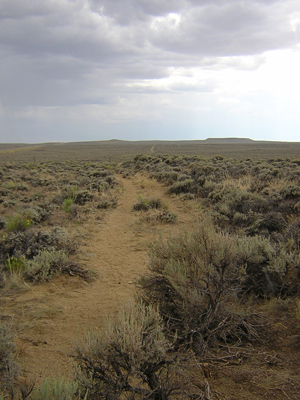
  • Phylis Evelyn Swinney

    Phylis Evelyn Swinney

    I was born on a farm near Buffalo, Kansas on July 27, 1920. I am the youngest of four children: Lois, George, Delyte, and myself. Both my parents, Tilden Swinney, and Daisy (Stoll) Swinney, were born, and raised in southeastern Kansas.

    I started School when I was five years old, and was put in the first grade. Delyte was in the second grade. I took 2nd and 3rd grades in the same year. Ours was a typical rural school with one large room, a coal burning stove, and two outhouses. Our school was one mile from home as you travel cross the farm fields. Otherwise, it was two miles by road. My folks got a Shetland pony for Delyte and me. Mother built a little shed with runners, and we pulled it to school, and left it there for Susie (our male horse) to stay in during school. For a while we both rode Susie to school. Then mother built a cart, which we hitched behind the horse.

    I do not remember a time when we didn’t go to church. Dad was Sunday School superintendent. He was also active in Grange and Farm Bureau. Mother was active in Ladies’ Aid and Unit. Delyte and I were in 4-H club. We both won many ribbons.

    As we were growing up, we learned to work on the farm. We raised lots of chickens, and sold eggs to a hatchery. We had sheep, and cattle. We usually milked five or six cows, and sold cream. We raised a big garden, and did lots of canning. In the winter, we butchered beef, or sheep, and canned meat. We never lacked plenty of food.

    Lois was married to Clyde Mears when I was six or seven years old. Ivan George was born about a year later. When Ivan was about five years old, they moved to California. My brother George went with them.

    Delyte and I graduated from the 8th grade when I was twelve years old. We went to Vilas, Kansas for high school, rooming with our cousins Artia and Amos Nelson the first year. Other years we drove, or rode with Winnie and Austin Sellers.

    After high school graduation at age sixteen. I worked in different homes in Chanute, Kansas. When I was 18 I went to California, hoping to go to school for designing clothes. I did not get in, so I worked at various things. I finally got on at Sears in receiving.

    I found a housekeeping room about two blocks from Lois’ and was on my own. During this time Mrs. Baker had a Bible study for young women, which I attended. I also attended the first Baptist Church in W. Los Angeles. Dick Cantrell was my Sunday School teacher. He was going to evening Bible school at Biola. I rode with him, and went too. The following year I decided to go to day school.

    I really loved this opportunity to study the Word. Dr. Hubbard’s classes were especially rich. Wilma Lambert was one of my roommates. She was headed for Nigeria under SIM. This was a challenge to me.

    She introduced me to Heber Richins. We were married on June 10, 1943. In February 1945, we went to Nigeria to work under SIM.

  • Orson Oriel Richins

    Orson Oriel Richins

    Orson Oriel Richins

    by Ena R. Mitchell

    My mother Rachel Hennefer Richins and my father Orson Oriel Richins spent their childhood in Henefer, Utah. There they played and helped their parents, as all small children do. As they grew older they had many boy and girl friends. Orson Oriel Richins was considered as one of Mother’s best boy friends. People would often see them going to school together and after school they would sit on their favorite bench and pretend that it was a wagon. He would help her off the bench as if it were a seat in the wagon. He walked home with her and he always carried her books for her. The Devil’s Slide was a favorite spot for all the young people. They would gather there for their picnics and to pick wild currants. Another delightful spot for fun was called the Witches’ Rock. In the wintertime, all the young people would go sleigh riding together. The friendship of Orson and my mother grew into love and they were married in the Temple Endowment House at Salt Lake City on May 25, 1881. To this union were born nine children, three boys and six girls. Six months after Father married my mother, he married Caroline Fawcett under the law of polygamy.

    In the fall of 1882 Father was indicted for polygamy. It was necessary for him to hide out from the Officers. The Officers kept watch over the house so closely that it was necessary for Mother to carry food to him. Father had to hide in the chicken house, and Mother carried his food to him in a horse nose sack so that the officers would not become suspicious of Father’s whereabouts.

    Father sold his property in Henefer and put Mother on the train for her to go to Mesa, Arizona, telling her he would follow. It was six months before Mother could let her folks know where she was. The officer questioned Grandma Richins as to their whereabouts. She never told where Mother and Father went.

    Mother lived in Mesa, Arizona for seven years. Two of her children were born there. As Father and Aunt Carrie were living in Mexico, it was necessary for Mother to make a living for her children. Mother provided for them by taking in washing and by nursing the sick. Father moved Mother to Mexico to be with him and Aunt Carrie, his second wife. Mother and Aunt Carrie lived in the same house and Mother always said that she loved Aunt Carrie like a sister. Aunt Carrie died, leaving three young children: Oriel, eight; Parley, six years old and Mary, who was 15 months old.

    Mother raised these three children like her own. The love and respect these children showed Mother was an indication of a job well done. A few months after Caroline’s death, Father married his third wife, a widow by the name of Sadie Harper, with two young girls.

    Mother worked hard doing the many things needed to care for her family, selling butter and eggs to support their needs. The older children had to do many chores on the ranch in Mexico, milking many cows night and morning. Mother made butter and cheese to sell and Father would freight, taking the eggs, butter and cheese to Deming and Silver City and Dog Springs, making the circle by wagon.((See “Camp for the Night” for a story about Orson’s freighting adventures.)) Mother and children were home taking care of the ranch and milking the cows and attending to the many duties.

    The Story of My Father’s Life

    by Rebecca R. Sanders

    My father, Orson Oriel Richins was born in Henefer, Utah on April 2, 1862 and died December 16, 1926, in Virden, New Mexico. His father, Charles W. Richins was born in Sheepscombe Glen, England on August 17, 1828, and died 27 August 1903 in Colonia Diaz, Mexico. His mother Louisa shill Richins, was born in Staffordshire, England on June 22, 1829. She died April 28, 1902, in Mesa, Arizona.

    My father was born under the new and everlasting covenant and was baptized a member of the Church of Jesus Christ of Latter-day Saints at the age of eight years. He progressed in the priesthood to a Seventy and acted as a Presiding Elder in several branches in Zion.

    His childhood days were spent in Henefer, Utah helping his father on the farm and working with cattle. My father had many boy and girl friends. Among his favorite of the girl friends was little Rachel Hennefer, who was born October 30, 1861, in Henefer, Utah. Her parents were James Hennefer, who was born June 2, 1821, in Wordsley, England and Sarah Hulks, who was born November 25, 1823, in London, England.

    Every day they would be seen going to school together and at play, they would sit on a certain bench and pretend it was a wagon. He would help her off the bench as if it were a seat in the wagon. He would walk home with her and carry her books. The Devil’s Slide was a favorite spot for the young folks, where they gathered for picnics and to pick currants.

    In the wintertime, they would go sleigh riding. As they grew older their friendship grew to love. They were married in the Temple at Salt Lake City, Utah on May 25, 1881. To this union was born nine children, three boys and six girls.

    Children of Rachel Hennefer Richins
    • Judith Louisa (Thygerson), born April 26, 1882, at Henefer, Summit County, Utah and died on April 12, 1937, in Virden, New Mexico.
    • Rachel Rebecca (Sanders), born March 25, 1885, at Mesa, Maricopa County, Arizona and died on May 28, 1960, in Douglas, Arizona.
    • Sarah Lillian, born August 3, 1888, at Mesa, Maricopa County, Arizona and died June 13, 1891, in Colonia Diaz, Mexico.
    • Orson James, born May 13, 1891, at Colonia Diaz, Chihuahua, Mexico and died on 29 August 1974 in Lordsburg, New Mexico.
    • Goldie Ireta (Wright), born August 30, 1893, at Colonia Diaz, Chihuahua, Mexico and died January 30, 1920, in Hachita, New Mexico.
    • George Arthur, born February 13, 1896, at Colonia Diaz, Chihuahua, Mexico and died May 28, 1981, in Dallas Texas.
    • Prudence Mae (Bowers), born on October 16, 1900, at Colonia Diaz, Chihuahua, Mexico and died October 16, 1978, in Salt Lake City, Utah.
    • Ether Wellington, born October 14, 1902, at Colonia Diaz, Chihuahua, Mexico and died January 21, 1973, in Lordsburg, New Mexico.
    • Ena Agnes(Mitchell), born January 3, 1906, at Colonia Diaz, Chihuahua, Mexico and died December 1, 1999, in Las Cruces, New Mexico.
    Children of Caroline Fawcett Richins
    • Joseph Oriel, born April 12, 1883, at Mesa, Maricopa, Arizona, and died 19 March 1941 in Salt Lake City, Utah.
    • Charles Parley, born September 18, 1886, at Deming, Grant County, New Mexico and died December 20, 1976, in Blythe, California.
    • Emery Willard, born February 23, 1889, at Colonia Diaz, Chihuahua, New Mexico and died May 27, 1891, in Colonia Diaz, Mexico.
    • Mary Emma (Patton), born December 7, 1890, at Colonia Diaz, Chihuahua, Mexico and died January 21, 1969, in Mesa, Arizona.
    Children of Sarah Harper Richins
    • Marland Lumin, born December 29, 1895, at Colonia Diaz, Chihuahua, Mexico and died August 15, 1973.
    • Carrie Roeen (Ford), born on October 25, 1899, at Colonia Diaz, Chihuahua, Mexico and died May 12, 1983, in Prescott, Arizona.
    • Sadie Esther (Agee), born on February 9, 1902, at Colonia Diaz, Chihuahua, Mexico.
    • Colola Beth (Whipple), born December 26, 1904, at Colonia Diaz, Chihuahua, Mexico and died January 28, 1965, in Phoenix, Arizona.
    • Orson Oriel, Jr., born July 5, 1908, at Colonia Diaz, Chihuahua, Mexico. He died on April 24, 1990 in Chandler, Arizona.
    • Olive Olga (McCulloch), born May 3, 1911, at Colonia Diaz, Chihuahua, Mexico.

    Under the law of polygamy, Orson took Caroline Fawcett as his second wife and to them was born four children, three boys and one girl. Caroline Fawcett was born on August 24, 1862, in New Zealand. They were married on October 20, 1881. Her father’s name was Joseph Fawcett and her mother’s name was Mary Ann Stratford.

    On February 23, 1895, he married Sarah Amanda Shurtliff Harper, who was a widow with two daughters, Mary Blanche and Elsa Vinetta. To them was born six children, two boys and four girls.

    This made a total of nineteen (19) children in all for Orson Oriel Richins—eight boys and eleven girls.

    Henefer, Utah

    Orson moved from Henefer, Utah to Mesa, Arizona and lived there seven years. Then on account of his religious beliefs, he went to Old Mexico where he could live with his families. When father went to Mexico he made his home in a little town called Colonia Diaz. As an occupation, he took up freighting from Mexico to Deming, New Mexico. He took butter, eggs, cheese and all kinds of vegetables to sell and exchange for dry goods.

    It was a lonely road over many mountains and very few travelers were seen on the road in the early days of 1887. The small towns were far apart and on many occasions, he saw bands of Apache Indians roving about. They would come to his wagon and stop him. Father always gave them whatever they wanted and when they had ransacked through all his provisions they would ride on their horses to the rear of the wagon for miles. Then they would give one of their war whoops, turn their horses, wave good-by to him and ride off in the direction from which they came. He said that he always had a prayer in his heart that his life would be spared and that he might see his families again.

    On one of Father’s trips, ((See “Camp for the Night” for a story about Orson’s freighting adventures.)) he had sold his load and was on his way home and as usual, he wanted to stop at an old man’s place in Emory Canyon. I think he was a prospector and lived in a one-room adobe house, which was at the entrance of Emory Canyon. It was in a large range of rugged mountains where the Indians had their hideout. There was a small spring at the house, where Father could water his horses.

    He was in Emory Canyon just a few miles away from the house and it was getting late in the afternoon but he wanted to make the old prospector’s home before night. He heard a still small voice say, “Camp for the night.” So he hobbled his horses and went to bed, but was unable to sleep much, as he could not understand why he was told to camp there.

    He arose very early the next morning, hitched his team to the wagon and started on his way expecting to make it to the old prospector’s for breakfast. He had only gone a short distance when he heard Indians whooping and yelling and of course, this put him on edge. As he neared the prospector’s home he could smell meat frying and thinking he was just in time for breakfast, he forgot the Indians, tied his team and went to the house to greet his old friend. Upon entering the house he could see that the Indians had been there, and he found his prospector friend dead.

    The Indians had made a big fire in the stove and placed his body on it to burn. Hurriedly father took his friend’s body from the stove and buried it near the house, all the time fearing the Indians would return. He knew he was prompted by that still small voice the night before and the Lord had saved his life.

    He continued his homeward journey and stopped at Alamo Huecco and Dog Springs where he met a cowboy and told him of his scare. For protection, they agreed to stay together until the Indians had gone back to their hideout and then father continued his journey home even though he had to pass over the Indian’s trail several times. The scare made him very nervous for several weeks so he discontinued his freighting for some time.

    Missionary Moments

    My father was called on a mission for the Church, which meant leaving his two wives and eleven children while he labored in the Central States Mission for 27 months. While on this mission he visited Carthage Jail, where the Prophet Joseph Smith was killed by the mob. The stains of the Prophet’s blood were still on the floor, which was covered with a carpet. They have tried to remove these stains but it cannot be done.

    During this time he made many friends and converts and filled an honorable mission. He returned to his home in Colonia Diaz and found his families in good health, thankful they had prospered during his absence. After his mission he continued farming, raising cattle and freighting from Colonia Diaz to Guzman.

    During this time he was called to serve as a home missionary with Brother Mabin as his companion. Some times they would take their wives and children with them as an outing or trip. On one of these trips they were on their way home from Colonia Morales and had camped overnight in Guadalupe Canyon.

    While building a fire the next morning to cook breakfast, a mad coyote came in camp, jumped and scratched my father’s face. He tussled with the mad coyote and his first thoughts were of the Mabin children, who were sleeping on the ground close to where he was building up the fire. He awoke Brother Mabin and told him to cover the children so the coyote would not harm them.

    The coyote got away from him but was killed by a rancher the next day. The fear of hydrophobia was so prevalent in his mind that he prayed to the Lord for deliverance from the fear. He knew his prayers were answered because the fear was taken from his mind. My father said he knew that through the power of the Lord no ill effects came from the scratches of the rabid coyote.

    Exodus From Mexico

    In 1912, during the Mexican Revolution, Father and his families were driven from their homes. They had to leave for the United States in such a hurry that they left all of their possessions behind them. After a few weeks the Revolution quieted down and a group of relatives went back to Mexico and gathered what few things were left in the houses and some of the cattle that had not been driven off.

    My father took up a homestead not far from Hachita, New Mexico and close to the Mexico border. He lived there for a number of years and progressed very nicely, but due to his wife’s health, he sold out to the Diamond A Cattle Co. and moved to the town of Hachita, New Mexico.

    Father was a very religious man and while in Hachita he was Presiding Elder over the branch of the Latter-day Saints Church that was started by the people who were driven out of Old Mexico at the time of the Exodus in 1912.

    While in Hachita, word came from the church authorities for the Saints and settlers to buy farms in Red Rock, New Mexico, which is 38 miles north of Lordsburg. Father invested all he had in a farm in Red Rock, then he asked all of his children and their families to go there and buy a home so they would all be together. The three or four years spent in Red Rock proved very unsuccessful and father worked so hard his health began to fail him. He gave up farming and moved to Virden, New Mexico, where the people consisted of mostly Latter-day Saints and his former acquaintances of Old Mexico.

    Father’s Final Words

    Father loved to read the four standard works of the church and the Desert News. He was a great pioneer and loved to start new homes, but old age was creeping upon him and his health was failing fast. A short time after moving to Virden, he had a stroke, which made him bedfast. He knew that his time upon this earth was short so he called his wives, children grandchildren to his bedside and gave each a blessing.

    His daughter Golda Ireta, who had passed on in death before him, January 30, 1920, assisted him in living these blessings, because he would pause all through his blessings and say, “Ireta bring me more blessings, more blessings Ireta.” In all he gave 29 blessings, which have been a help to all his families. His last words to his children were, “Live the Gospel and Teachings of Jesus Christ and the Lord will bless you for it.”

    He passed away on the 16th of December 1926 and was laid to rest at Virden, New Mexico.

    The Story of the Sick Horse

    Ena R. Mitchell

    I would like to relate a story father told us about one of his many experiences when he was freighting out of Mexico selling the cheese, eggs and butter mother made. Uncle Bill, as father always referred to him, lived in the mountain like a hermit. ((See “Camp for the Night” for a story about Orson’s freighting adventures.))

    Father was always prayerful and believed in his Father in Heaven’s protecting care. Father always made it a point to visit Uncle Bill’s place when he made his rounds to tell him about things that were happening in the world and all the news he knew about their friends. Uncle bill lived near Antelope Wells in the mountains in what is known as Emory Canyon. He was a hermit living alone, mining and prospecting. Father always tried to stay the night with him so they could visit. This time he was trying to get to Uncle Bill’s before dark and for no reason one of his horses became very lame and sick. The horse seemed unable to walk and tried to lay down. Seeing the condition of his horse that evening, Father got out of the wagon, took hold of the bridle and led the horse off the road into the tall mesquites to hide from view if any passerby would happen to come along, as he had fear of stopping near the well. He prepared for the night and gave the best care he could to the sick horse.

    During the night he heard a group of horses trotting on the road. His fear was Indians, as he knew that they traveled at night when they were on a War Party. He kept still and crawled to where his horses were, in hopes he could soothe them so they would not make a noise and attract the other horses. Right at daybreak father was up ready to start on his trip. He got up early in hopes to arrive at Uncle Bill’s in time for breakfast. He harnessed the horses and the sick horse showed no sign of being ill as he had been the night before, so he was soon on his way.

    Upon entering Emory Canyon he could see the smoke from the chimney of Uncle Bill’s house and also smelled meat like beef frying. Father was pleased, thinking he would soon enjoy a good deer steak for breakfast. Father approached the house and thought it strange that Uncle Bill did not greet him when he drove up. Father jumped off the wagon and opened the door of the cabin and to his horror, he saw a red-hot stove and Uncle Bill tied across the stove burning. Father, realizing that the Indians had just left, hurriedly cut the rawhide strings that held Uncle Bill on the stove and quickly dug a shallow grave, buried his friend behind the cabin and left before the Indians returned.

    Father realized that the party of Indians that had passed him in the night had killed his friend. Thanking the Lord for his protection, he always felt and knew the Lord had a hand in the reason for his horse becoming so sick the night before. The Lord had answered his prayers and gave him protection so he might return to his family.

    Missionary Opportunities

    Father was called on a mission in October 1896 to serve in the Central States from October 1896 to January 29, 1899, for a total of 27 months. He left his families to care for themselves in his absence. I have heard my mother (Rachel) repeat many times how blessed his loved ones were while he was on his mission. Mother said they had very little food in the home, only enough flour to make one batch of bread when he left. When he came home he found the family well. Mother had cared for her family well and they were able to buy all their needs in clothing and food from the sale of cheese and butter she made and from selling eggs at a store in town. She had also purchased enough bricks to build a new brick home and there were two barrels of flour in the home.

    Exodus From Mexico

    The Mexican Revolution necessitated Father move his families to the United States for safety. When they left Mexico they went from Colonia Diaz, Mexico to the Corner Ranch in the United States (New Mexico), which was about 20 miles away, they stayed for three days. They hoped to return to their homes once the fighting in northern Mexico calmed down, but the conditions in Mexico only worsened. They were told they would not be able to return to Mexico for the foreseeable future. The United States Government ordered the refugees to Hachita, New Mexico and provided tents for their families. The tents, food and clothing were provided until the people could provide for themselves. I was 5 years old, but I remember the Tent City. I loved to go with Mother when she went to the big tent, which was the Commissary, to get food. Mother would give me dried peaches, prunes and apples to eat, which was such a treat. We eventually moved from the Tent City to Old Hachita. Mother was able to find work at a boarding house to support the family. Father was busy trying to find land to homestead. He and my brother-in-law, Ras Thygerson filed on a homestead twenty miles southeast of Hachita.

    Father built a long one-room house made of 1″ x 12″ boards and a few half windows. It had a tin roof and a dirt floor. To deflect the heat, father and the boys went to the Big Hatchet Mountains and cut bear grass to put on the roof. We lived in this house with a dirt floor for over a year before father put a wooden floor in the house. Mother was very particular about the care of the dirt floor. Each day it had to be dampened and swept. The floor was hard and had little or no dust. We lived on the homestead, with father doing dryland farming and raising some cattle, from 1913 to 1922.

    Orson Oriel Richins Homestead - Sep 23, 1913

    The photo above shows the Richins homestead south of Hachita, New Mexico. The buggy and horse by the house (center) belong to visitors. The wagon on the right is the one the Richins family used to go places in. Every Sunday morning they drove 20 miles to Hachita to hold and attend Sunday School and church. The Hatchet Mountains are in the background, with the dryland farm (dry lake bed) in the middle. (Ena A. Richins)

    Father was called to be the President of the Branch in Hachita and the only means of transportation we had for many years was a team of horses and wagon. Each Sunday morning we were up at daybreak and ready to travel the 20 miles to attend Sunday School and Church. Our lives were very primitive.

    The ranch was near the Mexican Border and many nervous and dangerous days and nights were passed. Mexicans often crossed into the United States stealing and murdering the white ranchers who lived along the border. While we lived on this ranch, my father and brothers never left the house or went anywhere on the homestead without first strapping a belt of bullets around their waist and carrying their rifles. Guns and ammunition were always kept in the house where they could be reached quickly. Even when going to and from the fields, guns were taken. Whenever we heard that some ruthless Mexican who had molested or killed other ranchers in the area was about, we were not permitted to undress for bed or use lights of any kind, as they might announce our whereabouts. We lived in constant fear.

    Father, realizing the danger his family was in, asked the United States Army to be encamped below our ranch near the border. A small detachment of soldiers was stationed five miles above us at the Home Ranch, a large cattle company headquarters. The soldiers patrolled each day to the Mexican border, which was below our ranch. This offered a little protection for us.

    Mother refused to live on the ranch any longer and moved to Hachita and ran a boarding house during the year of 1920-21. In 1922 she moved to Duncan, Arizona where I was to attend High School. Father sold the ranch and bought a small farm at Red Rock, New Mexico. The farm was very sandy and this purchase turned out to be unprofitable. Father and mother lived at Red Rock two years. Father was unable to make headway farming, as his health was very poor. Father underwent an operation for a hernia, after which father never fully regained his health. Father sold the farm at Red Rock and bought a lot in Virden, New Mexico where father and mother wanted to live. They moved to Virden and lived in one room of the home of father’s halfsister (Aunt Bea Smith) until they could build their own home in Virden. Father died December 16, 1926, and was buried in Virden, New Mexico.

    The Return Home: Excerpts From My Missionary Journal

    by Orson Oriel Richins
    Ciudad Juarez, Mexico, at Brother B. Pierces, Saturday, January 28, 1899.

    The morning beautiful, the weather clear, sun shines bright, Brother Pierce and family well. I wash myself at Brother Pierce’s, went and ate breakfast with Brother J. L. Wilson at the restaurant, from there came and got ready to go on the RGSM & Pacific RR. Leaving Ciudad Juarez 9:00 am for Guzman station 78 miles. Arriving at Guzman Station 12:00. I was accompanied by G. L. Wilson, A. P. Spillsberry and one Mr. Stewart from the East coming into Mexico to look at the Country. The last named person and I had quite a chat one morning. Mr. Stewart said that the Prophet Joseph Smith was blessed with more than man’s wisdom, for said he, “He could not have organized the Church so perfect if he had not been blessed by Divine Wisdom.” I was met at the Station by my son Oriel Richins, and my brother-in-law Robert Maybin, (Eunice’s husband). Was pleased to see each other. From the Station we went ¼ mile to the wagons, where I was met by my dear wife Sarah and my daughter Rebecca and my sister Eunice. It was a happy meeting, being absent from each other 27 months. Robert Maybin had soon hitched up the horses on the wagon, and we were soon traveling towards Colonia Diaz, just before sundown we camped and ate supper, and let the horses have a rest and eat. We then hitched up again and drove until about 8:30 pm. Here we camped for the night, 25 miles from Guzman. The moon shined bright, a nice beautiful evening. We made our bed on the ground, said our prayers and I administered to Eunice, we then all retired for the night.

    At our Camp on the Road, Sunday, January 29, 1999.

    We all got up feeling well, (Eunice better). Made a fire, Eunice got breakfast ready, we said our prayers and ate our breakfast after which hitched up the horses on the wagon, and rolled out of camp about 9:00 am. The road nice and weather pleasant. Arrived at my home about 12:00. Here I met my dear wife Rachel and the rest of the family; Judith, Parley, Mary, Orson, Ireta, and George. Also two of my sisters, Agnes and Lois. We all got into the wagon and went to my Father’s. Here I meet my dear father who is 70 years old, enjoying good health and looking better than when I left. Also, met Aunt Agnes and the rest of my brothers and sisters including my brother Marland who I had not seen for 7 years. It was a joyful meeting, finding each other enjoying the best of health. We ate diner at Father’s and after dinner we sat in the parlor and sang hymns and had an enjoyable time. After which I took Oriel’s pacing mare and went up to my home in Diaz. Here I meet my little son Marland who had grown so much I would not have known him. Also Blanche and Elsie who had grown to be big girls. It was a joy to meet all my dear family, enjoying good health, and to think God had so blessed us, and permitted us to see each other again, being returned to the bosom of my loved ones once more after being absent 27 months on a mission in the Northern Illinois Conference. We feel to thank God for this glorious blessing. I returned from my home in Diaz to the Ranch. Here I was surprised by a wagon load of young folks (12) from town. The evening was spent singing and reciting. I also gave them a small sketch of my missionary experiences: the entertainment lasted until about 11:00 pm, dismissed by prayer by O. O. Richins. Our guests returning home to Diaz. I then had family prayers and we all retired for the night 10:30 pm.

    The Value of Prayer in Father’s Life

    by Ena R. Mitchell

    In September 1921 mother, (Rachel H. Richins) her grandson Sidney Wright, and I moved to Duncan, Arizona, where I was to attend High School. We lived in three rooms of my brother Orson’s large house. He and his wife and family were living near Duncan. Mother did not want to live anymore at the ranch near the Mexico border. She felt if she moved to Duncan near her son and where I could attend High School, Father would consent to sell the homestead.

    About the middle of September or the first part of October 1921, Father (Orson O. Richins) came and spent two days with us in Duncan. He had to return to the ranch to take care of a few things, and would only be gone overnight. Sidney was four years old and being young wanted to go with his grandpa. It was a thrill for him to ride in the Model “T” Ford with his grandfather. On their return trip to Duncan from the ranch, they had to travel an old road, which went near Brockman, about 20 miles southeast of Lordsburg. The Model “T” got stuck in mud. Father tried to get the car out but failed, so the only thing he could do was to get a shovel to dig the car out. Fortunately, he saw a ranch house about three-quarters of a mile off the road and thought it best to walk to it to see if he could borrow a shovel or something to dig with to get the car out of the mud.

    Father went to the ranch house and borrowed the shovel and returned to the car and worked with the car and dug it out with the shovel. There was no road to the ranch house and the ground was muddy, as it had rained the day before. Father thought it best to walk again to the ranch house to return the shovel rather than risk getting the car stuck again. Father cautioned Sidney again not to get out of the car, advising him of the danger of wild animals and being lost in the thick brush. This worried father and he hurried to return the shovel he had borrowed. After returning the shovel he took a short cut through the brush in hopes to return to Sidney sooner, when suddenly the earth caved in beneath him and he found himself dangling in an old well up to his armpits. Father swung his legs and feet in hopes to touch something to get a footing against the side of the well, but he was unable to touch anything with his feet. He made efforts to try to wiggle forward on his elbows on the old planks that had been covered with dirt, but every time he made a move he could hear and feel the boards crack, and give from the weight of his body.

    Father struggled for some time in hopes he could move enough to be able to touch a side of the old well with his feet, but it was impossible for when he did the rotten boards cracked and gave way. Father was gravely concerned about his predicament, for he seemed doomed to fall in the old abandoned well to his death.

    He realized the danger of his young grandson Sidney, alone in the car in a wild and brushy country. What would happen to him if he got out of the car and wandered away in the tall brush? He would never be found and would be lost forever. In this anxiety, Father prayed humbly for some time and with anguish called upon the Lord to be freed from this awful peril and to deliver him so he could go to his young grandson. While praying for his grandson’s safety, Father poured out his heart humbly and in earnest prayer to the Lord for Sidney’s safety and protection.

    Father recalls only that he awoke and found himself lying on the ground near the well where he had been dangling. He never knew how he ever got out of the well, or how long he had been lying on the ground unconscious. He knew it was about noon when he got the car out of the mud and went to return the shovel to the ranch, and now it was late in the afternoon. Father said he crawled some distance away from the well, as he was afraid that he might again become trapped. He hurried to the car, as he was anxious to reach Sidney. He had a prayer in his heart that he would find his young grandson safe. He half ran to the car, as he was some distance away from it, and found Sidney sound asleep in the back. Father knelt beside the car and offered up a prayer of thanksgiving to his Heavenly Father, thanking him for his blessings: delivering him out of the hole and finding his grandson safe and asleep in the Model “T”.

    It was early evening when Father and Sidney reached Duncan. Orson was chopping wood and I was carrying the wood into the house when Father came and sat down on a large stump and related his experience. With tears running down his face and shaking from the ordeal, Father told of his pleading to his Father in Heaven to spare him, and for the safety of his grandson.

    Father never wanted to speak of this experience again, as he was very humble and touched by the ordeal he had gone through. Father had great faith, especially that the Lord hears and answers prayers. He taught his children to have faith in our Heavenly Father as He hears our prayers and answers them.

  • Henry Richins & Sarah Haynes

    Henry Richins & Sarah Haynes

    Richins Brothers: Henry and Thomas Richins

    Henry was the younger of the two sons born to Thomas Richins and Sarah. His brother, Thomas, was two years his senior. They were probably young boys when they moved to Painswick with their parents.

    For many years, the Richins family has searched, without success, to find the birthplace of Thomas and Henry and the marriage of their parents, Thomas Richins and Sarah. There was a Temple Index Bureau (T.I.B.) card that stated Henry Richins was born April 9, 1769 at Rodbury. Another card had no date of birth, but listed him as being born in Rodbury. In all of our searching, we have not been able to find Rodbury. The 1841 census states Henry was born in the county of Gloucestershire, England, but there is no parish of Rodbury listed in the index of parishes. An index of towns in Gloucestershire did not have a Rodbury, but we still hope and search.

    We have verified that Henry was born in the year 1769 by his age on his death certificate. We also were able to set Thomas’ year of birth as 1767 by his age on his marriage license or allegation. There were no Richins entries in the Painswick Parish Record until 1790, when the burial of Sarah Richins, wife of Thomas Richins, was recorded on May 28, 1790. By then, Henry was a young man of 21 years. He was then of age to receive his inheritance of five pounds from his grandfather, John Richins. Five pounds may not sound like much on today’s market, but it was a respectable sum in those days and certainly helped him to get a start in life.

    The following year, 1791, Henry’s brother, Thomas, was married by license to Ann Wilkins. He had to pay a bond of several hundred pounds, but he did not have to wait the four weeks while his coming marriage was publicized. The allegation listed Thomas as age 24, a bachelor and a yeoman of Painswick. A yeoman was a gentleman farmer who held a small estate in the country. We can see that Thomas, being the eldest son and heir, had a great advantage over Henry, who was a farm laborer.

    Henry Richins and Sarah Haynes

    Henry was 23 when he sought the hand of Sarah Haynes in marriage.  She was the daughter of Edward Haynes and Ann Cook.  She was 22, having been christened at Painswick October 21, 1770.  Henry could not afford to be married by license, so they were married by banns and waited out the required four weeks while their intentions to be married were announced in church.  The purpose of banns was to allow anyone who might oppose the marriage the chance to present their opposition before the marriage took place.  Since no one objected, the Vicar of Painswick, the Reverend John Moseley, married them on April 10, 1792 at he parish church.  Sarah’s father, Edward Haynes, was one of the witnesses and there were probably other family members present to wish them happiness.

    Neither Henry nor Sarah could read or write, so they had to place the usual “X” by their names.  Edward Haynes also placed an “X” by his name.  There were no national schools until 1870 and schooling was not required or thought important.  Parents were more concerned that their children received training in a labor or trade and find employment than be in a schoolroom learning to read and write.  It has been told that Henry was concerned about education and one of his sons attended Oxford, but Sarah and Henry were a generation too soon.

    After the marriage, Henry took his new bride to Sheepscombe to live.  It was a beautiful country with green rolling hills crowned by trees and woods and forests.  In early morning, sometimes the mist lays low among the trees and as the sun broke forth above the treetops, it turned the meadows a brilliant green.  The cottages reflected the sun and wisps of curling smoke rose from the chimneys as the families prepared to meet another day.  Sheepscombe was an isolated village north of Painswick, but included in the parish. 

    There were two large estates that required farm laborers, the Manor of Sheepscombe, which included part of Cranham and the Ebworth estate that consisted of 300 acres of land and a substantial Gable House from the early 17th century and a contemporary stable block.  In 1715, the house was heightened and enlarged during remodeling.  It was sold many times from 1715 to 1800 and each owner made his own alterations to the house and stables.  Most of the owners held large estates and homes in other cities and used Ebworth as a country estate for fox hunting and fishing.  It had a game park patrolled by gamekeepers to protect the game and fish from encroachment by the public.

    Henry apparently obtained employment at the Ebworth estate, for according to the 1841 census, Henry and Sarah were living at Ebworth Park in House #196.  (It was the custom of the Lords of Manors and the gentry with large estates, to build houses for the tenant farmers and farm laborers.  The house would have included a garden spot, ranging from a small plot to several acres and they also had the privilege of pasturing a few cattle on the commons, for which they paid rent or lease.

    Ebworth was north of Sheepsombe village and was bounded on the north by the Sheepscombe stream that divides it from Cranham.  Brookthrape and Harrescombe lie to the west, Miserden (home of the Wagers) is on the east and southwest is Painswick.  This is the heart of the Cotswold country, known for its beauty and the Cotswold stone—a soft sandstone pushed up from the sea.  It was easy to cut and work with, but has also proven very durable.  Most of the homes and buildings are several hundred years old.  The post office at Painswick dates back to 1428.  The stone ranges in color from soft grays at Painswick to the golden honey hue of Stanton, often called the most beautiful village in England.  The weathering and moss has etched beautiful designs and markings in the stone.

    Henry and Sarah settled in their home with a few sheep and cattle to pasture on the commons and several acres of ground to grow crops and though the wages were low, they were able to manage and raise a family.  Their first child was their daughter, Sarah.  Since there was no church at Sheepscombe, they had to travel several miles to Painswick to have her christened at the Painswick church on June 9, 1793.  The Reverend John Moseley, who had married them, performed the christening.  Sarah was followed by another daughter, Elizabeth, who was christened on February 3, 1798 by a curate, as Reverend Moseley had passed away.

    One wonders how they traveled to Painswick in the cold winter with a newborn baby.  Most children were christened soon after birth as possible because they were warned that if the baby died before it was baptized, it would burn eternally in hell.  What anguish this teaching must have caused!  Christening was their form of baptism.  The baby’s head was held over the font, which held the holy water, and the minister dipped his fingers into the water, sprinkled the baby’s head and gave it its name at the time of baptism.

    Henry and Sarah took Elizabeth in the cold winter to be christened.  Some farmers had a cart that was pulled by a small horse to take products to market and used it to travel if they had to go far.  Did they borrow a cart or did they walk?  Most people in the working class walked.  Sarah probably wore patterns in the mud and snow, which consisted of wooden soles mounted on iron rings that raised the shoes above the mud.

    With each new child, Henry probably wished for a son.  It was important in England to have a son to carry on the family name.  So we can imagine how pleased he was when the next child was a boy.  He was christened November 20, 1800 and given the name of Richard.  Usually, the first son was named after the father or a grandfather.  Was Richard the name of his mother’s father?  Or a friend?  It would be someone who was close or dear to them.  He also was christened by the curate.

    Religious Dissension in Painswick

    There was dissension in the Church at this time.  For 200 years, the people of the parish had been able to choose their Vicar, but in 1752 when they presented their choice to the Council, he was rejected.  The Council who presented John Moseley as the new Vicar, but the people were unwilling to accept him and instituted a suit to establish the choice of the people.  Finally after ten years the people submitted and John Moseley served as Vicar until his death, October 8, 1794.  His finely carved tombstone can still be admired near the Lyk-Gate in the Painswick churchyard.

    On the first Sunday after Reverend Moseley’s death, the church wardens called a meeting to call a new Vicar.  They chose Mr. John Fearon, but the trustees refused to appoint him.  They claimed the right to choose without interference from the parishioners.  Mr. Fearon filed a bill in court to compel the trustees to present him.  The trustees instead placed the parish in charge of the curates. Mr. Fearon was about to take charge of the parish in 1823, but his health declined and he became too ill.  He died June 10, 1823.

    Once again a meeting was called to elect a new Vicar.  There were eight names presented, but only two names were included in final voting—Reverend Robert Strong, who was at the time one of the curates in charge of the parish and William Knight, who had also been a curate in charge of the parish.  The people were divided into two hostile camps.  The contest became so vigorous that the men went so far as to engage in fistfights.  The women even embroidered the name of their choice on their caps and aprons.  Although Robert Strong was eventually elected, the hostile feelings were not wiped away for twenty years and affected the relationship of the Vicar with his flock.

    Another son was born to Henry and Sarah during these troubled years.  He was named Henry, after his father.  He was christened on Christmas day, December 25, 1802, by the acting curate.  Three years later a daughter was born.  She was christened and received the name Meriam on November 11, 1805.  Child number six was William who was born at Sheepscombe, December 27, 1806 and christened February 15, 1807 at Painswick. Their seventh and last child was Joseph.  He was christened September 2, 1810 at Painswick.  Henry and Sarah raised their children through trying times.  The anger and feelings in the Church weakened the parish spiritually and the rough environment of Sheepscombe must have given them grave concern.  There was also the depression, the industrial revolution, plagues, disease and war to cause them worry.

    War and Plagues

    In 1803, England was under the threat of invasion from Napoleon.  He had made his escape and had been able to raise a large army.  They had conquered Europe and now threatened to invade and conquer England.  There were many sympathizers to the French cause, especially in Ireland, so England was plagued with informers and treason as well.  When Nelson won his naval victory at Trafalgar and England became the “Mistress of the Seas,” it decreased the threat of invasion.  The fighting continued for ten years before Wellington defeated Napoleon at the battle of Waterloo.

    With the end of the war, England had to face many problems at home.  The war had curtailed trade and other countries had taken over her markets and the depression had caused unemployment, as machines replaced men.  The return of the soldiers swelled the unemployment ranks even more. There was a great housing shortage in the industrial areas as small towns became a city almost overnight.  As a mill or factory would go up, the unemployed rushed to get work and would discover there was no place to live.  Two and three families would crowd into one small cottage.  People lived in attics and in cellars and dugouts. With no way of disposing of the waste and garbage, the unsanitary conditions brought on an epidemic of cholera that took so many lives there was no place to bury the dead.  Gravediggers were known to dig up older graves and remove the bones so that the new victims could be buried.  Although Painswick and Sheepscombe seemed to avoid the overcrowding and plagues, they could not avoid the depression.

    Painswick was noted for its weaving and quality cloth.  The Painswick wool was of high quality and long fiber and there were many qualified weavers.  Many of the homes had a room set aside for a hand loom.  There were shelves to place the sacks of wool and weaving and spinning tools.  The looms were seldom idle, as weavers in the family took turns at the loom. With the invention of the power loom by Cartwright and the use of waterpower to run them, mills began to spring up all along the streams of Painswick and Sheepscombe.  At the height of the industry, there were 20 or 30 mills along the streams.  They were well known for the fine woven broadcloth, especially the brilliant red that the army used for their “red coats” and for the coats used by those who enjoyed the fox hunts.  There was also navy blue for the Navy and green for the billiard tables of the gentry.  The weavers with their hand looms could not compete and lost their market.  In anger they marched to destroy the mills that had destroyed their living, but it was all in vain.

    Sheepscombe was called the “Peaceful Valley,” but it didn’t deserve the name.  One moralist wrote [source unknown], “Sheepscombe is a wild and lawless place where 700 people live in poverty and ignorance with scant regard for other’s welfare.”  Another author [source unknown] wrote concerning the condition of the mills: “The licentious ballads and filthy jesters and oaths profane were wont to echo in the walls, while drunkenness, not infrequently, went so far as to suspend the mills operation.”

    There was no church in Sheepscombe, but many ale shops and many unlicensed houses where beer and ale were sold were plentiful.  What a challenge Henry and Sarah faced to raise a family in this environment.  Their home life must have been a source of strength to have raised a noble family in those

    Two weavers, John and William Twinning tried to upgrade the lives of the children by opening a school to teach reading and writing, but most parents preferred the meager wages of their children to their learning to read or write.  Discouraged by the apathy of the parents, they finally closed the school.  Then the Reverend Charles Neville came to Painswick as a curate.  He noticed John and William Twinning’s regular attendance at church and became interested in their work with the school.  He and his wife, Agnes, determined to help the “godforsaken” people of Sheepscombe and Painswick.

    Religious Revival in Sheepscombe

    Agnes Neville was an energetic, dark-eyed girl of 22 years.  She had a cheerful disposition and determination.  At first she received very little encouragement in Sheepscombe and her critics were convinced that no woman could keep order, much less teach these wild ruffians.  They predicted she would meet insults if not actual violence.  The young couple found it rough going indeed and received little encouragement that they would succeed.  They persevered and even in the cold winters, they walked in tracks of mud and snow to reach this isolated village.  Agnes began to hold classes in the village and to visit the families in their homes.  She acted as nurse, doctor and midwife.  Reverend Neville began to hold cottage meetings in Sheepscombe after his meetings in Painswick.  Through their love and patience and kind understanding, they gained the love and respect of the village people and soon the cottage meetings were filled to overflowing.  The change was miraculous.  Agnes even convinced the unlicensed beer houses to stop making beer.

    The people of Sheepscombe desired to have a church of their own where they could meet.  Reverend Neville acted quickly and within three months had permission to build the church and had obtained the site.  He worked ceaselessly to raise money for the building.  Knowing the poverty of the village he approached his friends and family and acquaintances outside the valley for contributions.  Thomas Crome, the Lord of the Manor, donated the site for the church and promised to furnish the stone from his quarry.  The people were asked to furnish the labor.  After a full day’s work at the mills or farms, the people worked on the church, sometimes by moonlight.  One worker was heard to say, “We never felt weary, we worked with such hearty good will.”

    On Easter Monday, April 12, 1819, they laid the cornerstone and by February 21, 1820, the church, dedicated to St. John, was consecrated and a clipping service was held.  This custom was for the children and adults (if desired) to hold hands and dance or march around the church singing a special song for the occasion.

    The church was a simple design, compromising of the present have today, only it was shorter.  The communion table then was a board with hinges that could be raised or lowered.  A small vestry was built on the south wall.  Reverend Neville didn’t stop with the church but built a school and Vicarage besides, where the doors were always open to welcome everyone.

    The church was soon filled and overflowing and had to be enlarged by 1831, but Reverend Neville and Agnes were not present to see it.  He had to resign his post in 1827 because of ill health.  Sheepscombe was saddened by the news that Agnes had died after the birth of a stillborn baby in 1831 at age.  Joseph Richins was instrumental in raising funds for plaques in memorial of their service.  Joseph Dunan Osterhan replaced Reverend Neville.

    The church has been remodeled and enlarged several times.  The “ugly old pews” were replaced to the delight of the congregation, but when the plans called for tearing down the tower and replacing it with a new one, the people rose up to the man to protest.  It didn’t matter that the tower had been criticized and poked fun at, this was their very special tower and it was dear to them.

    When Dr. Verry had written concerning buildings in England [source not listed], he mentioned the St. John’s church in Sheepscombe: “The original church has a most amusing west end, with a minuscule tower which thinks it’s a turret with an okra lead roof, but then tries to be a tower with four tiny corner pinnacles and a pygmy ringing stage below…”  Henry Warren [source not listed], in writing about the Cotswold years wrote concerning the tower:

    “The first impulse…is to laugh for it is the most extraordinary tower.  It is as if those zealous amateur builders became so excited at the miracle they had wrought that they let their fancy run wild, all they had wrought that they let their fancy run wild, all ecclesiastical decorum was thrown to the winds.  One said there must be a pinnacle, another said there must be a cupola; so they simply combined the two.  A third said there certainly should be a stone caping and the fourth said what was really wanted was some nice fancy turrets so they erected caping and turrets as well.”

    – Henry Warren

    To the people of Sheepscombe, it was this extraordinary tower that gave the church its charm and character.  Take away the tower and it would become just a small, ordinary church.

    When I, Hazel Richins, visited the church in 1983, they were having an open house to raise money for repair of the church.  The Vicars from Sheepscombe and Painswick were there to welcome the people and invite them to tea at the Vicarage.  The church was decorated with flowers from their gardens.  I was so enchanted by the beauty of Sheepscombe and it was a very special moment to be in the church where Henry and Sarah worshipped with their family and may have helped to build.  I felt a desire to have this special church preserved, so I left a pound note in the name of the Richins Surname family.  It was gratefully and graciously accepted.

    Although the environment had improved there were still many stressful years of struggle.  The depression was felt deeply on the farms, as the wages of the workers had been cut until many were listed as paupers.  Six men tried to organize the farm workers into a union and strike for higher wages, but they were seized and put aboard a ship bound for Australia and they were not allowed to return for seven years.

    The Industrial Revolution: A changed way of life

    Painswick and Sheepscombe also became victims of the industrial revolution when the steam engine was invented.  It began to replace the water-powered mills.  Without need of water, mills and factories sprang up in towns all over England.  Then it was the water mills that could not compete with the steam engine mills.  As the mills along the Sheepscombe and Painswick streams began to close, some of the larger mills tried to avoid closing by replacing men, women and children in the less important jobs, so they wouldn’t have to pay the higher wages.  This failed and caused wages to take another drop.

    Henry and Sarah struggled through the depression with very little money.  Their few sheep and cattle and land provided the food so they were able to feed the family, although the diet was sometimes monotonous.  When William told his grandchildren of his life in England, it was not negative things, but of a green valley with rolling hills and woods and streams where his father took then to fish and hunt.  He spoke of meadows and flowers where he tended his father’s sheep, showing they had a happy childhood in spite of being poor.

    Through living in an isolated village they were able to avoid the crowding, the crime, the riots, etc., but they could not escape the dreaded disease of consumption.  One fifth of all the deaths were from it.  It was fatal before they developed drugs to cure it and inoculations to prevent it.  We now call it tuberculoses or TB for short.

    People were not aware consumption was caused by bacilli and it spread through families unchecked.  It was spread from the sputum of the patient and also by drinking the milk of an infected cow.  At first it was believed that the bloody sputum was caused by a broken blood vessel in the lungs when coughing from a cold.  They believed that the cold was caught from a draft, so to avoid catching a cold, they shut the windows and doors even in hot weather.  The hot stuffy room soon filled with bacilli from the patient’s cough.

    The first symptom was the swelling of the glands in the neck.  As the tuberculosis began to form in the lungs, they coughed up the bloody sputum. They became anemic and suffered from cold sweats at night.  They became dehydrated and feverish.  Ulcers formed in their mouths and on their skin.  They became emaciated and the lower limbs swelled with fluid in the tissues.  This caused ever-present pain and suffering.  As the disease advanced to affect the brain, the victims suffered from a high fever and delirium.  Then they lapsed into a coma and then death.  How frightened and heartsick the parents must have been to see the dreaded symptoms appear in one child or loved one after another.  Not surprisingly, many of the Richins fell victim to this disease.

    Except for Sarah, Henry’s and Sarah’s family reached maturity and married.  We can find no other entry for Sarah after her christening and therefore feel she must have died young.  Following is a brief synopsis of  Henry’s and Sarah’s other children:

    • Child #2—Elizabeth, better known as Eliza, married Daniel Pearce and they were the parents of nine children.  Some of their children died as a result of consumption.  Elizabeth died of heart disease, June 19, 1868.
    • Child #3—Richard married Charlotte Priscilla Wager and they were parents of eleven children—some of them also died of consumption.  Richard died in 1848.
    • Child #4—Henry, married Rachel Twinning—he saw some of his children die because of consumption before he became its victim in 1861.
    • Child #5—Meriam married John Dickinson, a cloth worker, by banns on July 29, 1827 at Painswick church.  Robert Strong performed the ceremony.  Neither Meriam nor John could read or write and so they placed the usual “X” by their names.  They began their life in Sheepscombe.  Their first child was a son born in 1828.  He was christened George.  He was followed by another son, Peter, born in 1829.  A daughter, Ellen, was born in 1832.  After Ellen’s birth, the family disappeared from the records.

    With the closing of the mills, did they move to a more industrial area to get employment?  The Richins Surname Association has searched the 1851 census of England to try to find them, but to no avail.  We have also searched the surrounding areas, without success.  Many families emigrated at this time—did they emigrate?  We are still hoping to find them in order to do the work for all of them and seal them as a family.  The work has been done for the individuals listed above.

    • Child #6—William was a farm laborer like his father.  He married Charlotte Guy.  After joining the Church of Jesus Christ of Latter-day Saints, he emigrated to Utah.
    • Child #7—Joseph was the last born.  He married Ann Davis.

    With all the children married and in homes of their own, Sarah’s younger sister, Hannah Haynes, who never married, went to live with Henry and Sarah.  She must have been a great help to them.

    In 1843, Henry developed gangrene in his leg.  There is no indication of the cause.  He was still listed as an agricultural laborer, so it may have resulted from a farm accident.  Without sterile dressings and drugs to combat infection, gangrene caused many deaths.  Henry fought his infection for four months before passing away on April 23, 1843 at the age of 74 years.  John Lambe was present at his death.  Was he a doctor who had come to ease his pain?  Or even amputate his leg?  Morphine was available to ease pain and for use as a sedative.  Henry was buried April 30, 1843.

    Sarah, left bereaved and a widow, had yet another sorrow to pass through—she sat by her son, Richard, and watched him die from intemperance on November 8, 1848, leaving five orphaned sons.  The following spring Sarah was at the home of Richard’s son, Charles Richins when she passed away on April 1, 1849.  She was buried April 8, 1849.

    It is interesting that both Henry and Sarah were buried one week after their deaths.  There was no means to keep a body that long without deterioration. I wonder if the delay in providing for their burial was because of the Mormon missionaries teaching the Richins family.  In many parishes, the ministers refused to bury a member of a Mormon’s family in the churchyard.  I wonder if this was the situation, that they hesitated because the Richins were being taught the gospel by the Mormon missionaries.

    The LDS Church and the Richins Family

    In Luke 8, Jesus tells the parable of the sower.  In verse eight, He said, “Other seeds fell on good ground and sprang up and bear fruits and hundredfold.”

    The seed of the gospel found fertile soil in the Richins family.  The gospel was introduced in the British Isles in 1837.  The Twelve Apostles, according to revelation, were to lay the cornerstones of the Far West temple and leave for their missions to England.  The anti-Mormon mobs bragged it was one of Joe Smith’s revelations that would not be fulfilled.

    The Apostles laid the cornerstones without incident, but Satan was determined to stop them from going on their missions to England.  They were attacked by illness and so were there families.  Some of the men had no money to pay for their passage to England.  The Lord allowed them to be tested.  They placed the sick families in the hands of the Lord and though too sick to walk, set forth to fulfill their calls from the Lord.  They left without purse or script, but were given money and clothing along the way.

    As we see the results, we can understand why Satan tried to stop them.  Branches of the Church of Jesus Christ of Latter-day Saints were organized in Liverpool and spread outward across England.  Wilford Woodruff was teaching the gospel in Stanley, Stratfordshire, when the spirit told him to go south—that there were people who were praying for guidance.  Although he was having success in Stratfordshire, he bid them farewell and traveled south to Herdfordhshire. 

    Upon his arrival there, he found a whole congregation of United brethren who had become dissatisfied with the Wesleyan Methodist Church and had formed a church of their own and were praying for guidance.  Wilford Woodruff and his fellow missionaries were able to baptize all of them but one.  Miracles followed their conversion.  He then opened the counties of Worcestar and Cloucestershire for teaching the gospel.  The Cheltham Conference was oraganized in 1840, whereupon Charles Shill and Elder Blackwell were sent to the area of Painswick, Syde and Sheepscombe.

    They found fertile ground in the Richins family as well as the families they had married into.  These were choice spirits that our Heavenly Father sent at that time to strengthen the Church.  There had been a spirit of apostasy in Kirtland, Ohio—even some of the Twelve Apostles had apostatized and joined the enemy.  These faithful converts strengthened the Church by traveling to Zion and faithfully serving wherever they were called.

    The first of the Richins to be baptized was Charles, son of Richard and Priscilla.  He was baptized by Charles Shill, December 26, 1849.  He was ordained a priest on June 1, 1850 and was able to baptize his cousin Leonard Richins, son of William, on July 7, 1850.

    Charles Shill baptized William and Charlotte Guy Richins on January 1, 1850.  Their children, besides Leonard and Peter, were baptized as follows: Meriam, November 3, 1856 by Robert Jones;  Joseph, January 1, 1850 and confirmed January 3, by Charles Blackwell;  Enoch, April 21, 1850 by Charles Blackwell.  William was ordained an Elder on August 27, 1854 by J. W. Edwards.  William emigrated to the United States in 1866.

    In addition to Charles, Richard’s other surviving sons were also converted. Thomas was baptized January 1, 1850 by Charles Shill and confirmed January 5, 1850 by William Davis.  Edward was baptized February 28, 1853 by George Humphries and confirmed March 2, 1853.  John was baptized February 5, 1854 by George Taylor and confirmed February 2, 1854 by William Edgeworth. 

    The Savior gave the interpretation of the sower in Luke chapter 8, verse 15: “But on the good ground are they which in honest and good heart, having heard the word, keep it and bring forth fruit with patience.”

    How proudly we should carry the name of Richins.