Doc Type: History

  • Sylvia Desire Wheeler

    Sylvia Desire Wheeler

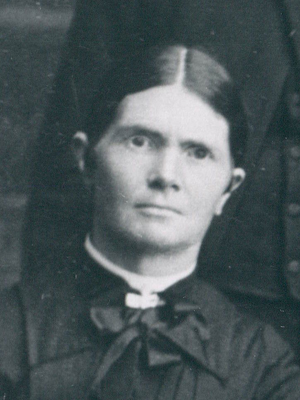
    Sylvia Desire Wheeler was born in Portage, Ohio, on April 17, 1821. When she was 17 years old she went west to Fort Leavenworth, Missouri to be with other members of The Church of Jesus Christ of Latter-day Saints. While there, she was married to Ransom Asa Beecher on November 22, 1838, by Mr. Grooves. Sylvia and Ransom had twelve children (including two sets of twins), eight boys and four girls. All but three of them grew to maturity and were married.

    The Beechers moved next to Nauvoo, Illinois, where their first three children were born. They were living there when the Saints were being so badly treated by mobs and “Mormon-haters.” Sylvia endured many trials and hardships and remained strong, faithful, and devoted to the cause of Truth. She dearly loved and supported the Prophet Joseph, in whom she had great faith. On one occasion when she was ill and in bed, the Prophet was also ill. Sylvia sent her apron to him to be blessed. He blessed it and sent it back to her with the promise that she would recover. She wrapped it around her head and was instantly healed.

    Sylvia was in Nauvoo during the period of mobbing and fighting. She saw cannonballs roll down the streets and at one time a mob came to her home and commanded her family to leave the city. Ransom was ill with malaria at the time. When the mob was informed of this they withdrew and the Beechers were permitted to remain in Nauvoo until after the martyrdom of Joseph and Hyrum Smith. Sylvia recounted on the night the Prophet was murdered she could not sleep. She knew something horrible was happening. She was so nervous that she walked the floor and wrung her hands. When she was informed of the terrible deed she was not surprised.

    Shortly after this incident the Beechers left Nauvoo and crossed the Mississippi River with their little family and belongings. Sylvia was worn out from worry and overwork so they sought refuge for the night under humble and uncomfortable conditions — whether in a tent or a hut is not certain. Her makeshift bed provided inadequate comfort to her and in these circumstances, she gave birth to twin girls. Ransom delivered the babies with the assistance of Sylvia’s married sister, Ursula. The twins lived, notwithstanding the fact that they were two months premature. They were so small a teacup could cover their heads and rest on their shoulders. Ironically, these girls each weighed over 200 pounds as adults.

    The Beechers resided in Illinois and surrounding states (including Wisconsin) until 1853, when they migrated west to Salt Lake City, Utah. Two more children were born to them when they lived in Wisconsin. They traveled across the Plains in a company of Saints in a wagon drawn by three yokes of steers and cows.

    They lived in Salt Lake four years worked for President Brigham Young as a carpenter. Twin boys were born to the Beechers during this period. Wages were low and there was little employment in Salt Lake, so in 1859 Ransom and Sarah moved to Willard, Utah, known then as Willow Creek, where Ransom established a sawmill and purchased a few sheep.

    Sylvia had a difficult time managing for her family, as there was little income to meet the needs of her family and regular visitors and she had little help. She cared for the little home, made clothing from the wool their sheep provided and assumed responsibility for the guidance of the children.

    The Beechers lived in Utah until 1872, when they moved to Elba, Idaho. Until the Post Office was established, the new settlement was called Beecherville. In this new land, they were once again pioneers, as there were only four families in the entire valley. Times were difficult and they had to haul everything they purchased from Kelton or other distant places. The country was wild and there was little government protection from marauding Indians. Often bands of roving Indians would call at the Beecher home. At other times the settlers gathered at the community center (log cabin) in fear of an Indian attack.

    The Beecher children married and chose homesteads in the valley. Eventually, all of Sarah’s living children, with the exception of William and Lovisa, were living in Cassia Creek, Idaho. She acted as a midwife in bringing many of her grandchildren in this world and she seldom had the help of a doctor.

    Sarah’s life was full of hardships, trials, and overwork. She was delivered from these when she passed away on March 9, 1877, at the age of 56.

  • Ransom Asa Beecher

    Ransom Asa Beecher

    Ransom Asa Beecher, son of Lyman Beecher and Sally Wheeler, was born at West Haven, Connecticut on December 10, 1813. When Ransom was about a year old his parents moved west to Vienna, Ohio. They must have joined in the westward movement following the War of 1812. Little is known of Ransom’s youth, but we do know that the family remained in Vienna, Ohio until at least 1832.

    The next we learn of Ransom was when he married Sylvia Desire Wheeler on March 22, 1828, at Fort Leavenworth, Missouri. It appears that Sylvia joined The Church of Jesus Christ of Latter-day Saints and was living with the Saints there at that time. Ransom probably joined the Church about that time, as they moved to Nauvoo, Illinois, where they remained until after the martyrdom of the Prophet Joseph Smith. As a child, I remember hearing him tell of the war in Nauvoo: “A group of Saints was by the schoolhouse under rifle fire. One of them stepped out into the open and was shot. I peeked around the corner of the building and saw two men’s heads above the grass. I aimed my rifle at one of the heads and fired.” When I asked if he hit the man he said, “I did not wait to see.”

    Ransom and Sylvia were forced out of Nauvoo and went across the Mississippi River. They camped there and Sylvia gave birth to twin girls, Lovina and Lovisa. The Beechers remained in the Midwest until 1853, moving as necessity demanded, including to Wisconsin, where their son Reuben was born on October 31, 1851.

    In 1853 they migrated west to Salt Lake City, Utah with a wagon train of fellow Mormons. The family lived in Salt Lake four years, during which time Ransom worked as a cabinetmaker for President Brigham Young. Ransom was a very independent soul and he became dissatisfied with cabinetmaking. He left Salt Lake and moved his family to Willow Creek, Utah (present-day Willard, Utah).

    Life in Willow Creek was difficult for the family as Ransom was restless and venturesome. He took several hunting trips into the lesser-known surrounding wilderness areas. He took some of his sons to the Bear River (Idaho) country, but no definite record of this venture was kept, so details remain dim. His prowess as a hunter was greatly recognized—the Indians called him “Bear Dog” because he seemed to have no fear and loved the new country.

    This venturesome spirit finally took the Beechers to Cassia Creek, a tributary of the Raft River. The new valley was beautiful, with game on every hill and the streams well stocked with trout. Ransom located his family on a homestead at the Narrows and several of his sons and daughters married and likewise filed on homesteads in the valley. The Beechers owned most of the creek bottomland in the valley. They were without question pioneers—the log cabins had dirt floors and dirt roofs. During the winter the floors were covered with straw to help protect bare feet from the cold earth. Cooking was done over an open fire in a fireplace. A small flock of sheep furnished wool for clothing. To make matters worse, Indian scares were frequent, as Chief Pocatello and his people roamed the territory.

    Sylvia, the wife, and mother of 12 children, died March 9, 1877, leaving two boys at home—Orval (17) and Merritt (13). Ransom’s wanderlust was sated and from that time on he concentrated on his children and grandchildren. He maintained his residence in the little log cabin until his death on December 23, 1904. All his children married and Merritt built a fine brick house on the old homestead. He tried to get his grandfather to live with him, but Ransom declined, preferring to live by himself and enjoy the fireplace in his log cabin.

    Ransom was a hardy pioneer—rough, rugged, independent and gruff. He asked few favors, yet he was ever anxious to help others. He was skilled as a workman and there was nothing he would not try to do. He lived a long life and the kind of life that was necessary to prepare a new land for the future. He was a small man about 5 feet 5 inches and weighed about 80 pounds when he was 18 years old. It is doubtful that he ever weighed over 125 pounds. He wore a beard and was very independent in his habits. He certainly would have been at home with the great pioneers of the west. He died December 23, 1904, and was buried in the Willard City cemetery.

  • Richard Drake & Phoebe Lovina Beecher

    Richard Drake & Phoebe Lovina Beecher

    Richard Drake

    Richard Drake was born on November 22, 1839, at Palermo, Oswego, New York to Jacob Drake and Flora Hayden. This couple had four other sons: two older than Richard (Willis and Warren) and two younger (Medelson Del Roi and Jacob Moroni, Jr.). Jacob and Flora joined The Church of Jesus Christ of Latter-day Saints in New York and moved their family to Nauvoo, Illinois to be with the Prophet Joseph Smith and the rest of the church membership. Medelson Del Roi and Jacob Moroni were born while the family was in Nauvoo. However, Jacob did not live to see his namesake born. Flora was left a widow with four boys and a baby on the way. Richard must have been quite young when his mother remarried, this time to Lemuel Mallory. Flora left the house Jacob had built her and, with her new husband and her boys, traveled west to Utah in the Captain Bennet Company.

    However, it appears that Flora never reached her destination in the west. Family tradition holds that Flora was laid to rest somewhere on the Great Plains along the trail to Utah. The 1850 census shows Lemuel Mallory in Utah with most of Flora’s boys, but no Flora and no Medelson Del Roi. The Drake boys lost both parents in quick succession and at an early age. Family tradition also indicates that Lemuel mistreated his foster sons. He was a polygamist and purportedly had more children than he could support. Richard spent much of his time with the Indians and learned their language. They called him “Muggins” which means “Brave.” Richard also loved music and played the violin by ear.

    Phoebe Lovina Beecher

    Phoebe Lovina Beecher was the daughter of Ransom Asa Beecher and Sylvia Desire Wheeler. She was born at Montrose, Lee, Iowa on September 23, 1846. Her parents were forced to leave their home in Nauvoo, Illinois by anti-Mormon mobs. They joined the great trek of Latter-day Saints west. Once across the wide Mississippi River in Iowa, the family stopped to rest and make preparations for Sylvia to give birth to twin girls. Phoebe Lovina was one of those twins.

    Phoebe married Richard Drake on July 24, 1864. They lived in Willard, Utah between the years of 1872 and 1874. They moved to Elba or Connant, Idaho. Later they sold their home there and pioneered in the Teton Valley of Idaho.

    Richard arrived in the Teton Valley in 1889 and stayed with his son, Richard Asa. He moved his wife and children there the following spring. He and his son-in-law, Edwin Rice, and his sons made homes in Victor and Cedron, Idaho. They grubbed the sagebrush, built good barns and homes, and established fine herds of cattle and horses. Richard and Phoebe were the parents of eight children.

    One time Richard was traveling in Oregon with a team of horses pulling a wagon. He made camp and heard a cow and calf bawling. He surmised they were being attacked by a wild animal and took his gun and went to their rescue in his bare feet. He shot at the animal and quickly jumped aside to be clear of the gun smoke and gain a clear view of the scene. The wounded mountain lion was coming after him and Richard did not have time to reload his rifle, so he used it as a club to hit the lion on the head. He knocked the mountain lion unconscious, but in doing so he broke his rifle in two, rendering it useless. Knowing the lion was only stunned and that it would be angrier than before, Richard quickly retreated back to camp. The next morning Richard returned to the skirmish site and found the lion had killed and partially eaten the calf.

    Ruth Rice Jenkins remembers her grandfather, Richard, as being tall, slim, and very kind. She recalls Phoebe as small, plump, and darkly complected. Richard and Phoebe knew how to make their grandchildren feel loved and wanted. The high ideals and great talents found in Richard must have been instinctive because he did not have a chance to acquire them in his youth.

    The house they built in Cedron, Idaho was larger than most pioneer homes. It had a large living room, which was carpeted from wall to wall with a rag rug they had woven themselves. Under the rug was a soft bed of straw to provide some cushioning. Richard and his sons wrestled and performed competitive sports on the soft rug.

    The living room also boasted of an organ, two violins, some harmonicas, and a phonograph with a big horn. All the children played some instrument. For community dances, their daughter Sylvia would chord on the organ while Richard and his son Fred played their fiddles. Richard also called for square dances. There was fun and frolic in their home. Never have we known people with such kind and happy dispositions. There was always a group of young people in their home.

    Teton Valley of Idaho

    In their early years in the Teton Valley, the Drakes made a living by trapping and selling fur. The Drake boys were good trappers and the beaver was plentiful at that time. They tanned their own hides for their own fancy gloves and chaps, which Phoebe “foxed” or trimmed with plucked beaver. Richard was never idle. He was a good blacksmith and loved to work in his shop when there wasn’t farm work to do. His son-in-law Edwin Rice claimed that Richard was a splendid wheelwright. He was also a farmer and stockman who raised fine horses, which he loved to race at local celebrations. He pulled the neighbors’ teeth, soled their shoes, and cut their hair. The first school in the valley was in the Drake home; they paid and provide board for the teachers.

    Phoebe grandchildren vividly recall her kitchen with its big, black stove, which they called a range. There was always something tasty cooking on top of the range or in its warming oven. There was also a large waist-high wooden box with a deep shelf inside near the top. This was the flour bin. The inside shelf was always loaded with goodies made by Phoebe’s own hands. Quite often the shelf usually held “crullers,” a sweet spiced dough similar to cake doughnuts twisted into crooked shapes and deep-fried. Phoebe’s pies (mostly custard) were also available. The grandchildren reveled in knowing they could help themselves to these treats at any time without fear of reprimand or chastisement. Grandmother Phoebe told them she made the treats for their enjoyment. She allowed them to pick and eat all the strawberries they desired. Neither did she object if her grandchildren took a spoon and dug into the can of fresh honey Phoebe kept on hand or sampled the “Pickle Lilly” from a large wooden bucket.

    Phoebe was extremely ambitious. Her granddaughter Arleigh recounted how Phoebe would sit by a table with a book propped in front of her so she could read aloud to Arleigh while Arleigh brushed and combed her hair. At the same time, Phoebe knitted stockings, gloves, or lace. She knit surprisingly well and only needed to look at her work occasionally. Her fingers flew and the needles clicked rhythmically. She also sheared her own sheep, washed and carded the wool, and spun her own yarn. She had much early experience in making her own dyes. She wove yards and yards of carpet. Phoebe used every little scrap of material for some project. She made hundreds of quilts, rugs of several kinds, woven carpets, knitted articles of clothing, and many yards of beautiful lace.

    The young folks of the community spoke of Richard and Phoebe as Grandpa and Grandma Drake. They loved everyone and the sentiment was reciprocated by all that knew them. Their home was always open to their grandchildren and anyone else for singing and recreation. Many times Richard and Phoebe hooked up horse and buggy and traveled over rutted roads in answer to the anguished call of a pioneer mother in the travails of childbirth. Often this was in the middle of the night or severe winter cold or blizzard conditions. There were no doctors and Phoebe served as a midwife, doctor and nurse, and even housekeeper to those in need. She also was present to assist in times of death.

    Before Phoebe died, her daughter Sylvia counted the number of babies Phoebe had delivered over the years; the number was something over 300! To our knowledge, Phoebe never accepted any payment for her services, though her friends sometimes gave her “gifts.” What did the Savior say? “…Inasmuch as ye have done it unto the least of these my brethren, ye have done it unto me. (KJV Bible, Matthew 25:40). Surely she was found in the service of her fellow men, so she was in the service of her God. Phoebe was the ideal of her grandchildren and was greatly loved by them. Ruth Rice Jenkins recounted how Phoebe let her get into bed with her even when Ruth was a big girl and many times she warmed Ruth’s feet with her dear, old hands.

    The Drakes had a fine, tall son named Ransom who was injured in a skiing accident, which left him paralyzed from the waist down. She always tried to make others happy. During the long, helpless days before Ransom’s death, with so little he could do, Phoebe had an idea. She brought out a .22 rifle and helped her son amuse himself by taking turns shooting the images of the politicians that appeared on the newspapered wall of the cabin.

    Ransom died in the fall of 1897 at the age of 16. After Ransom’s death, Phoebe grieved greatly until one night when she lay crying in her bed, she became aware of music coming from afar slowly approaching her until the sound filled her bedroom. She knew it was from heaven and its divine beauty brought peace and comfort to her heart such as she had never known before. The message it conferred to her was one of understanding that her son was in a place where this divine peace reigned and she need grieve for him any longer.

    Richard suffered a stroke in 1904 and never regained his health sufficiently to do any work thereafter. However, he remained cheerful during his entire affliction. During this time he trained his two cats, Saboy and Sabi, to do various tricks. He deeded his homestead to his youngest son, Merritt. Richard passed away on March 6, 1912, at the age of 73. He was blessed in the Nauvoo 5th Ward as a small child at the same time as his brothers. He had a patriarchal blessing at about age 15 in Richardson, Utah by Charles Hyde. They were not active in The Church of Jesus Christ of Latter-day Saints and were affiliated with the Reorganized Church of Jesus Christ of Latter-day Saints for reasons unknown to us.

    His youngest son Merritt died in the spring of 1916. Merritt’s wife, Eva, married Monroe Dustin. Monroe’s sons took over the home and land the Drakes had worked so hard to make beautiful. At the time of this writing, the Dustins still owned the homestead land.

    One More Homestead

    In 1915 Phoebe still possessed her homestead rights and decided to use them on behalf of her daughter Sylvia and her husband, Edwin Rice. She left her home in Cedron, Idaho, and the accumulations of a lifetime, except her bedding, dishes, and personal belongings. These she took with her in June 1915 as she embarked, at the age of 69, on yet another pioneering venture with her daughter and son-in-law. The intended homestead site was twenty miles past St. Anthony, Idaho on the grassy ridge prairie five miles beyond the Juniper hills west of Parker, Idaho. Her personal belongings were contained in a wooden chest Richard had made for her. Her granddaughter, Ruth Rice, accompanied her parents and grandmother on that trip from Cedron to St. Anthony. Ruth was 17 and remembers how her grandmother wore a sunbonnet and gave her one to wear.

    It took two and one-half days by wagon to reach the dry farms on Grassy Ridge. The roads were little more than trails winding through the lava rock from Parker on. It was dusty and hot and rough, but Phoebe seemed to enjoy the adventure. There was a shack about 12 feet x 16 feet and a couple of tents for the family to live in. These were located up on a hill where the winds hit them full force. Despite these primitive conditions, Phoebe seemed to enjoy herself and the Rices most definitely enjoyed her.

    She was there at the dry farm homestead about a month when she had an acute attack of pleurisy and was in such terrible pain that they dared not move her over the rough roads for medical attention. Instead, they brought Dr. Morefield to her, but he was unable to help her. Pleurisy affected her heart and she died July 9, 1915. She, who had been born on the flats of the Mississippi River across from Nauvoo, Illinois as a premature twin to a refugee mother fleeing anti-Mormon mobs, died in a tent on a windswept prairie of an Idaho dry farm.

    When her youngest son Merritt and his brother Asa heard the news of her illness they went in a white-top buggy to see her. They returned home quite late that night. Merritt had just gone to bed when he heard the front door open. He arose from his bed, somehow knowing that his mother had passed away. When he checked with Edwin and Sylvia later, they confirmed that she had died that same hour. Merritt felt like his mother’s spirit had stopped at her old home on its journey heavenward.

    Edwin and Sylvia Rice took Phoebe’s body on the long, rough road to Hansen’s funeral home in St. Anthony. From there she was taken to Victor, Idaho, and laid to rest by Richard. She was a pioneer all her life, but she endeavored to make life pleasant and comfortable for others around her. Her descendants have much to live up to if they would be like her.

  • Jane Clarissa Miller

    Jane Clarissa Miller

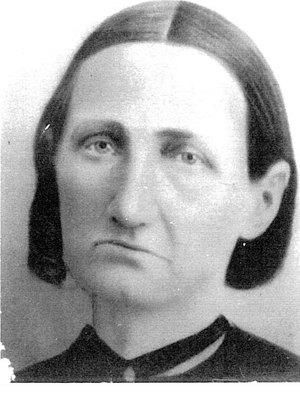
    Daniel A. Miller and Clarissa Pond, parents of Jane Clarissa Miller, joined The Church of Jesus Christ of Latter-day Saints before Jane Clarissa was born on August 1, 1841 or 1842 in Adams, Hancock, Illinois. The Miller family then moved to Kanesville, Iowa where Daniel served as Bishop for one year after anti-Mormon mobs drove them from their home in 1846. Kanesville was a crude, temporary settlement for the Mormon refugees. Jane Clarissa was five or six years old when her mother died in Kanesville, Iowa in 1847. Daniel Miller subsequently married Lovina Monrose, who became Jane’s new mother.

    Like many other pioneers, Jane knew about long days of wagon rides, sleeping under the stars at night, and eating at campfires day after day. The trek westward wasn’t all drudgery. There was time for romping and running, and fun games at night before bedtime on the plains. She learned the pioneer songs and listened to long sermons on Sundays with the sky for a ceiling and the sod for the floor of this outdoor chapel.

    Upon the family’s arrival in the Salt Lake Valley, they rested for a night in the Great Salt Lake settlement before driving north again the next day to help settle Farmington, Utah. They followed the shore of the Great Salt Lake, where only the trail of Indians had been before. The other adventurous families that accompanied Millers were Thomas Grover, Joseph Secrist, William O. Smith, Allen Burk, and Captain Davis. Jane’s father and brother tried a little fall plowing in the cement-like ground the next morning.  All they could see was the glimmering waters of the Great Salt Lake to the west of them, while all around the landscape was marred by deep gullies from endless run-offs in the spring when melting snows run wild toward the lake. That fall, Jane and the other children played in the deep gullies and hid in the tall sagebrush, which the men cut down to burn that winter.

    Daniel Miller built a two-story adobe house for the family on 4th North in Farmington. Her first schoolhouse was a one-room cabin of logs near Ezra T. Clark’s place. There she learned to read and write, but more importantly, she learned to be helpful and thrifty and wise in taking responsibilities. By the time she was sixteen, Jane had enjoyed wool picking bees, corn husking parties, and wild berry picking, as well as how to dry fruit, make soap, spin, weave, knit, and sew. At the wool picking bees, boys and girls made the most of it, and mothers cooked fine pioneer feeds for everyone. Pioneer dances and surprise parties were the life of the youth. Jane had her eyes on a brown-eyed youth who moved to North Ogden and thereafter, his visits became less frequent, much to her dismay.

    The pioneers learned of a large army headed for Utah with unknown intentions. The Church leaders feared trouble and hostility from the Army, so they ordered a general evacuation of the Salt Lake Valley. The Miller family headed south, where they waited for the trouble to blow over. Soon after they returned home Jane married Oscar North Rice on April 25, 1859. She was seventeen or eighteen years old at the time and they settled in what is now Providence, Utah. She had many experiences with the dangers from frost, bears, wolves, Indians. She knew what it was like to leave a good home and her family and start a new family in a crude log cabin with willows and sod for a roof and a dirt floor in place of boards. She also knew the joys of serving God and was blessed with six daughters and one son. Death called her home at the age of fifty-four on February 15, 1896. May God own and bless her.

  • Elizabeth Almira Babbitt

    Elizabeth Almira Babbitt

    Elizabeth’s parents were Lorin Whiting Babbitt and Almira Castle. They met and were married in Pompey, Onandaga County, New York, where the Castles were residing at the time. The couple moved to Painesville, Lake County, Ohio to be near The Church of Jesus Christ of Latter-day Saints at Kirtland, Ohio. Elizabeth Almira, their first child, was born May 18, 1830, at Painesville, Lake County, Ohio. Lorin Babbitt helped to build both the Kirtland and Nauvoo Temples.

    Elizabeth well-remembered the day in Kirtland when the Prophet Joseph Smith hoisted her upon his strong shoulders and pranced off a few paces playing horse for her. Later, in Nauvoo, she saw her parents’ home burned down while her sick mother was forced to lie in the dooryard a short distance away. Almira Babbitt never recovered from these exposures and she died and was buried at Nauvoo before the Saints were forced further west. Elizabeth then had the care of her four younger brothers and sisters. She was also at the great meeting held by the Saints at Nauvoo and saw the mantle of Joseph Smith fall upon the person of Brigham Young.

    Her father then moved the family to Kanesville, Iowa in 1848. It was there she met and married a young man who had been sent back from Utah to help emigrants to cross the plains. This 19-year-old young man was Leonard Gurley Rice. Elder Orson Hyde made them man and wife on a Sunday evening—March 18, 1849. Their honeymoon was spent crossing the plains to Utah. Elizabeth spent her 18th birthday driving one of Leonard’s wagons, as usual, while he was helping others on the journey west. Leonard was an expert horseman and could drive a team of oxen with skill. However, this was more than could be said of many that he found himself assisting.

    Leonard and Elizabeth settled in Farmington, Utah upon reaching Utah in 1849. To this union were born eleven children, but they had to part with five of them while they were babies and a son was later killed in a snow slide at the age of 25. Five children grew to maturity and married. Elizabeth was a mother to every child who came her way and her house was always a sort of refuge for the needy ones. In addition to rearing her own family, Elizabeth mothered an orphaned Indian baby brought to her by freighters. The freighters had found the baby lying beside its slain mother after a battle between US soldiers and a band of Bannock Indians on the Little Salmon River in northern Idaho. She also raised William Kelsey’s daughter, May, after his second wife, Ann Victoria Rose, died when May was three weeks old.

    Leonard Gurley also married Margaret Buckwalter Wickle, the widow of Henry Lemon Wickle, as well as a girlhood friend of Elizabeth. These two wives and their families lived in a state of harmony not often found even in traditional families. At the time of the US government’s crusade against polygamy in the 1880s, these two wives chose to be with their families who had moved to Idaho. Leonard remained in Farmington, Utah to assist his third wife, Lucy Jane, and her young family. Leonard Gurley died in 1886, while Elizabeth Almira died June 27, 1907, at the age of 77. She was buried at Parker, Fremont County, Idaho.

  • Elizabeth Ann Morris

    Elizabeth Ann Morris

    Elizabeth Ann Morris was born in Ponteat, Carmarthen, South Wales on June 13, 1817, the daughter of Richard and Eliza Jones Morris. When Ann was thirteen years of age, her mother died, leaving six children. Ann’s father married again and deserted his own family. Ann was given a good home by a family who loved her as their own. In 1841, she married William Butler, a coal digger, and they became the parents of four children. They were among the first people to hear the Gospel of The Church of Jesus Christ of Latter-day Saints in Wales. After prayerful study, the Butlers accepted the teachings and commenced preparations to cast their lot with the Saints in America. At last, reservations were made for the family to sail, but tragedy hit, and William, stricken with cholera, died July 13, 1855. Sometime later, two days prior to sailing, a son and a daughter developed cholera and died. If Ann stopped to bury her son and daughter she would give up her chance to leave and her reservations could not be refunded. The decision to leave someone to attend to the burial so she could go was a heart-breaking experience for Ann, but her desire to carry out plans to be in Zion was strong.

    Ann and her two children, Elizabeth and William Richard, arrived at Boston, Massachusetts May 25, 1856. They rode in a railroad cattle car from Boston to Des Moines, Iowa, and after three weeks of waiting for their handcart to be made ready, they started the trek across the plains. They left June 23, 1856 in Captain Bunker’s Handcart Company. At Winter Quarters they received more provisions. When they reached the Salt Lake Valley on October 2, 1856, their clothes were in tatters, and rags were wrapped around their cracked, sore feet. If a supply wagon had not come to meet them, they would have perished.

    One of Ann’s friends from Wales took her and her two children into her home for a few days. Then Heber C. Kimball asked Ira Rice, a widower of means, if he would employ Ann as his housekeeper. This arrangement proved an advantage to both, and on November 20, 1856, they were married. They were happy in their pioneer home with their two families, but were never blessed with children of their own.

    With Ira, Ann moved from North Ogden and thence to Providence, Utah, where they lived until 1865. At that time they answered a call to settle to the south. Ann was left a widow again while in Washington, Utah, in 1868.

    She had been set apart as a midwife by Heber C. Kimball and she brought hundreds of babies into the world without medical assistance. She endured many hardships and was known far and wide as Grandma Rice, recognized for her gifts of discernment and vision, faithfulness in church service, and a willingness to work hard and long. Ann died at the age of 81 and was buried at Escalante, Utah on November 30, 1898, where she had been living to be near her children and grandchildren.

  • Arvin Mitchell Stoddard & Caroline Sargent

    Arvin Mitchell Stoddard & Caroline Sargent

    Arvin Mitchell Stoddard

    Arvin Mitchell Stoddard
    Arvin Mitchell Stoddard

    Arvin was born September 1, 1852, in Bastard, Ludy County, Upper Canada (the southern and central portions of modern-day Ontario, Canada). He was the son of Nathaniel and Jane Stoddard. He was converted to the restored gospel of Jesus Christ in Johnston’s District of Upper Canada and later lived in Nauvoo, Illinois, where he received his endowment in the temple on January 23, 1846. He was among the first to cross the Mississippi River with Brigham Young on February 4, 1846. Covered wagons laden with scant supplies were drawn onto flatboats and ferried across the dangerous river. They traveled seven miles over frozen ground to Sugar Creek, where Arvin and the rest of the party pitched their tents amid fresh falling snow. They bade farewell to their beloved city and the beautiful temple, never to see it again. He saw the men of the Mormon Battalion march away from their loved ones; he passed through hardships and trials traveling across the plains, entering the Salt Lake Valley as part of the third ten wagons, of which Edward Stevenson was captain.

    Arvin’s brother, Albert Q. Stoddard, traveled in the same outfit as Arvin. Albert was born in Upper Canada in 1831. Another brother, Rufus Stoddard, born July 15, 1827, was baptized into the LDS church on June 10, 1836, in Upper Canada, by Quincy Blake. Nathaniel Stoddard is on record as having been baptized in Provo, Utah, on September 29, 1852.

    One of the first white men to consider Provo as a stopping place was Elias Blackburn. With his mother and a brother, he pitched a tent and began to improve a spot of ground in 1849. By 1850, there were four wards organized with a Bishop over each ward. Bishop Elias H. Blackburn was in charge of all tithing from the four wards over which Apostle George Albert Smith presided. Arvin helped build up the Provo area.

    Utah County was a wild, untried area. Crickets devoured their first crop in 1851, and the Indians, friendly at first, were demanding visitors, too often and too many. The first large building was erected in Fort Utah in six weeks. In the center was a bastion on which was mounted a cannon. They shot it off to impress the Indians. Land was laid out, giving forty acres to each family. They were told by the church leaders to live in the fort and to farm outside. Bishop Blackburn did as directed, but some of the other families ignored the order until Chief Walker went on the war path. Then three hundred families moved back into the fort. The advice spoken by the servants of God had gone unheeded.

    When Chief Walker shot up the settlement in the winter of 1850, the people requested help from Daniel H. Wells in Salt Lake City. The Utah Minute Men responded in February. This was a terribly cold period during which they suffered greatly. After riding all night, they arrived in Provo, finding the Indians well-fortified and using guns provided to them by the white gold seekers in 1849.

    Caroline Sargent Stoddard

    Caroline Sargent
    Caroline Sargent

    Caroline was born in October 1834 at West Liberty, Jackson County, Missouri. She was the daughter of Abel Morgan Sargent and Sarah Edwards. Caroline’s mother, Sarah Edwards, died at the home of her parents in Indiana at the birth of her last baby, a stillborn son. A sister, Druscilla, and a little brother, Thomas, were left at their grandparents’ home in Indiana while the rest of the motherless children were being cared for by different friends of Abel’s in the camps stretching from Nauvoo, Illinois to Winter Quarters, Nebraska.

    When the call came for men for the Mormon Battalion, Abel Morgan Sargent enlisted, taking with him two of his daughters, Caroline and her older sister, Martha Jane (for whom Janie was named five years later). Abel M. Sargent was among the sick detachment sent back from Santa Fe, New Mexico, to Pueblo, Colorado. Weakened as he was, Abel eagerly left with the Brigham Young caravan on August 26, 1847, in the 34th wagon. He was anxious to locate his children that he had left at Winter Quarters and in Indiana. To his joy, he learned that Harriet had married Apostle Rich. The eastbound caravan in which Abel traveled met the company of emigrants captained by Apostle Rich on the plains. Harriet Sargent Rich was in the company.

    When Abel reached Indiana, he found his daughter, Druscilla, had married and did not wish to accompany her father to the Salt Lake Valley. Thomas gladly joined his father, and as soon as arrangements could be made, Abel and his beloved son started on the long journey across the plains. Abel’s health had continued to fail, making him an early prey to the dreaded cholera. He died somewhere near the Black Hills of South Dakota. On learning of his father’s death, Thomas prayed to be taken with him. In a few hours, Thomas died and was buried in the same shallow grave with his father. Caroline Sargent, now an orphan living in Provo, Utah, is listed on the 1850 census as fifteen years of age. Here in the new settlement of Provo, Caroline met her future husband, Arvin Mitchell Stoddard. We do not have the marriage date of Arvin and Caroline. Arvin was endowed in the Nauvoo Temple on January 23, 1846. Caroline was endowed in Salt Lake City in February 1852. She was sealed to her husband on August 23, 1852. They had endured untold hardships, but each had hopes for a better life together. Caroline was barely sixteen years old, and Arvin ten years her senior.

    Soon their home was added to the fast-growing settlement of Provo. Bishop Blackburn had built a large tithing office and storehouse where the Saints brought eggs, butter, cheese, grain, fruits, vegetables, poultry, and other produce, most of which had to be taken to Salt Lake in the cool of the night. It must have been a great comfort and joy for Caroline to have a home and a husband to protect her. Their first baby, the subject of this sketch, was born in Provo, Utah County, Utah, on April 29th, 1852. They named her Martha Jane for Caroline’s sister, but all her life she was called Janie.

    About the time Janie was born (1852-1853), the Mexicans were dealing in slave trading with the Indians. The latter would kidnap Indian children from neighboring tribes and would sell them to the Mexicans. When the Mormons tried to put a stop to this slave traffic, Chief Walker retaliated fiercely. “What right,” he demanded, “Did the Mormons have in interfering with their money-making deals?” So it was again for the white man to carry his gun handy. By 1853 the Indians had stolen many animals, and trouble lurked from every bush.

    In 1851, Charles Colson Rich and Amasa M. Lyman led a large migration from Utah to San Bernardino, California. It is possible that Arvin and Caroline, along with baby Janie, left their Utah County holdings and went to San Bernardino at this time. Amasa M. Lyman returned to Utah in 1853. He wanted to interest more new settlers in the California project. We find in the book “Mormons of San Bernardino,” and also in “Our Pioneer Heritage,” vol. 4, page 408, extracts from the reports of Arvin M. Stoddard, surveyor of San Bernardino County. Arvin and Caroline were living in San Bernardino when their second child, a son, was born in 1854. He was named Arvin Nathaniel, and called “Nat.” Three years later, their daughter, Harriet Celestia, was born. Janie named her seventh child for this sister and called her “Hattie.”

    San Bernardino was home to them for a brief period, from 1854 to 1857, when the U.S. government sent Johnston’s army to Utah to put down a rebellion that never existed. The Saints from all over the land were requested to move back to Utah to help meet this threat head-on. If war was needed, it was going to be nothing less, for the Saints had been plundered, murdered, and robbed for the last time peaceably.

    Not all the Mormons obeyed, but Arvin and Caroline with the three children joined the great caravan headed north this time, instead of west.

    What a sight met their eyes in Provo. People living in wagon-boxes, tents, dugouts, shacks all over the area, and even in the outlying districts; people and livestock covered the land. Even the great accumulated tithing from the Salt Lake City storehouse had been transferred to Provo, at great expense. The confusion did not last as long as expected. The national government and Church leaders came to an agreement, and everyone was able to move back home. This time Arvin and Caroline located in Farmington, Davis County, Utah. They apparently lived there for at least twelve years, as the Farmington Ward records list the birth of Sarah Emily Stoddard: March 17, 1859; Druscilla and Caroline, twins: January 14, 1861; Henry M. Stoddard: July 27, 1864; Effie Stoddard: June 27, 1866; and Abel Morgan Stoddard: February 12, 1868.

    By 1874, Arvin and Caroline were living in Milford, Beaver County, Utah. They remained there for the rest of their lives. Caroline died in 1905, and Arvin in 1914. Both are buried in Milford.

  • Martha Jane Stoddard

    Martha Jane Stoddard

    Martha Jane Stoddard (Janie) was born April 29, 1852 in Provo Utah. She was the first child born to Arvin Mitchell and Caroline Sargent Stoddard. Her early years were spent in California where her father, a surveyor, helped lay out an LDS community in San Bernardino. The Stoddard family, along with other saints, was called back to Utah during the Utah War. They settled in Farmington.

    Janie was ten years old when the new all-rock chapel (still in use today) was finished in Farmington. This building could seat 400 people comfortably. Janie was with the children who welcomed President Brigham Young and six apostles to Farmington for the dedication.

    On the 4th of July in 1868 a wonderful celebration was held in Farmington and at Miller’s Grove (now the site of Lagoon). A dance was held that night at the church. Sixteen-year-old Janie Stoddard met her future husband, Leonard Babbitt Rice. They became sweethearts, and on December 22, 1871, they were married. Len was 21 years old and Janie was 19.

    Their first child, Elizabeth Maud, was born in Farmington on September 22, 1872, but died the same day. They moved to Minersville, Utah where their second daughter, Jane, was born May 17, 1873. She died the day after her birth. The couple moved to Milford, Utah where Janie’s parents were living at the time and their third child, a son, Arvin Riley was born.

    Len and Janie moved back to Farmington where their fourth child was born, Otis Scott. The Rice’s along with a brother and sister-in-law moved to Georgetown, Idaho in 1879 where their son, David Augustus, and daughter, Caroline were born. The Rice families then moved to the Rexburg area and settled on the Egin Bench which became Parker, Idaho. There four more children were born to the couple: Harriet, Sargent, Hazel, and Leonard Babbitt Jr. They had ten children in all.

    The family prospered in Parker. Len and Janie had a beautiful home and a good business. But the wanderlust returned and the whole family decided to move to southern Alberta, Canada where wide-open fields awaited and the possibility of prosperous returns. They packed everything, including thrashing machines and wagons, in boxcars and moved by railroad. In Canada farming was successful some years and not others, depending on the whims of the weather. They built a nice home in Claresholm, but by 1915 all the children were married, and most had moved back to the United States. So Len and Janie sold out and moved back to Idaho.

    Great Sadness came to the family when three of their adult children passed away. Scott, a young father of six children was hit and killed by a train while on horseback in Canada. Their youngest son, Leonard Jr. died during the influenza epidemic in 1920, and their daughter Hazel died leaving a husband and three small children in Canada.

    Janie and Len had been married 49 years when he passed away just five days after Leonard Jr. After Len’s death Janie spent some time in Canada helping after Hazel’s death, and then moved back to Idaho. She lived another ten years until she passed away on the 29th of August, 1930. They are buried in the Parker, Idaho Cemetery.

    I am very grateful for the great heritage Martha Jane Stoddard left to me as her great-granddaughter. She raised a good family of stalwart citizens who are true to the gospel and The Church of Jesus Christ of Latter-day Saints.

  • Lucy Jane Stevens

    Lucy Jane Stevens

    Lucy Jane Stevens, daughter of Samuel Stevens and Rhoda Brixey, was born in Portsmouth, England, on January 1, 1848. Her father was a shipwright and her four brothers followed the same trade. Fortune had favored them considerably by way of worldly goods.

    The Stevens family belonged to the Methodist Church. While Lucy Jane was still a girl, her mother came in contact with Mormon Elders. Lucy’s mother listened to the message and was very much impressed. Lucy’s father, however, gave the Elders orders not to visit his home any more. A few years later, when Lucy Jane was just fourteen, her mother died, but prior to her death, she had impressed upon Lucy Jane the importance of the Elders’ message. One night after her mother’s death, she had a very strange dream. Her mother came to her, sat at the foot of the bed, and urged Lucy Jane to accept the Gospel and be baptized and do the work for her dead ancestors. She was now in a confusing predicament—a father who bitterly opposed any such action, and the desire to carry out the wish of her dead mother.

    Her father remarried, and thereafter Lucy lived with an aunt. From the allowance her father gave her, plus the money her aunt gave her, she saved enough for a voyage to America. At the age of seventeen, in company with
    three other girls, she ran away from home, joined a company of LDS converts, and traveled to America. At Council Bluffs they were able to buy their own outfit to cross the plains. Their company was one of the last ones to come before the coming of the railroad.

    Lucy Jane lived for a year in Salt Lake City at the home of Archie Hill, a former missionary to England. During this time she went to school. Leonard Rice, in charge of the relief wagons sent to meet Lucy’s company, had apparently been impressed with Lucy, and she with him, since they were married a year after her arrival in Utah. Lucy Jane Stevens became the third wife of Leonard Rice and moved to Farmington, Utah, opposite the Old Courthouse.

    Leonard and Lucy Jane became the parents of three girls and four boys. At the age of thirty-seven, Lucy was left a widow due to the untimely death of her husband. Her youngest child was only two weeks old. During the years her father had urged her time and again to return to England, offering her money as an inducement, but to no avail. She had adjusted herself to pioneer life and had learned the arts needed to finish raising her family by herself, which she did. She worked and struggled, running a farm with the help of the older children, until one by one, the children all married and left home.

    In 1911, her burdens eased and for the first time since arriving in Utah, she left her home state and went to California, where she lived with her daughter, Rhoda, for five years.

    She returned to Utah and died March 20, 1923, after suffering four years from a broken leg. Lucy Jane Stevens Rice was survived by all her own children, thirty-six grandchildren, and thirteen great-grandchildren.

  • Margaret Mathews

    Margaret Mathews

    Margaret Mathews was born in Swansea, Glamorgan, Wales on June 11, 1849. Her parents, Hopkin and Margaret Morris Mathews, joined The Church of Jesus Christ of Latter-day Saints and had both served as missionaries before and after their marriage. When Margaret was seven years of age, her parents left Liverpool, England for America. They landed in New York City six weeks later with their five children.

    They traveled overland to Iowa City where they became a part of the Edward Bunker Handcart Company and walked all the way to Utah. She never forgot the Brass Band and the hundreds of Saints who met them as those
    foot-sore and weary people entered the city. She could hardly sleep in a house after sleeping so long out of doors. In the spring of 1858, her parents took the family to Farmington, Utah. It was a town ten years old, but they decided to go on to a newer place—Providence, Utah. There they lived in the open for months. The children watched while men plowed with crude hand-made tools and planted gardens. They built a few log cabins in a fort formation because the Indians resented settlers’ presence. The Indians often stole horses and cattle, but once two squaws stole a little boy. No child had a better pair of parents. They were hard-working and faithful to the Church. Margaret learned to do as all the girls did: how to clear wool fresh from sheep’s backs, card it, spin it and knit it into socks or stockings.

    Her mother was a nurse and midwife for years. Margaret took her place in the home when her mother was called away. Their log cabin was heated from a fireplace until a bigger and better house was built. They had no matches, so it was wise to keep live, red-hot coals from night until morning rather than go out borrowing fire in the cold weather. The dancing parties she attended in a log schoolhouse and later in the larger rock building were lighted by burning logs in the fireplace.

    Margaret never had running water on tap in her life until long after her husband died. She carried it from streams near the house. Her father was in the first Providence Bishopric and her mother was a counselor in the first Relief Society in Providence.

    When the Church leaders suggested that the girls and women glean wheat behind the scythe-wielding harvesters, she became a gleaner. She gave some of the wheat she gathered to the Relief Society, which had a wheat storage project at that time. The wheat the Relief Society owned was sold for the Logan Temple Fund.

    As a young lady, she often was hired out in the homes of the Saints. She accepted all the teachings and advice of the Church leaders. She was employed in the home of Oscar N. and Jane Rice. She became the second wife of Oscar North Rice in 1869, ten years after Jane Miller had been sealed to Oscar in the Endowment House under the authority of the Priesthood of God for all Eternity. Margaret passed away on February 18, 1926, in Providence, Utah.